 Your Browser is Outdated


When crafting the perfect rifle for your needs, there’s a lot to consider, such as the main application of your firearm, the distance you plan to use it at the most, and any personal aspects that may affect your usage of it. Whether you plan to trek long stretches of terrain for your hunts or have a smaller frame that is less suited for heavier builds, creating a lightweight AR is an excellent way to ensure you can use your firearm to its full potential. In this guide, we’ll detail the benefits and disadvantages lighter builds offer and explain what upgrades to consider when trying to shave weight off your rifle.
Is a Lightweight AR Better Than a Heavier Build?
In short, a lightweight AR isn’t necessarily better than a heavier one—it’s all about creating a balanced weapon that meets all your needs without holding you back. Many marksmen tend to classify lightweight ARs within a specific weight range, but those numbers don’t matter if your needs differ from the person who claimed that. Instead of aiming for a certain metric, you should focus on the benefits and disadvantages of lightweight AR builds to guide your decision.
Pros of a Lightweight AR:
- Less Fatigue: Shaving a couple of pounds off your build may not seem like much, but that can add up over time. Activities like Western big game hunting and tactical training require a lot of physical exertion while carrying your firearm, and a lightweight rifle can make all the difference down the stretch. If you plan to do enough physical activity with your firearm to impact your stamina, a lightweight build is a must.
- Faster Target Transitions: Less weight = less inertia. With a lighter build, it’s often much easier to transition between targets and track moving game with less effort. That’s why lightweight builds excel on predator hunts with speedy targets and competitions like 3-gun where you need to quickly adapt to different targets.
- Enhanced Maneuverability: Building off the point above, a lightweight AR is much easier to maneuver during tactical drills. You will also have a simpler time shouldering the weapon and firing from a standing position.
- Easier to Accessorize: Starting with a lightweight build makes it much simpler to add optics, weapon lights, laser sights, and other attachments down the road. You’ll have a solid feel of the barebones AR, which can help you more carefully select the types of attachments you want with weight in mind.
Cons of a Lightweight AR:
- More Felt Recoil: A heavier rifle will absorb more recoil and move less during firing. The difference may feel negligible with cartridges like 5.56 NATO but is much more noticeable with more powerful calibers like .308 Win or 6.5 Creedmoor.
- Increased Muzzle Movement: A lighter rifle requires less effort to move, but that also means it's easier to move unintentionally. Some shooters find ultralight builds exhibit more natural sway when aiming offhand, making it slightly more difficult to maintain a perfectly steady sight picture, particularly at longer distances or during slower, more deliberate shots.
- Heat Management Concerns: Ultralight barrels tend to heat up faster. While this isn't usually a concern for hunting or defensive use, prolonged range sessions or high-round-count training can cause the barrel to reach higher temperatures sooner, potentially affecting point of impact or accuracy as it heats.
Thankfully, addressing these cons is where the rest of the guide comes in handy, as carefully selecting each component of your build can offset some of these disadvantages.
Best Upgrades for a Lightweight AR-10 or AR-15
When building a lightweight AR, the goal shouldn't be to achieve a specific weight. Instead, focus on the components that offer meaningful weight savings with the fewest compromises. The best lightweight build is one that's balanced for your intended use and comfortable for you to carry and shoot—not one that simply hits an arbitrary number on a scale.
Below are the primary components to consider, listed roughly in order of their impact.
Barrel
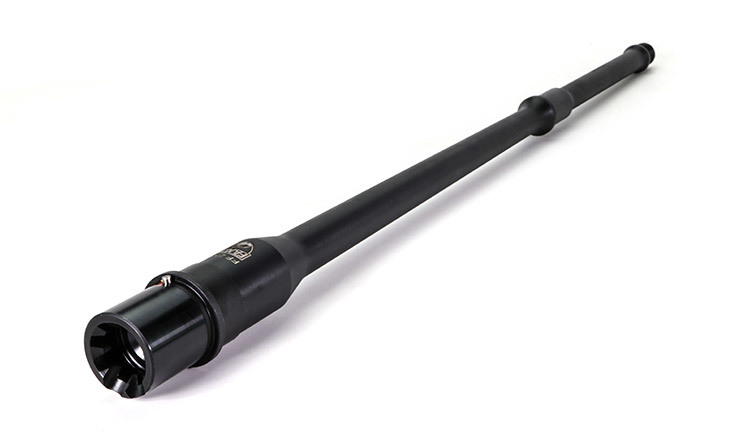 The barrel is one of the heaviest components on any AR and often provides the largest opportunity for meaningful weight reduction.
Some options to look for include:
- Pencil profile
- Lightweight profile
- Fluted barrel
- Carbon fiber-wrapped barrel
A lighter barrel shifts the rifle's balance point closer to the receiver, reducing front-end fatigue and making the rifle feel quicker to shoulder and transition between targets. The tradeoff is that the muzzle may feel less stable during slow, deliberate aiming than a rifle with a heavier barrel.
While a lighter barrel may heat up faster, it also cools down faster. On the other hand, a heavier barrel takes longer to heat up, but once it’s hot, it takes much longer to cool down. Upgrading to a lightweight barrel is best for hunting and home-defense rifles that you don’t plan to use during heavy-volume range sessions.
Handguard
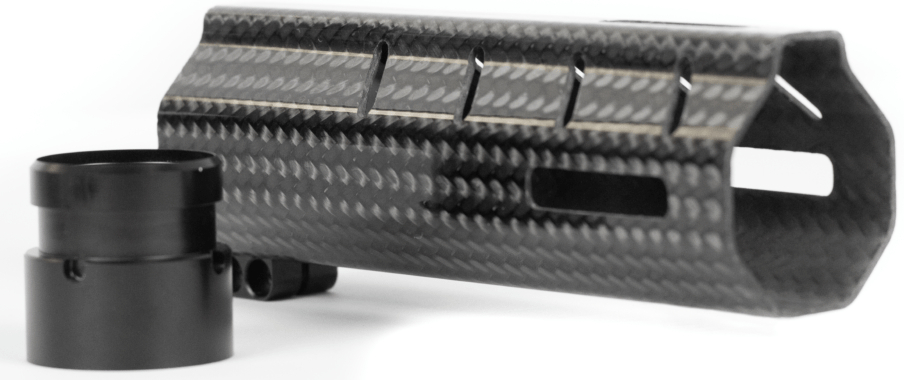 The handguard contributes substantial weight because it extends along much of the rifle.
Some options include:
- Slim free-float M-LOK handguards
- Aluminum lightweight designs
- Carbon fiber handguards
- A length appropriate for your barrel and intended use
Making this change reduces front-end weight, improves maneuverability, makes the rifle feel quicker to shoulder and transition between targets, and reduces fatigue during extended carry.
Quality lightweight aluminum handguards offer an excellent balance of weight, durability, and cost, making them the best option for many builds.
Carbon fiber handguards can save several additional ounces while maintaining excellent rigidity and are often more comfortable to grip in hot or cold weather since they don't conduct heat as readily as aluminum. However, they come at a significant price premium, and the additional weight savings may not justify the cost for every shooter.
Avoid choosing a handguard that's longer than necessary. While a longer handguard offers additional mounting space and allows for a more extended support-hand position, it also adds weight farther from the shooter's body, where it's more noticeable.
Skeletonized handguards can shave some weight, but they can leave large gaps around your weapon which could lead to your burning your hand on the barrel if not careful. The design is also more prone to snagging on loose clothing or your surroundings.
Optic
 Many shooters unknowingly add more weight with their optic than they save elsewhere.
Some lighter options include:
Opting for a lightweight optic offers significant weight savings, improved handling, faster target acquisition, and better overall balance. Keep in mind that a lighter optic may sacrifice magnification, objective lens size, low-light performance, and field of view.
Check out our guide on Mini Optics with Maximum Utility that offers several top suggestions, including compact options for night vision and thermal optics. Also, consider that a slightly heavier optic may be worth the added capability for hunting or precision shooting as opposed to range training and competitive use.
Stock/Buttstock
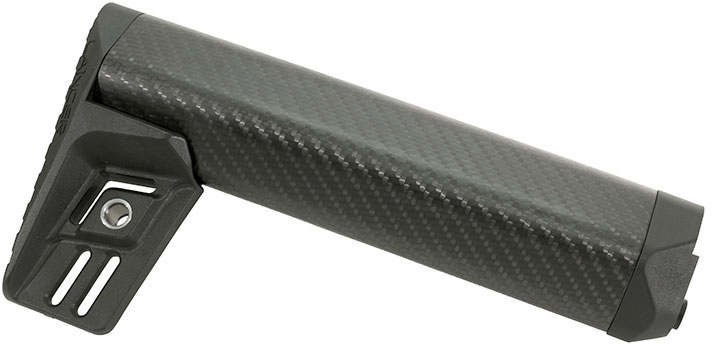 AR stocks can vary drastically in weight, so here are some lightweight options to consider:
- Minimalist adjustable stocks
- Lightweight fixed stocks
- Carbon fiber stocks
These upgrades make your firearm easier to carry by reducing rear-end weight. While most lightweight builds prioritize reducing front-end weight, the stock also plays a role in overall balance. A slightly heavier stock can help offset a lightweight front end, while a minimalist stock further reduces overall weight but may leave the rifle feeling more muzzle-heavy if paired with a heavier barrel or suppressor.
If you opt for a lighter front end/heavier back end, it can help reduce fatigue during extended carry and allow you to shoulder it quicker but may reduce stability a bit for slow, deliberate shots. A heavier front end/lighter back end can help reduce wobble for more stabilized shots but can increase fatigue while carrying and slow down target transitions.
- A balanced rifle with a lightweight front and rear end is best suited for general-purpose rifles by offering a nice blend of stability and portability.
- A rifle with a lightweight front end but heavier stock is best suited for backcountry hunting and home defense because it is easier to carry for longer periods and offers faster target transitions.
- A rifle with a heavier front end and lightweight stock is ideal for benchrest shooting where a bipod or shooting rest supports the front end’s weight.
Bolt Carrier Group (BCG)
This is one of the most misunderstood lightweight upgrades because unlike external components, the BCG directly affects the rifle's operating system. Lightweight carriers frequently require corresponding changes to the gas system and buffer weight to maintain reliable cycling.
- Upgrade to a lightweight BCG for competition rifles.
- Stick with a standard full-mass BCG otherwise.
Unless you're intentionally tuning a competition rifle, a quality full-mass BCG is generally the better option. The same line of thinking applies to AR buffer systems. Swapping to a lighter buffer is an option, but it can alter your rifle’s recoil and reliability if not properly tuned. It’s best to stick to easier upgrades that don’t impact your AR’s entire operating system unless you’re an experienced gunsmith.
Upper Receiver
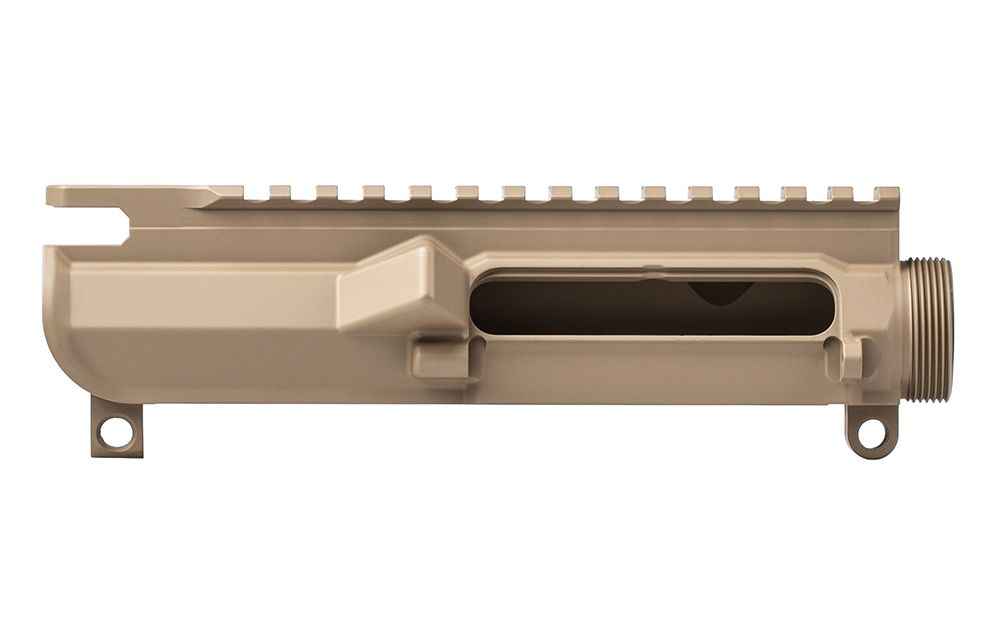 While a large part of your firearm, upgrading to a lightweight AR upper receiver is not much of a priority because most lightweight receivers save only a few ounces while increasing cost. Also, skeletonized designs may also expose more of the rifle's internals to dirt and debris and generally provide diminishing returns compared to lighter barrels or handguards.
However, there are some options to reduce weight, such as:
- Lightweight forged receivers
- Billet lightweight receivers
- Skeletonized receivers
The only obvious thing to note in terms of lightweight builds is to not purchase a complete upper receiver since it includes several components, like the barrel and handguard, that offer meaningful benefits when swapped with lightweight alternatives. Unless it is designated as a lightweight complete upper, includes several parts you want to keep, or its value is too good to pass up, it’s best to purchase all the extras afterwards if you’re aiming for a lightweight build.
Muzzle Devices
Muzzle devices may not weigh much individually, but because they're mounted at the very front of the rifle, even a few additional ounces can noticeably affect how the rifle handles. When selecting a muzzle device, consider both its weight and its intended purpose.
- Flash hiders typically weigh less than comparable muzzle brakes or suppressor mounts while minimizing visible muzzle flash.
- A2 flash hiders are among the lightest options and remain an excellent choice for many general-purpose rifles.
- Compensators and muzzle brakes often weigh slightly more but can reduce muzzle rise and felt recoil, making rapid follow-up shots easier.
- Suppressors add the greatest amount of front-end weight, which can make the rifle feel noticeably more nose-heavy during extended carry or offhand shooting. If minimizing weight is a priority, titanium suppressors can significantly reduce this penalty compared to steel models.
- Suppressor mounts usually add a small amount of permanent weight even when the suppressor isn't attached, though the tradeoff may be worthwhile if you regularly shoot suppressed.
In most cases, ensuring faster, more accurate follow-up shots, reducing muzzle flash, or enabling suppressed shooting when appropriate offer more benefits than shaving weight in this area.
Other Accessories
This should be your last step of a lightweight build, as it’s easier to accessorize your firearm once you have the base platform nailed down. Adding unnecessary gun accessories is the easiest way to weigh down your firearm, so it’s simply about figuring out what you need and what you don’t.
Here are some general tips regarding certain accessories to help you recognize your needs and shave weight where possible:
- Weapon Lights
- An ideal addition for tactical or home-defense ARs
- Not necessary for daytime hunting rifles or competition builds
- Compact lights weigh less and provide plenty of illumination for most tasks. Our Flashlight and Gun Light Guides offer more in-depth explanations for buying the best light for your needs, but 300 lumens is often enough for most rifles.
- Gun Grips
- AR foregrips and hand stops can vary significantly in weight. While there are tons of options under two ounces, some AR grips feature storage compartments, and when filled with small parts and batteries, that weight can quickly increase.
- A lightweight hand stop can provide enough indexing (consistent, natural hand placement) without the bulk of a full vertical grip.
- Polymer accessories generally weigh less than aluminum alternatives.
- Gun Slings
- A sling is one accessory you generally shouldn't skip, especially on a rifle intended to be carried over long distances since the sling supports the rifle's weight while carrying it. Choosing a comfortable sling often provides more practical benefit than saving a few ounces elsewhere.
- However, lightweight quick-detach (QD) swivels, minimal mounting hardware, and avoiding unnecessarily large steel attachment systems can help reduce weight.
- Laser Sights
- Infrared laser sights are essential for tactical operators with night vision, but a laser sight is generally not needed for hunting or sporting rifles.
- Red or green laser sights can be useful for quickly acquiring targets with home-defense AR-15s, but they can also give away your position.
- In most cases, it’s obvious to tell if you need this accessory or not. If you need both a laser and gun light, there are plenty of combo units out there that give you the utility of both with less weight than two individual components.
Shedding Light on Balanced Builds
A lightweight AR isn’t necessarily always better. It’s all about creating a balanced build that meets your needs and making compromises to create a rifle that is comfortable to use, enjoyable to shoot, and designed with your application in mind. Hunting rifles, home-defense ARs, and tactical setups all have different priorities. Once you determine your AR’s main purpose, work towards reducing front-end or rear-end weight based on that purpose. Then, consider what accessories you need to be successful, carefully reviewing each one to ensure it best suits your needs without adding unnecessary bulk.


