 Your Browser is Outdated


Owning a rangefinder gives you a significant advantage in many areas, from hunting and long-range target shooting to playing golf with your friends and colleagues. Specifically, laser rangefinders are the most popular and accurate, especially when the measured distance is less than 1,000 yards. If you’re looking to buy a laser rangefinder or the associated rangefinder accessories, you might focus on yardage and magnification. However, accuracy is often the most important aspect, as this is the biggest factor that affects your shots. In this guide, I discuss how accurate rangefinders are, the kind you need if you’re going hunting, and the advantages of using one vs. using a GPS unit.
How Accurate Are Laser Rangefinders?
Most modern laser rangefinders have pretty high accuracy and can tell you accurate ranges of distant objects at up to 1,000 yards. Generally, they have a margin of error of about 1% or lower when going past 100 yards. Some high-end options, like the Leupold RX-1600i, have an effective range that can accurately tell you the distance within half a yard at up to 500 yards, which is insanely accurate, especially when talking about hunting or long-range shooting. This is because at these distances, adjusting your scope even one click accounts for well over half a yard in distance, so it is a fairly negligible amount of error that shouldn’t throw off your shots.
Now, you might be wondering, how can laser rangefinders get accurate readings? This is because they use — get this — laser beams. They emit a powerful laser light at whatever you are aiming at. Then, the laser reflects back to the rangefinder after hitting your target and is recorded. During this time, a powerful internal clock records the time of flight of for the light from the laser to reflect back, which it converts to yardage using the speed of light. While this is pretty scientific, it’s extremely accurate as the speed of the laser is constant.
Despite all this, there are still a few things that can cause inaccuracies with your laser rangefinder’s readings. For example, the weather can affect the precision, especially at longer distances. The biggest culprits of this are rain and fog, as the moisture in the air throws off the laser and can slightly slow down its speed. Other common issues are the reflectivity and light conditions of your target. Laser rangefinders work best when aiming at reflective targets, such as glass, metal, water, etc. However, a deer or tree at a few hundred yards isn’t as reflective, which is why rangefinders do have a small margin of error. Additionally, using one at night can hamper your accuracy because the laser may not have a clear path to the target.
What Kind of Rangefinder Do You Need For Hunting?
A laser rangefinder is an invaluable tool for hunters, especially those in the Western region of the United States. Even though most hunters take shots at around a maximum distance of 200 yards, knowing the exact distance of the animal allows you to set your scope appropriately and get an accurate shot. This is also particularly useful if you mainly hunt with a bow, as even 10-20 yards in difference can greatly affect your aim and the trajectory of the arrow.
With this in mind, hunters want a rangefinder with excellent durability, like the Vortex Diamondback HD or Vortex Razor HD. These laser rangefinders have rigid ArmorTek scratch-resistant coatings that protect the lenses from dirt and oil, making them excellent in the changing weather conditions hunters often find themselves in. This ensures you have a reliable, functioning rangefinder after hiking to your favorite hunting spot, letting you get ready for the shot.
Aside from durability, you also want a rangefinder that provides extremely accurate measurements of at least 500 yards. While it is nice to have a high-power rangefinder that can gauge distances above 1,000 yards, this isn’t really necessary for hunting. Instead, you want something that is going to give you precise readings at medium to long distances, as this lets you adjust your scope properly.
You can even opt for the high-tech route of getting a laser rangefinder that uses Bluetooth technology to connect directly to your smartphone, or in some cases, your rifle scope. For example, the SIG SAUER OPMOD KILO1400BDX is an excellent option that works extremely well if you also have a SIG SAUER BDX rifle scope. The SIG SAUER BDX family of products has an associated app on your smartphone that lets you set up ballistic profiles for specific weapons and the exact ammo you use, helping you keep track. Then, the rangefinder connects directly to the rifle scope and shows you an automatic illuminated holdover dot to help you adjust your shot for the proper distance.
Rangefinder vs. GPS Unit
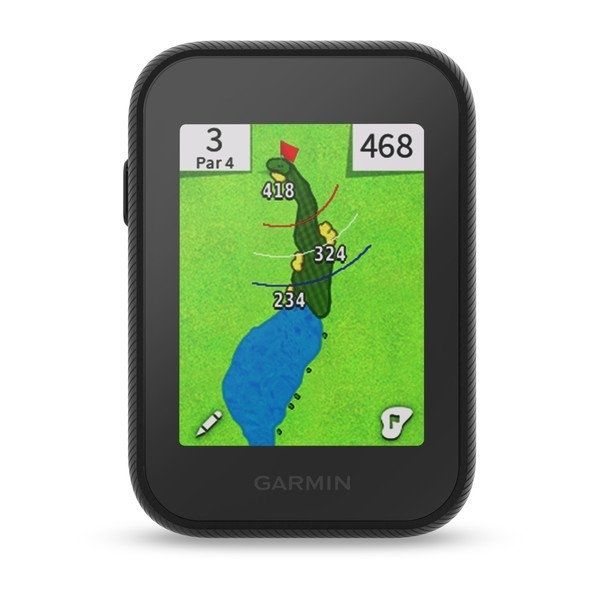 Rangefinders are extremely useful, but some people think a golf GPS unit might be a better investment. There are pros and cons to both, although a rangefinder is almost always a better option when it comes to hunting. However, for golfers, the choice is a little bit more nuanced. Since golfing takes place on a set course, a GPS unit can be pretty useful as you don’t need direct line of sight, which is particularly useful if the hole you are playing has a large bend in it or goes over a hill. While a golf rangefinder can give you accurate measurements of the distance of each shot or how far away from the hole you are, it only works well if you have a clear line of vision to the specific area.
Another advantage of using a GPS device, like the Garmin Approach G30, is that you can plot multiple points on each hole or the entire golf course. For example, you can track each shot with the GPS, allowing you to see the distance of each stroke as you play. This can help you adjust your swing, tune your next shot, and generally keep track of how far from the fairway you are as you play. It can even give you better directions to navigate the course in your golf cart.
Shop the Best Rangefinders & Accessories Today!
All in all, modern, high-quality laser rangefinders are extremely accurate. Whether you are looking to upgrade your hunting gear or improve your handicap in golf, you can’t go wrong with a reliable rangefinder. Some of the top laser rangefinder brands you should check out are Bushnell, Leica, and Leupold, as well as Vortex and SIG SAUER. As you’re preparing for the hunting season or trying to sight in your new rifle scope, we have tons of in-stock ammo, trail cameras, game calls, and hunting clothes. We even have plenty of golf equipment available if that’s more your style.


