 Your Browser is Outdated


A dedicated thermal scope and clip-on thermal scope often fall in the same price range, which leaves many hunters wondering if a thermal clip-on is worth the money. Thermal imaging optics in general are certainly worth the cost, providing hunters with a 24/7 sighting system that can identify prey in complete darkness and through thick fog, smoke, and other obscurants. However, such an investment requires careful consideration to ensure you choose the right optic for your needs and hunting style. In this guide, we’ll break down the differences between standalone thermal scopes and clip-on thermals to ensure you get the most bang for your buck.
What Is a Thermal Clip-On Scope?
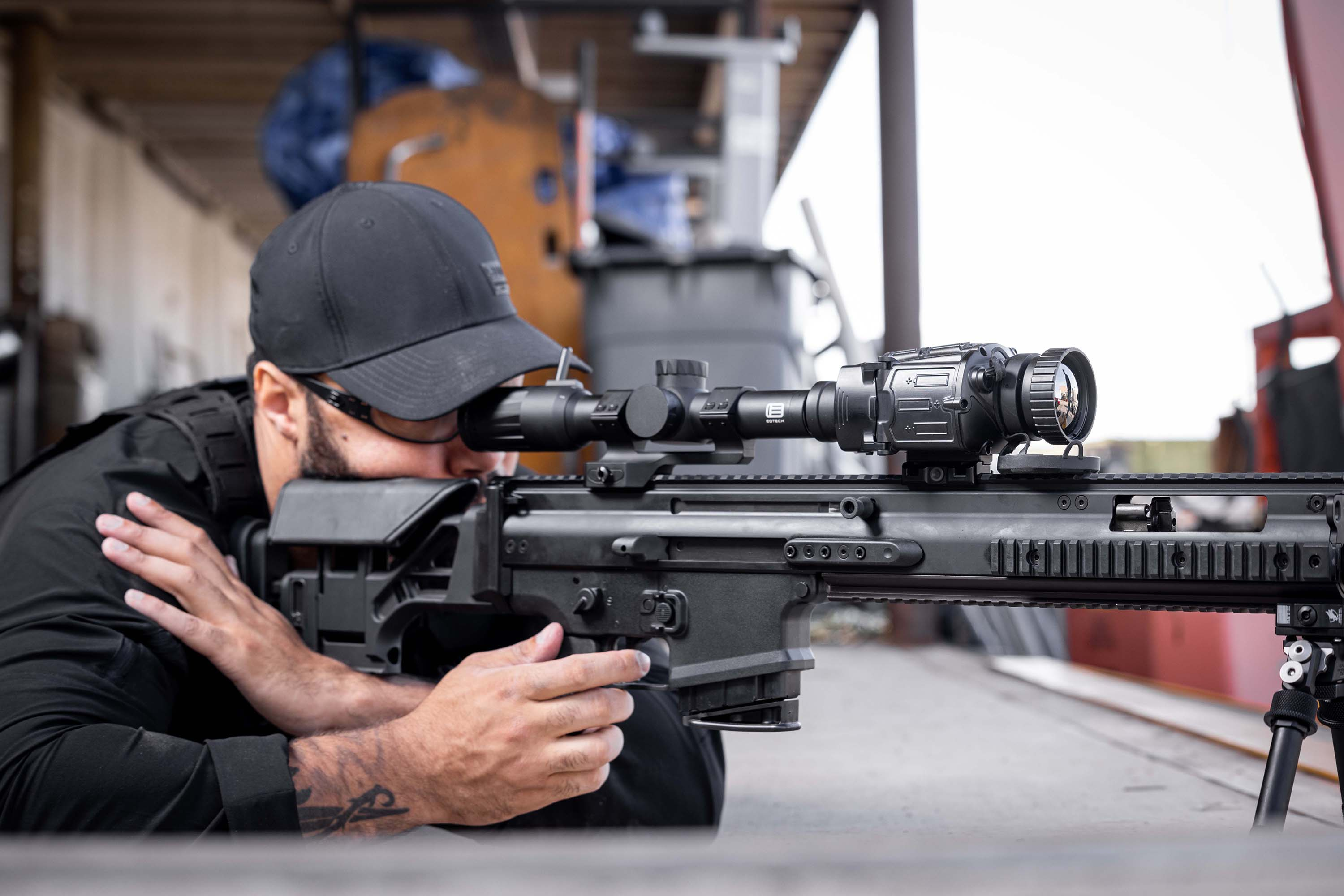
A clip-on thermal is an optic that you attach to your existing daytime rifle scope by rail-mounting it in front of your scope and clamping it onto the objective lens. This allows you to use the reticle, magnification, and features of the scope you’re most familiar with while adding thermal imaging capabilities.
What Is a Dedicated Thermal Scope?
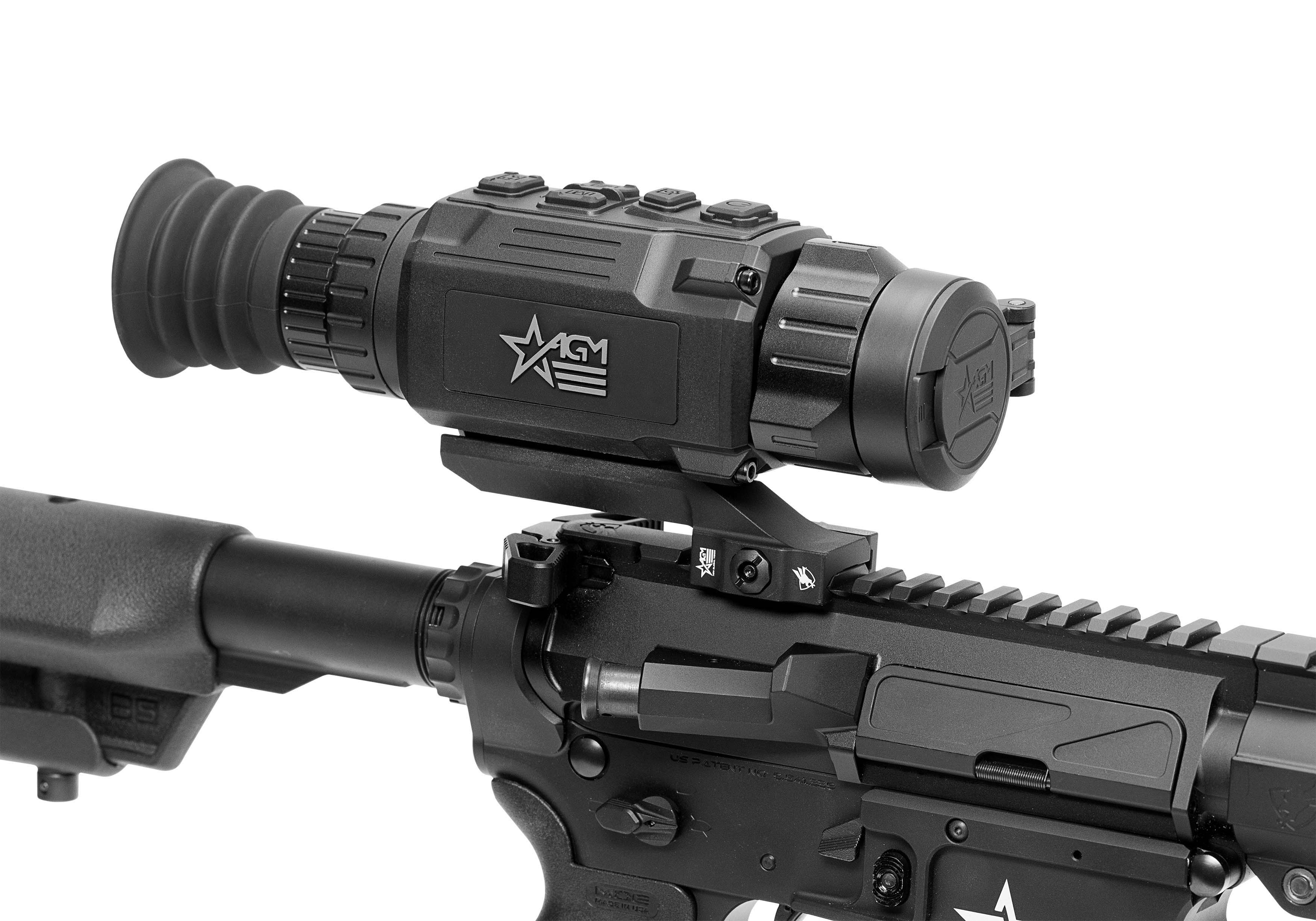
A traditional thermal rifle scope is a standalone optic that replaces your daytime glass entirely, operating as its own independent platform. These types of thermal optics come with their own reticles, displays, features, and controls, introducing an entirely new sighting system to your rifle.
Clip-On Thermals vs. Dedicated Thermal Scopes at a Glance
Before we dive into specifics, here’s a quick side-by-side breakdown to help you understand the main benefits and disadvantages of both optics:
| Feature | Thermal Clip-On | Dedicated Thermal Scope |
|---|---|---|
| How it mounts | Attaches in front of an existing daytime scope | Replaces the daytime scope |
| Daytime use | Remove the clip-on and use your normal scope | Requires a separate daytime optic for conventional viewing |
| Day/night versatility | Excellent — one rifle can serve both roles | Limited — primarily a dedicated thermal setup |
| Zero | Generally preserves your daytime scope's zero when properly mounted | Requires its own zero |
| Reticle | Uses your familiar daytime reticle | Uses a built-in digital thermal reticle |
| Magnification | Uses the magnification of your compatible daytime scope, within the clip-on's rated range | Uses its own optical/base magnification and digital zoom |
| Thermal features | Varies; some offer recording, app connectivity and other features, but often fewer than similarly priced dedicated thermals | Often more extensive — recording, digital zoom, PIP, ballistic tools, LRF, etc., depending on model |
| Weight & balance | Adds weight to the front of your existing scope | Integrated optic; weight distribution varies by model |
| Multiple rifles | Can be convenient to move between compatible rifles | Can also be moved, but typically requires re-zeroing or profile changes |
| Cost | Can be more economical if you already own a quality daytime scope | May offer more thermal functionality for the money, but you'll need a separate daytime optic for conventional use |
| Best for | Hunters who want to preserve a quality daytime setup and add thermal capability | Hunters who want a dedicated, feature-rich thermal setup |
| Biggest advantage | Versatility and preserving your existing optic | Simplicity and purpose-built thermal functionality |
| Biggest drawback | Adds weight and another component to the rifle; may sacrifice some features | Gives up your daytime scope and may require a separate optic for daytime use |
Pros & Cons of Thermal Clip-On Scopes
Pros
- Keep Your Existing Scope: You get to hunt with the same rifle scope that’s filled your freezer in the past, keeping its magnification, reticle, and general function. This means that you don’t need to learn an entirely new optical system to add thermal imaging capabilities to your scope.
- Retain Your Reticle: Use the same holdovers and reticle you’ve trained and hunted with in the past without needing to learn an entirely new sighting system or adjusting your aiming habits.
- Same Rifle, More Utility: You can seamlessly transition from day to night hunting without requiring an additional mounting and zeroing session with a dedicated optic. One rifle in your pack can provide pristine views by day and thermal imaging at night.
- Can Be Used with Multiple Rifles: Adding to the point above, you can easily swap a thermal clip-on to another rifle in your collection, which creates a more versatile hunting loadout compared to having a rifle dedicated for thermal use only.
- Useful for Day/Night Hunting in Regulated Areas: Depending on the state, jurisdiction, and hunting grounds, some laws forbid the use of thermal optics when hunting certain prey or even within specific areas of the same grounds. You can quickly remove or attach a clip-on scope as needed to abide by these rules, adjusting to the game you’re hunting or area you’re entering. However, please note that the clip-on itself does not make thermal use legal where thermal equipment is prohibited.
- Can Be Used as Handheld Thermal Viewers: While some dedicated thermal scopes can also serve as thermal monoculars, most are too heavy and bulky for efficient observation. Most clip-ons offer this functionality out of the box, but some may require an additional eyepiece for handheld use.
Cons
- Fewer Features for the Same Price: Especially when considering optics in the same price range, a dedicated thermal scope often comes with more features than a clip-on, such as onboard video recording, built-in laser rangefinders and ballistic calculators, multiple weapon profiles, and smartphone integration. That’s not to say a clip-on can’t offer these features, but you’ll pay a lot more for them compared to a dedicated thermal optic.
- Clip-On Performance Is Limited by Daytime Scope: With a dedicated thermal, the optical system is purpose-built around the sensor, but a clip-on scope relies on a separate optic to create the thermal image you see. Clip-ons are designed to operate within a particular range of magnifications from the daytime optic, so higher magnifications may distort image quality.
- Adds More Weight and Length: The clip-on sits in front of your daytime scope, adding front-end weight and taking up more rail space than a dedicated thermal optic. While clip-ons aren’t generally heavy, the slight weight shift can impact balance and handling.
- Requires Precise Mounting: Objective lens diameter, rail space, and eye relief need to be considered before purchasing a clip-on to ensure it will properly align with your daytime scope.
Best Use Cases for Thermal Clip-on Scopes
Thermal clip-ons are particularly well suited to hunters and shooters who want to add thermal capability without replacing their existing daytime optic. Rather than treating the clip-on as a standalone sight, think of it as an extension of a rifle setup you already know and trust.
- You Regularly Shoot Day and Night: If you use the same rifle during daylight and nighttime hunts, a clip-on provides an easy way to switch between conventional and thermal viewing. You can keep your daytime scope mounted for normal use and add the thermal when conditions or a particular hunt call for it.
- You Already Have a High-Quality Rifle Scope: A thermal clip-on is most beneficial to those who currently own a reliable daytime scope they have mastered. Otherwise, you need to buy both a regular rifle scope and thermal clip-on, which is much more expensive than buying a dedicated thermal rifle scope.
- You Want a Familiar Sight Picture: For those averse to adapting to a new optical system, clip-ons are the better choice because you maintain your scope’s reticle, features, and operation.
Pros & Cons of Dedicated Thermal Rifle Scopes
Pros:
- Purpose-Built Thermal System: The thermal sensor, lens, display, and controls are designed to work together as one optic. This can provide a more straightforward and optimized thermal viewing experience than pairing a thermal clip-on with a daytime scope from a completely different brand.
- More Features for the Price: When comparing thermal optics at a similar price point, a dedicated thermal scope offers more features like onboard video recording and storage, picture-in-picture (PiP) mode, integrated laser rangefinders and ballistic calculators, and multiple rifle profiles.
- Flexible Reticle Options: Most thermal scopes offer some form of reticle customization, providing numerous colors and configurations to best match your exact needs.
- Guaranteed Long-Range Thermal Performance: Depending on the model, a dedicated thermal scope will provide the best image possible at its highest magnification level, while a daytime scope’s performance operates within the clip-on’s constraints.
Cons
- Requires a Separate Daytime Optic: While you can certainly use a thermal scope for daytime hunting, it only displays differences in infrared radiation and heat, so you lose visual information such as color, texture, and fine features. Also, sunlight heats up your surroundings during the day, which can decrease thermal contrast compared to night viewing.
- More Expensive to Build a Complete Day/Night Setup: A dedicated thermal may provide more thermal functionality for its price, but adding a quality daytime scope to the system can make the total investment substantially higher.
- Often Heavier and Bulkier: While more balanced than a rifle scope plus clip-on, a dedicated thermal scope is usually heavier and bulkier than a standard daytime scope and clip-on.
- More Difficult to Switch Rifles: Dedicated thermals often offer multiple weapon profiles that can retain zero across platforms, but even after you zero it for multiple firearms, the mounting process is more tedious and time-consuming than with a clip-on thermal.
Best Use Cases for Dedicated Thermal Scopes
A dedicated thermal scope makes the most sense for hunters and shooters who want thermal imaging to be the primary sighting system on their rifle.
- You Mostly Hunt at Night: If most of your hunting takes place after dark, there may be little reason to retain a conventional daytime scope on the rifle. A dedicated thermal provides a purpose-built setup without requiring a separate optic to be used as the foundation.
- You Want a Dedicated Thermal Setup: A dedicated thermal is better when you want your rifle configured specifically for thermal shooting. The scope, mount, reticle, magnification, and thermal controls can all be selected around that purpose rather than adapting an existing daytime setup. You also get more features per dollar.
- You Want to Use Thermal at Long Distances: A dedicated thermal is designed with its own capabilities in mind, meaning that it delivers its best performance at the highest magnification level. You don’t need to consider the limitations of a daytime optic when selecting a thermal scope for long-range shooting.
Find the Perfect Thermal Optic for Your Next Hunt
Now that you know the differences between clip-on thermal scopes and dedicated thermal imaging optics, you can make an informed decision to optimize your setup. OpticsPlanet carries the best thermal scopes and clip-ons from top-rated brands like Pulsar, ATN, and AGM Global Vision. Browse our selection today and find the ideal complement for your daytime glass or a dedicated thermal rifle optic designed with your needs and budget in mind.