 Your Browser is Outdated


9mm Luger is by far the most popular pistol caliber around the globe, adopted by several militaries and law enforcement agencies worldwide. 9mm ammo grew its roots in 1901 when Georg Luger sought to create a more powerful, military-capable cartridge over his previous designs. While that design stuck with most of the world, Lt. Col. John Cooper desired another option for his treasured 1911 pistol—something that would deliver more muzzle velocity at longer ranges than .45 ACP and improved penetration and expansion over 9mm. Nearly 80 years after 9mm’s inception, 10mm Auto ammunition was born.
If you’re wondering how one measly millimeter of cartridge diameter can impact a caliber, it’s a heck of a lot more than you think. In fact, 10mm Auto ammo has completely different use cases and compatible handgun models, as you cannot safely shoot 10mm Auto from a 9mm pistol and vice versa. In this guide, we’ll compare calibers at a glance and break down the pros and cons of each to help you pick out the perfect round for your needs.
9mm vs. 10mm Auto Caliber Comparison
Before diving into specifics, here is a clean caliber comparison chart to help you grasp the basic differences between each cartridge:
| Specification | 9mm Luger | 10mm Auto |
|---|---|---|
| Bullet Diameter | 0.355 in (9.01 mm) | 0.400 in (10.17 mm) |
| Case Length | 0.754 in | 0.992 in |
| Overall Length | 1.169 in | 1.260 in |
| Typical Bullet Weight | 115–147 gr | 165–180 gr |
| Muzzle Velocity | 1,100–1,200 fps | 1,150–1,300 fps |
| Muzzle Energy | 350–500 ft-lb | 500–750+ ft-lb |
| Recoil (Perceived) | Low to moderate | Moderate to high |
| Magazine Capacity | Higher | Lower |
| Penetration | Moderate | Deep |
| Expansion (JHP) | Consistent with modern loads | Strong, often deeper penetration |
| Barrier Performance | Adequate | Strong (auto glass, barriers) |
| Overpenetration Risk | Moderate | Higher |
| Ammo Cost | Lower | Higher |
| Availability | Very high | Moderate |
| Common Use Cases | CCW, duty, home defense | Duty, backcountry defense, hunting backup |
Pros & Cons of 9mm Ammo
Here is a breakdown of the benefits and disadvantages of 9mm ammo compared to 10mm Auto:
Advantages of 9mm Ammo
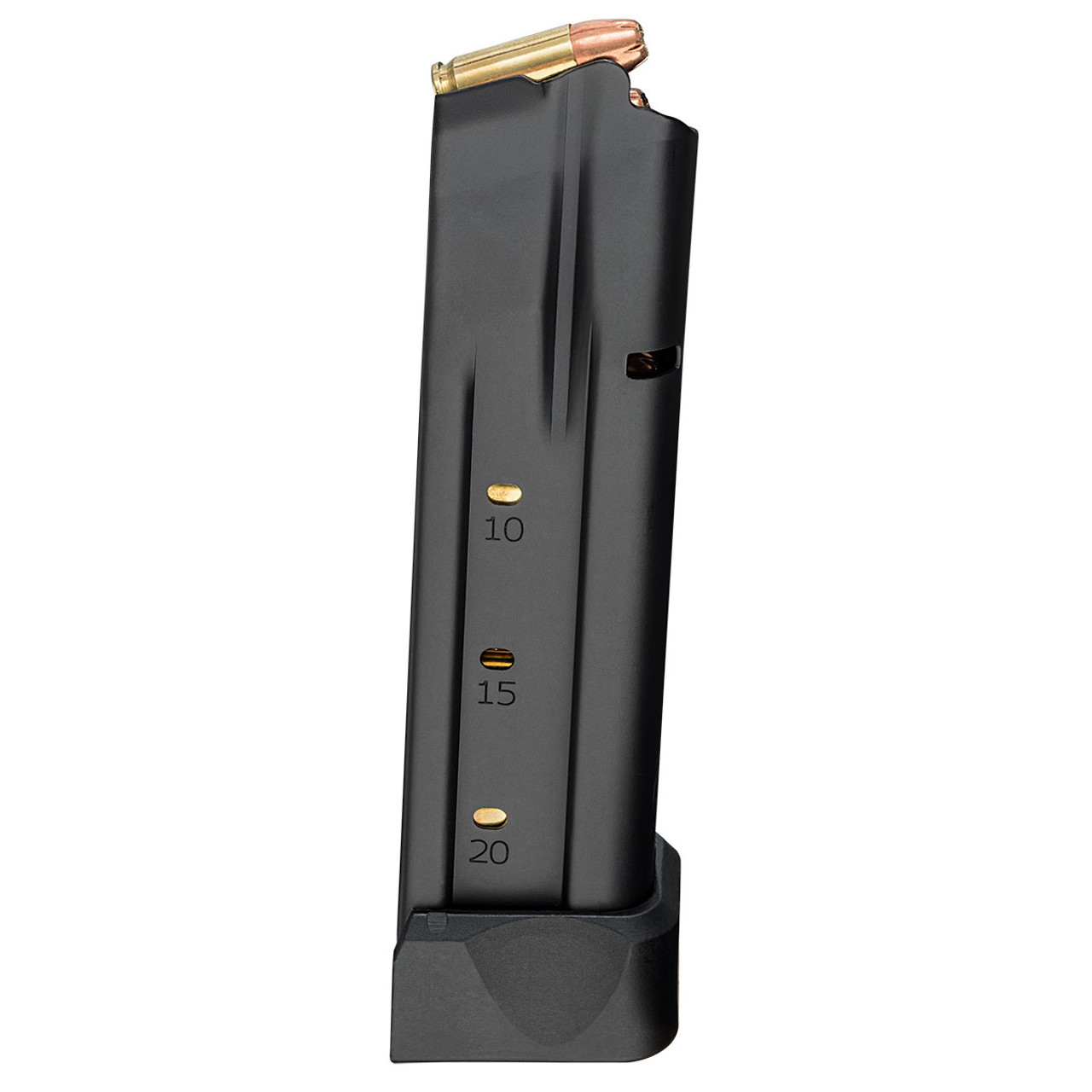 Less Recoil: One reason 9mm is so popular for concealed carry is that it has incredibly manageable recoil while delivering reliable performance for self-defense, offering much less felt recoil than 10mm.
- Larger Magazine Capacity: On average, 9mm pistols offer a larger ammo capacity than 10mm Auto, with 15-17 rounds being the norm. However, you can find 9mm magazines with 30+ round capacities (where permitted by law).
- Lower Cost: Due to its popularity, 9mm ammo is produced at a much higher rate than 10mm. You can find 9mm ammo as low as 30 cents per round but struggle to find 10mm Auto for anything less than 50 cents per round.
- Wider Availability: Tied to the above point, 9mm ammo offers more options in terms of bullet types, weights, and specialized lines, providing a broader pool of choices to suit more specific applications. For example, 9mm subsonic ammo is much easier to come by than subsonic 10mm Auto rounds.
- Expanded Firearm Compatibility: Beyond more handgun options, there are firearms such as the AR9 and pistol caliber carbines (PCC) that can shoot 9mm ammo, allowing you to adopt different platforms that offer more stability and accessory options.
- Better Suits Concealed Carry: While there are plenty of 10mm advocates who will disagree here, 9mm Luger has several advantages when it comes to CCW. For starters, most 9mm handguns will be lighter. The recoil is also easier to control, and you’ll have more rounds in the chamber.
Disadvantages of 9mm Ammo:
- Less Raw Power: At a basic level, 10mm Auto outperforms 9mm when it comes to stopping power. However, there are countless specialized defensive 9mm loads that close this gap, which means you’re guaranteed to find a 9mm cartridge that you can count on for personal protection.
- Reduced Penetration: This can be a pro or con depending on how you look at it. 10mm Auto pistols fire a heavier bullet at higher speeds, which can penetrate thick barriers. This is ideal for certain duty or hunting scenarios, but you want to minimize overpenetration for concealed carry and home defense, which is where 9mm Luger shines.
- Not as Reliable for Hunting & Wildlife Threats: 9mm is usually restricted to only small game and varmints where permitted. While possible, it is not ideal to defend yourself from bears and other thick-skinned threats and predators with 9mm Luger.
Pros & Cons of 10mm Auto Ammo
Here is a breakdown of the benefits and disadvantages of 10mm Auto ammo compared to 9mm Luger:
Advantages of 10mm Ammo:
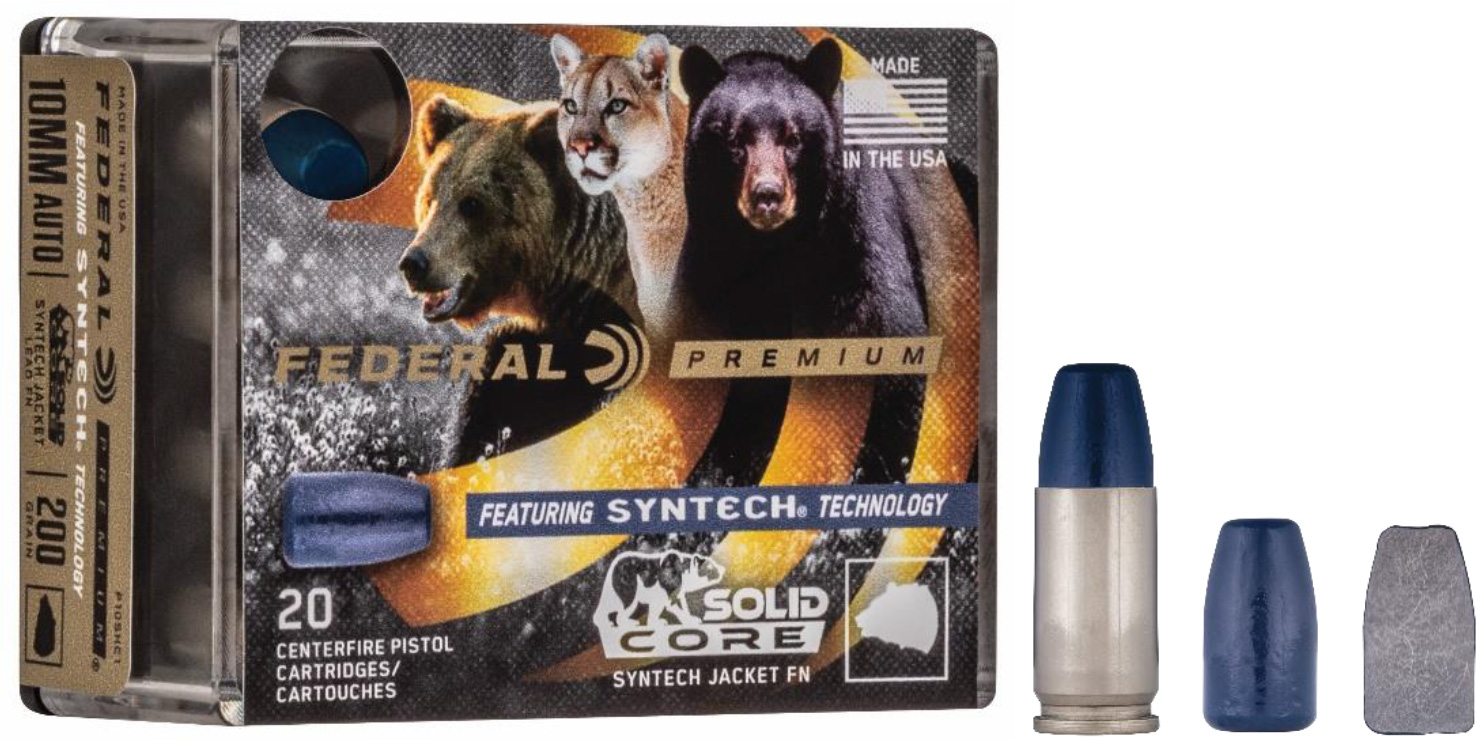 Greater Terminal Performance: Larger bullet + higher muzzle velocity and energy = more stopping power. In short, 10mm Auto delivers larger wound channels and transfers more energy to targets than standard 9mm rounds. As mentioned earlier, modern 9mm hollow points compete well with the average 10mm round in this aspect, but you can’t deny the raw data.
- Improved Penetration: While this can be a drawback in defense scenarios where overpenetration is a concern, such as in an apartment complex, it is a benefit in some cases. For example, you may need to penetrate barriers to hit a target on duty or to pierce the thick hide of an animal.
- Backcountry Defense & Hunting: Unlike 9mm ammunition, 10mm Auto is an excellent bear defense cartridge. Overpenetration is not much of a concern in the wilderness, and you need all of that you can get against a snarling bear posing a threat to your safety. For semi-auto handguns, 10mm is the preferred choice for bear defense and as a backup sidearm for hunting.
Disadvantages of 10mm Ammo:
- Higher Recoil: Due to its sheer power, 10mm ammo provides more felt recoil, making it less ideal for those who struggle with controlling strong kickback and desire easier follow-up shots. You can mitigate this through training and adding recoil-reducing accessories like muzzle brakes and enhanced grips to your firearm.
- Lower Magazine Capacity: The average 10mm Auto magazine maxes out at 15 rounds and is much lower with compact models. While even an 8-round magazine should be enough for self-defense with proper training, it is a massive downside to consider if you struggle adapting your aim to the strong recoil and can’t hit accurate follow-up shots on target.
- More Expensive: On average, you can expect to pay at least 20 cents more per round for 10mm ammo compared to 9mm Luger, and that gap can quickly expand as you get into specialized loads. This makes target practice pretty expensive, since you’ll need plenty of it to master the strong recoil of this round.
- Slimmer Selection: Again, 9mm’s popularity makes it more fruitful for manufacturers to produce a wide array of cartridges for it. While you can still find subsonic 10mm ammo and loads designed for special applications, your options are much thinner than with 9mm ammo.
- Limited Firearm Ecosystem: 10mm Auto is mostly used with full-size handguns, especially 1911 pistols. While there are compact carry guns chambered in 10mm, they are much less common than 9mm compact handguns. 9mm PCCs are abundant, but 10mm PCCs are extremely rare.
Like Comparing Apples to Oranges
One small millimeter for diameter makes one massive difference in usage. Hopefully, you now understand that you can’t exactly compare 9mm and 10mm ammo for specific applications like concealed carry or wildlife defense—only for duty use. If you want more power to penetrate barriers or need to defend yourself against bears and other large threats in the wild with a semi-auto handgun, go with 10mm Auto. If you want an incredibly reliable concealed carry round that is available for both pistols and AR9 rifles, 9mm Luger is the best ammo choice for you. Once you decide, check out our full selection of ammo for sale to stock up and save big on a massive variety of cartridges for nearly every caliber.


