 Your Browser is Outdated


When it comes to upgrading a pistol, the first thing most people go for is a new pistol slide and a red dot sight. These are easy upgrades that immediately give you a solid boost in accuracy and functionality. However, if you’re looking to take your shooting to the next level, one of the best components to replace on a factory pistol is the trigger. Swapping to a new pistol trigger has a ton of benefits depending on the type that you choose. If you’re thinking about making some upgrades to your concealed carry or even competition gun, here is what you should know about pistol triggers to help you make the best choices.
What Are the Different Types of Pistol Triggers?
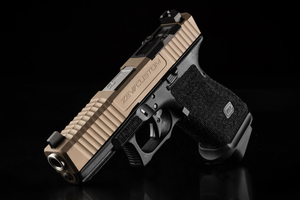 There are tons of different pistol trigger styles, but we’re only going to be talking about a few of them here, as they are the most common when it comes to semi-automatic pistols. Keep in mind, when you’re replacing your pistol trigger, the replacement must match the type of the factory trigger, as it affects how the pistol fits and functions. These pistol triggers are:
- Single-Action Triggers: Most commonly found in older revolvers, it is still popular today in many 1911-style pistols. This type of trigger is extremely simple and only has a single action: release the hammer or striker. It has the fewest moving parts, so this pistol trigger is simple to clean and replace.
- Double-Action Only: A double action trigger both cocks the hammer and releases it, which you can find on most revolvers. However, a double action only trigger does not allow you to manually cock the hammer. The entire process happens when you pull the trigger, and it is common on smaller semi-automatic pistols.
- Striker-Fired Triggers: The most common modern trigger. This is the type of trigger used by Glock, SIG SAUER, FN, and more of the top pistol manufacturers in the world. There is no external hammer or striker, only an internal firing pin. The firing pin is partially cocked when you chamber a round and after each shot. The primary benefit of this type is that each trigger pull is mechanically the exact same with a precise pull weight requirement that doesn’t change.
Among the different types of pistol triggers, you can also encounter single-stage triggers and two-stage triggers, although this distinction is more commonly found with rifle triggers. A single-stage trigger has a smooth, consistent pull until the break. A two-stage trigger has two different stages of a trigger pull. The first is generally heavier and leads to a sort of plateau where you can hold the trigger and rest. Then, the second stage requires very little force for the trigger to break and fire a round, which is extremely useful for precision shooters. For more information, check out our guide Single-Stage vs. Two-Stage Triggers for AR15s.
What’s Better, a Flat or Curved Trigger?
Aside from the type of trigger your pistol has, one of the biggest considerations in a replacement is the shape of your trigger. This comes down to two main shapes: curved and flat. A curved trigger is the traditional style that is still the most common on firearms, from rifles and shotguns to pistols. The curved trigger often feels more natural to shooters, as it curves with the finger and allows for a comfortable fit.
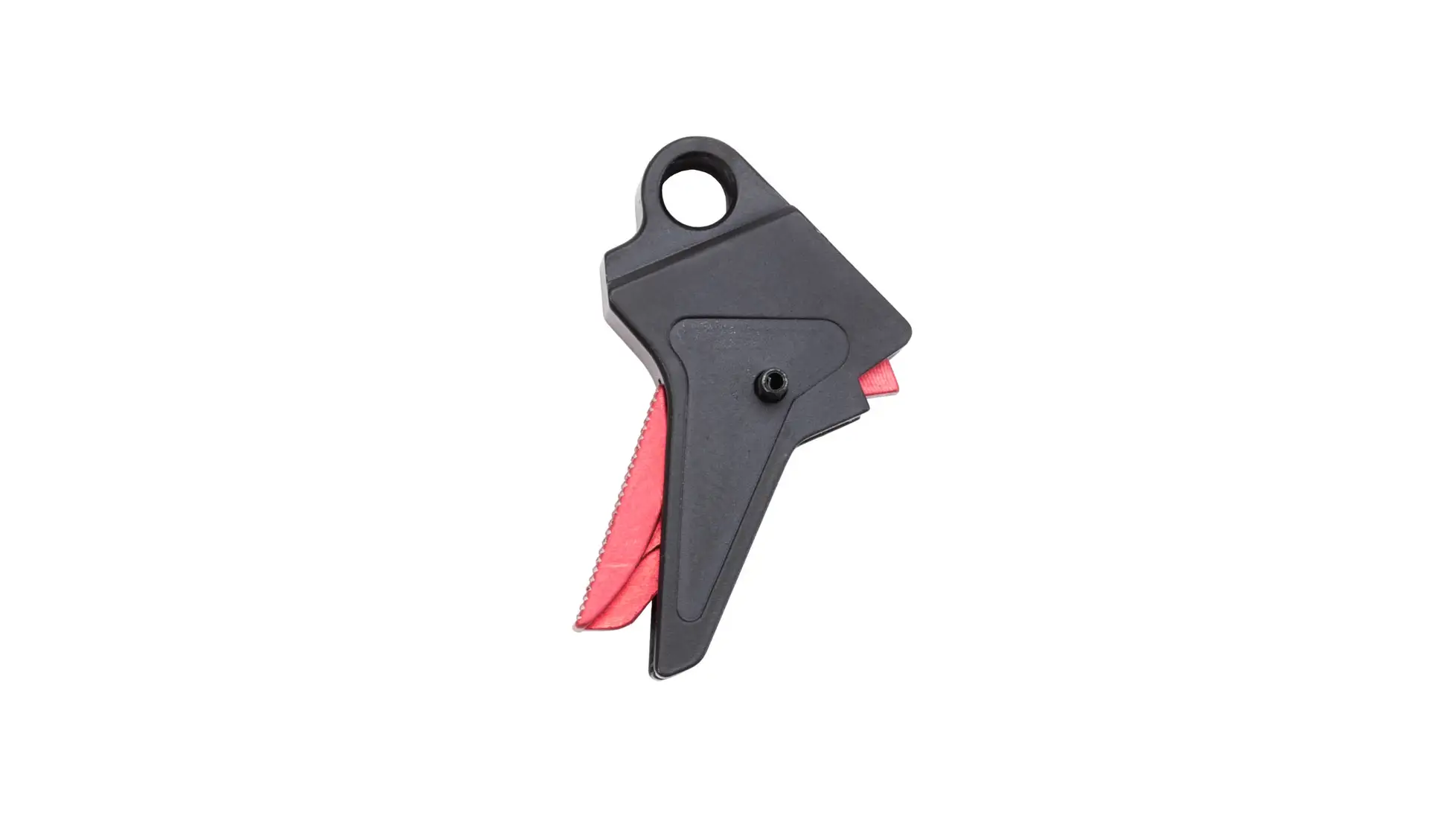 On the other hand, many people are embracing flat triggers, especially for tactical firearms and competition guns. This is because when you are trying to get the best performance possible out of shooting, a flat trigger often gives you more control over the firearm. Proper shooting technique requires you to place the front pad of your finger evenly on the trigger. With a curved trigger, you are more likely to place your finger farther across the trigger, resulting in pulled shots, which is where your bullets are “pulled” away from the center.
One thing to keep in mind when it comes to trigger shape is that it really comes down to what you feel more comfortable with. I recommend trying both types so that you can decide which one works best for you in terms of accuracy, comfortability, and shot placement. Also, see if the width of the pistol trigger affects how you shoot. Some triggers have more bulk than others, which can affect how you aim and shoot.
What to Look for When Choosing a Pistol Trigger?
When upgrading your trigger, the best place to start is by deciding what you want to achieve with the new trigger. For example, are you looking to improve your speed and accuracy in shooting competitions, or do you want a low trigger pull and smooth draw for an EDC firearm to protect yourself? Once you have narrowed down the primary reason, you can start to look at the different triggers available for your firearm.
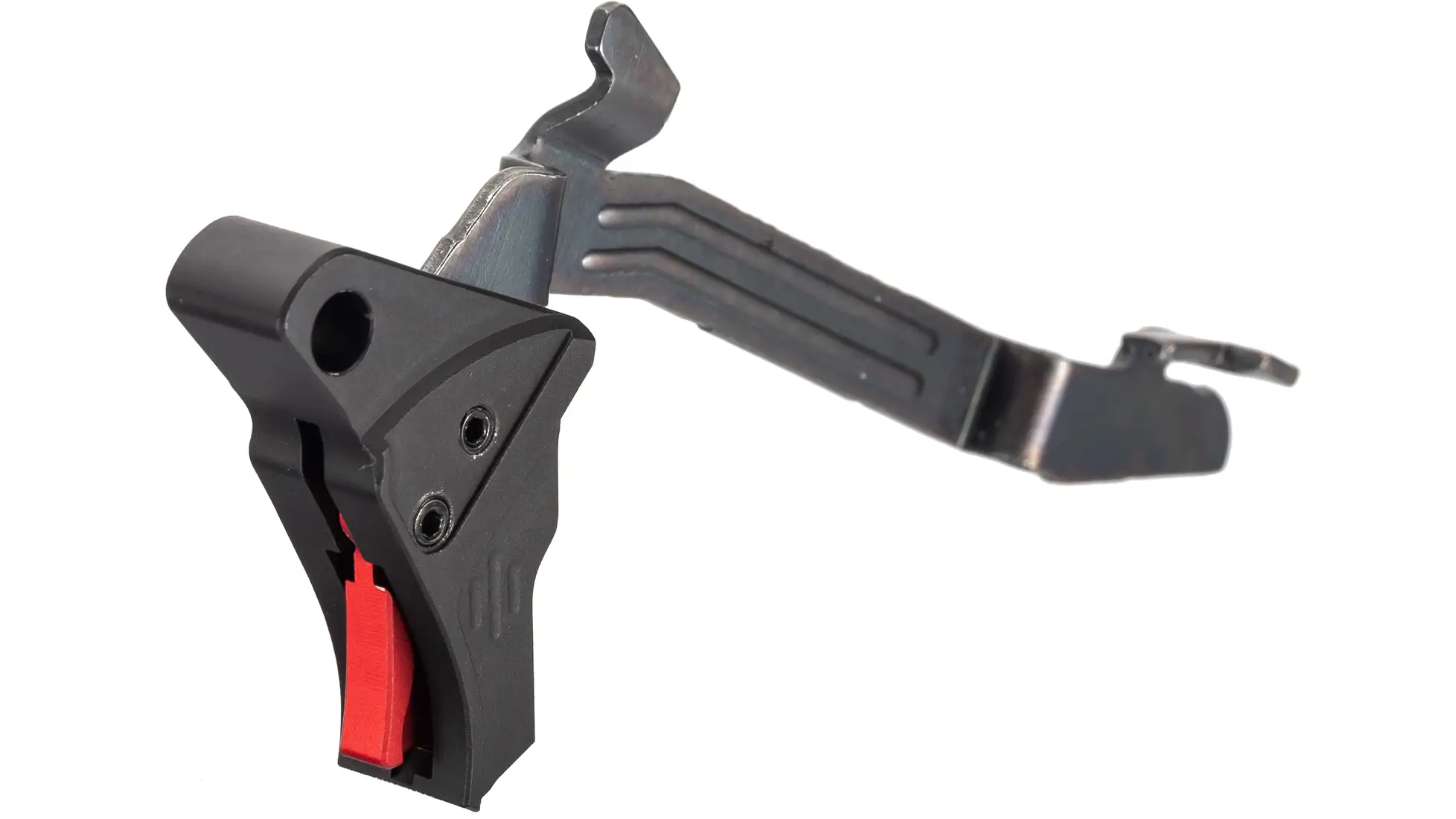 For starters, if you’re upgrading a Glock, you are probably aware of their signature “double trigger” system, known as their “Safe Action” trigger, which functions as a sort of safety on the firearm. In this case, most replacements still have this feature but offer a lot of customizability. For example, there are performance triggers that drop the pull weight from the standard 4.5-5.5 lbs to as low as 2.5 lbs. This can be a more than 50% reduction in trigger weight, meaning you use far less energy to pull the trigger and fire a round, enhancing your shooting speed.
Another thing to look for when trigger shopping is the reset distance of the trigger. This refers to how far forward the trigger must travel after a round is fired to reset, allowing you to fire it again. Many factory pistols have a longer reset as they aren’t exactly designed to be fired quickly, even though they are capable of it. A shorter reset is particularly useful for shooting competitions, which is why pistol triggers, like the Timney Triggers Alpha Glock Competition Trigger, upgrade the standard trigger bar for a shorter reset. While not as applicable for pistols, unless you have an AR pistol, an FRT Trigger is also an extremely popular modern option. A forced reset trigger (FRT) is a device that forces the trigger to reset after you fire, allowing you to shoot extremely quickly.
Finally, look for a trigger that matches your style and comfort. As mentioned above, there are pros and cons to each trigger shape, so choose one that matches how you like to shoot. Then, check out the different colors and materials available. Pistol triggers are available in a wide variety of color options to match the scheme of your firearm, including standard black and Flat Dark Earth, as well as blue, red, yellow, and more. As for material, polymer triggers are popular, especially for Glocks, but there are also steel and other options available for a shinier, more robust look.
Pull the Trigger On Some New Parts!
Here at OpticsPlanet we stock everything you need to fully revamp all your favorite firearms. From stocking up on ammo to getting new outdoor gear for your next hunting or camping trip, we have it all. And if you have any questions, check out our massive collection of How-To Guides or Contact Us.

