 Your Browser is Outdated


Among the countless ways to upgrade your firearm, nothing ramps up the fun like faster firepower. In today’s market, there’s a few different ways to achieve that: a Forced Reset Trigger, binary trigger, or Forced Reset Safety (FRS). This guide will break down what each component is, the advantages and disadvantages of each in comparison, and help you pick the best gun part to achieve a faster fire rate.
Please note that at the time of this guide’s publishing, these items are legal to own and operate at a federal level. However, state-level laws may restrict the purchase and use of these devices. Please consult your local and state laws before attempting to purchase these parts.
What Is a Binary Trigger?

A binary trigger, also known as an echo trigger or double-tap trigger, is an AR trigger upgrade that fires one shot on pull and a second during the release phase. On a standard rifle trigger, the reset process prepares the trigger for your next shot, but with a binary trigger, the forward movement itself initiates another firing event. Since the firing stages occur during two separate trigger functions, a firearm with a binary trigger is still classified as semi-automatic.
You can read our guide on AR-15 Binary Triggers for a more in-depth explanation, but basically, a standard gun trigger uses one sear to operate while a binary trigger uses two sears. A sear is the internal gun part that holds the hammer back to prevent firing until the trigger is pulled. On regular triggers, when you apply enough pressure, the sear engages the hammer which strikes the firing pin, resulting in a single shot. Afterwards, the disconnector attached to the sear prevents the hammer from releasing until you pull the trigger again.
For binary triggers, the first sear behaves the same as a standard trigger’s, but the second sear grabs the hammer before the trigger is released and engages the hammer again once it is, firing the next round. Binary triggers typically include three firing modes: Safety, Semi-Automatic (standard), and Binary. That means you can still use a binary trigger to only fire one round on pull like a normal trigger, allowing you to adjust to the situation as needed.
What Is a Forced Reset Trigger?
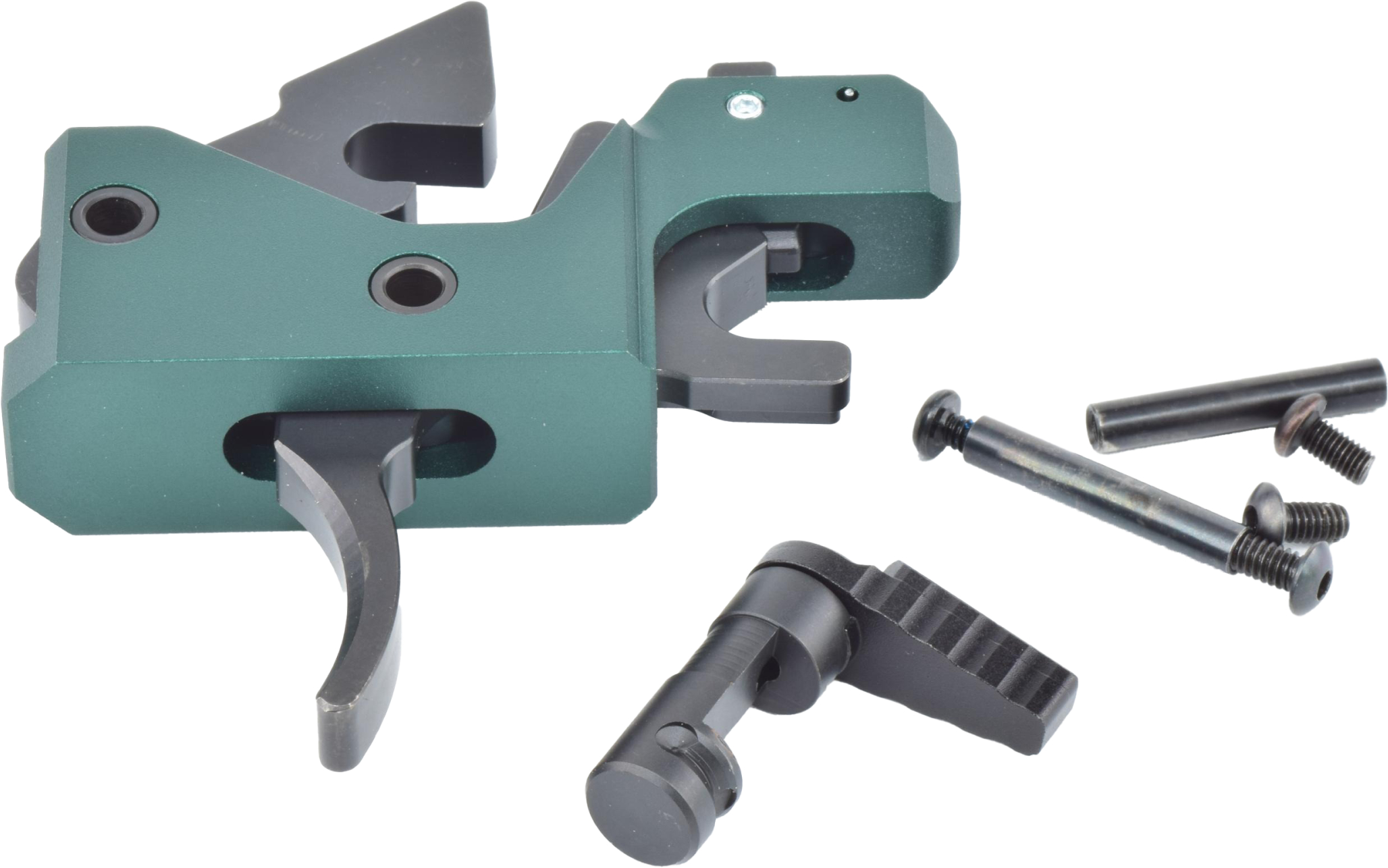
Unlike a binary trigger, forced reset triggers fire only one round when pulled. They don’t fire again upon release. The magic happens when the bolt carrier group cycles and mechanically forces the trigger forward, greatly accelerating the trigger’s reset time. The core distinction between a forced reset trigger and fully automatic firearm is that you can’t just hold down the trigger for faster fire; you need to engage the trigger to fire each shot—it just allows you to do that a hell of a lot quicker.
In short, instead of using a two-sear system like a binary trigger, a forced reset trigger relies on the firearm’s cycling mechanism to mechanically force rapid trigger resets. Like binary triggers, forced reset triggers usually offer three firing modes: Safety, Semi-Automatic (standard), and a Forced Reset mode. That third mode, which is what forced reset triggers are all about, doesn’t have a consistent name across manufacturers. However, popular options like The Triggered Company Disruptor Forced Reset Trigger labels it as Enhanced Semi-Auto.
What About Forced Reset Selectors?
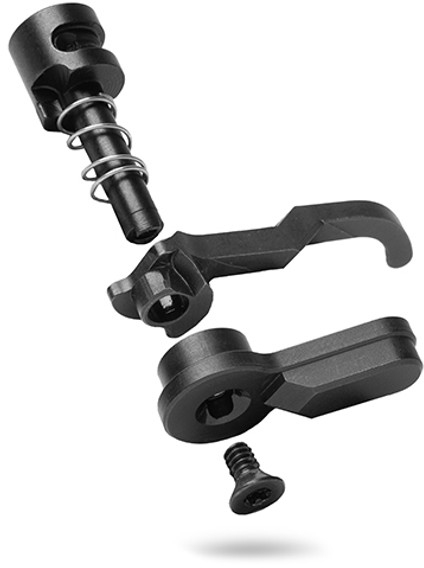
If you’re fiending for faster fire rates, there is a third option available—the forced reset selector, also called a super safety. Unlike a traditional forced reset trigger, which replaces the entire trigger assembly, a forced reset selector replaces your standard safety selector and works with a compatible trigger, using the firearm's cycling action to mechanically force the trigger forward after each shot. The result is a forced-reset function that can enable significantly faster follow-up shots while allowing the user to retain their existing fire-control group or a compatible aftermarket trigger. Depending on the design, some systems may require specific trigger geometries, modifications, or compatible components to function correctly.
Like the other options in this guide, an FRS often offers three firing modes: Safety, Semi-Automatic (standard), and a Forced Reset Select mode. Like forced reset triggers, that last option is what allows for faster fire, and its name varies from brand to brand. For example, one of the most popular options is the Atrius Super Selector (or Super Selektor), which labels its FRS mode as Super-Semi.
Which Option Is Best for You?
This all comes down to personal preference, but to help you decide, here is a list of advantages and disadvantages for each upgrade:
Binary Trigger
Pros:
- Fires on both the trigger pull and trigger release, allowing very fast shot strings.
- Typically offers a dedicated binary mode and a standard semi-auto mode.
- Often provides a more conventional trigger feel during operation.
- Available for a variety of firearm platforms.
Cons:
- There’s a bit of a learning curve for new shooters who need to adjust to the second round being fired after release, which differs from standard trigger operation.
- Trigger discipline becomes more important because a round may be fired when releasing the trigger.
- Some shooters find the pull-release firing sequence less intuitive than forced-reset systems.
- Subject to state and local restrictions in some jurisdictions.
Forced Reset Trigger
Pros:
- Extremely fast trigger reset can enable very rapid follow-up shots.
- Typically provides a consistent trigger feel once properly set up.
- Does not require firing on trigger release like a binary trigger.
- Familiar pull-reset-pull shooting rhythm for many users.
Cons:
- Generally more expensive than a selector-based solution.
- Requires replacement of the factory trigger assembly.
- May require tuning or compatibility considerations with certain firearms and components.
- There’s a bit of a learning curve since the trigger is forced forward. Too much rearward pressure can cause the forced reset to fail. Too little rearward pressure may not allow you to take full advantage of the faster firing rate.
- Some models have a more complex installation process than a selector replacement, but there are drop-in forced reset triggers that simplify the process.
- Subject to significant regulatory scrutiny and changing legal interpretations.
Forced Reset Selector (FRS) / Super Safety
Pros:
- Replaces the safety selector rather than the entire trigger assembly.
- Can often be used with your current trigger or a compatible factory or aftermarket trigger, providing more options for trigger shape, feel, aesthetic, and performance.
- Typically less expensive than a complete forced reset trigger system.
- Usually easier to remove or return to a standard configuration.
Cons:
- Compatibility can vary considerably between trigger designs and firearm setups.
- May require specific trigger geometries or supporting components.
- Performance can be less consistent across different firearm configurations.
- Generally not as refined or purpose-built as a dedicated forced reset trigger system.
- Also subject to ongoing legal and regulatory scrutiny.
Live Life in the Fast Shooting Lane
Speeding up your shots brings a lot of excitement to stale training routines. Whether you’re looking for a fun range toy or want to spice up your practice sessions, you can find a new Glock binary trigger, AR-15 forced reset trigger, and AR super safety right here at OpticsPlanet. One obvious downside we didn’t mention is that faster firepower can drain your ammunition supply much quicker than standard firing modes. Thankfully, we have plenty of ammo on sale for nearly every caliber to ensure you’re prepared to shred targets at the range.
