 Your Browser is Outdated


While most optics are designed for general use, there are many that are better suited for specific roles. Competition optics, like those used in USPSA, 3-Gun, and other shooting competitions, tend to prioritize different features than duty optics for law enforcement, military, and self-defense uses. Understanding the distinct differences, advantages, and disadvantages between the two styles helps you pick the right optic for your needs. Whether you're planning to carry a pistol with a red dot sight every day, plink casually on the weekends with a long-range rifle scope, or compete against other shooters, here is what you should know.
Competition Optics
Competition optics are intended for competitive shooting settings as well as sport and recreational shooting. Competition optics prioritize features that equate to greater speed and accuracy, such as larger objective windows, larger dots, specialized reticles, and lightweight housings.
A larger window provides a wider field of view, which makes it easier to identify the dot and see your target. A larger window can also help you identify and engage targets from unconventional positions.
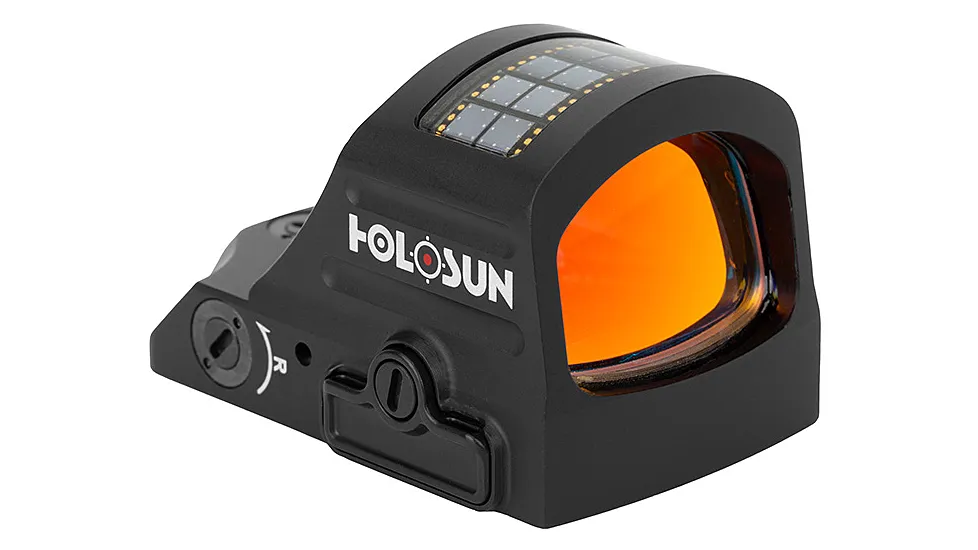 When it comes to the dot or reticle, competition optics offer many options to satisfy every user, such as those from 1 MOA up to 16 MOA. Bigger dots typically equate to faster target acquisition as the dot is easier to pick up, while smaller dots equate to better accuracy as they are smaller, finer aiming points. However, larger dot sizes cover more of the target, making it hard to be precise, engage at long distances, and see target details. Reticle options found on optics like the Holosun HS507C-X2 allow you to toggle between different reticles that use a smaller 1-3 MOA center dot, with an 8 to 32 MOA outer ring. A reticle like this is designed to eliminate the compromise between speed and accuracy by having both a fine aiming point with the center dot, and fast target acquisition with the larger MOA ring.
One drawback of competition optics is the housings are not as durable as duty optics. Most are manufactured from lightweight materials, such as aluminum or even polymer, like the C-More Railway, to keep the optic as lightweight as possible. The housing design is also more susceptible to damage as it was not designed for hard impacts like duty optics. However, there are still competition optics such as the 507 Comp which is made from 7075-T6 aluminum that can withstand impacts. If durability in a competition optic is important to you, purchase a model that uses an aluminum housing.
 Some other important considerations are battery life and co-witness. Battery life is often lower than that of a duty optic. However, this is not a large issue as you won’t be operating the optic all day or relying on it to be ready at a moments notice. Co-witnessing iron sights with your optic is also not as much of a concern with competition-oriented optics. One option is to install a new battery before a competition to ensure the optic does not go down during their course of fire. Alternatively, you can co-witness with the optic depending on the gun and optic if desired.
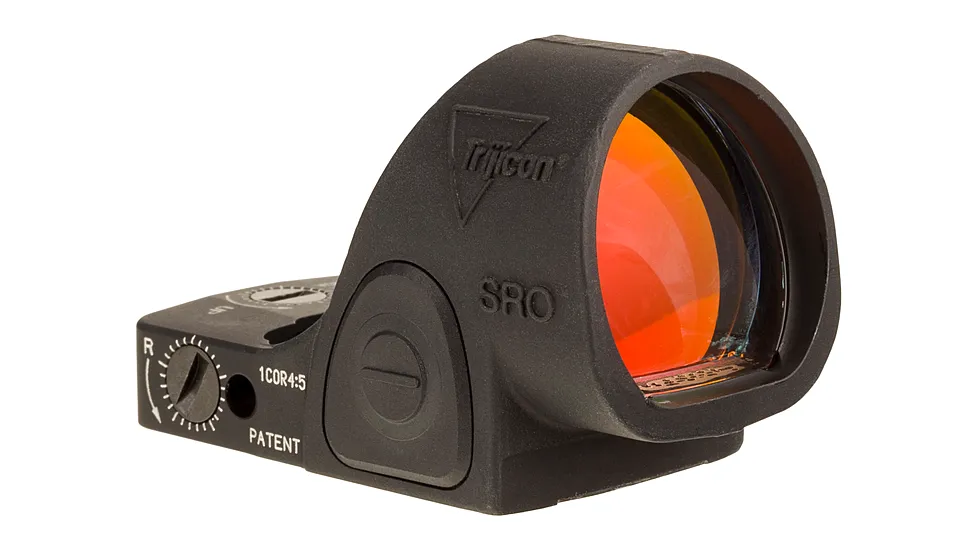
Depending on which optic you are using and how you mount it, choosing a holster may be more difficult. Optics can be mounted in many ways, including using an adapter plate to replace the rear sight, installing a milled pistol slide, or attaching an underside rail mount that places a picatinny rail above the pistol. Optics such as the Trijicon SRO can make holster compatibility more difficult due to its size and shape. This is why many competition shooters use firearm specific holsters that only use the trigger guard to retain the firearm. Minimalist holsters allow for more freedom to choose an optic or method to mount an optic.
Duty Optics
Duty optics are manufactured to be durable and reliable in the worst possible scenarios. They must withstand abuse, weather, and prolonged use, such as when used by military personnel and law enforcement officers. This means duty optics are for people who want something they can rely on to defend themselves, and most people focus on features such as durability, materials, closed emitters, the ability to co-witness, and battery life.
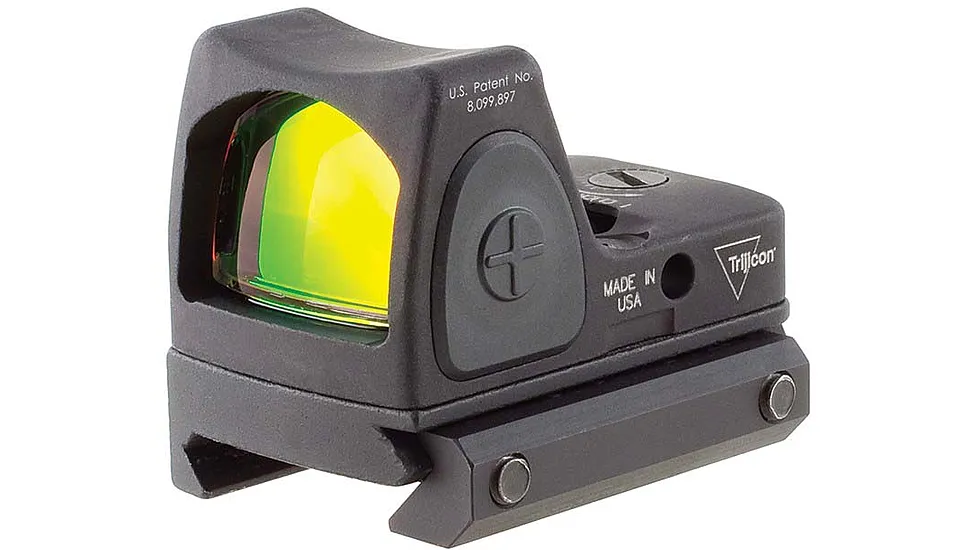 Duty optics use strong materials, such as 7075-T6 Aluminum and Titanium, to withstand harsh impacts, one-handed manipulations, harsh weather and more. Another method to increase durability is the design of its housing. For example, the Trijicon RMR uses flared corners to absorb impacts and divert stresses away from the lens to increase durability.
More recently, duty optics have begun to adopt closed emitters in which there are two panes of glass sealing and protecting the optic from rain, sweat, dust, dirt, snow etc. These are common for red dots being used on rifles and are now available for pistols.
When using an optic for duty, many people find it important to have a contingency plan in case the optic fails. The ability to co-witness iron sights through the optic window serves as a backup if the optic were to fail. Some duty optics have a rear sight built into the optic or the ability to mount an aftermarket rear sight directly behind the optic to allow you to co-witness the iron sights.
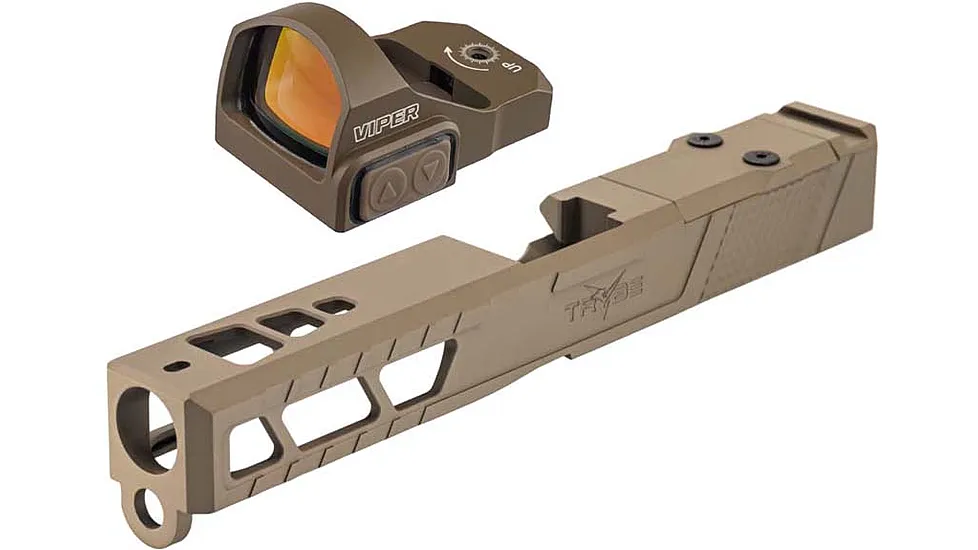 Battery life is another important factor to consider when selecting your duty optic. Thankfully, most modern optics boast at least a 20,000 hour battery life, which equates to about 2 years. Some, like the Vortex Viper, even have a battery life of 30,000 hours or more. You don’t want to worry about picking up your firearm when you need it only to find that the battery is dead. An optic with a long battery life gives you the peace of mind that whenever you need it, it will be ready. Other features such as auto-off and auto-on help to preserve the battery life when you aren't using the optic by automatically powering it down after a certain amount of time idling and powering it on when detecting movement. Solar fail safes use a solar panel integrated into the optic to power the optic in the case that the battery dies.
Some optics, like the Dual Illuminated Trijicon RMR, don’t use a battery at all. They are powered by fiberoptics for the day or when ambient light is available and tritium when there is no ambient light. There are also several methods to install a battery depending on the optic, such as a top-load battery, side-load battery, and bottom-load battery. Top and side-loading batteries are the most convenient as you don't have to uninstall the optic to change the battery. Bottom-loaded batteries require you to uninstall the optic to change the battery, which means you should confirm zero on the optic upon re-installation.
Most duty optics are designed to be mounted directly to a pistol's slide or with an adapter plate. Because there aren’t as many methods for mounting optics on duty pistols that require having to drill into the frame or using the underside accessory rail, holster compatibility is more lenient. Some optics may still cause fitment issues if their housings are very large. Most duty holsters provide optic compatibility in their specifications to help you find one that works with your pistol/optic combination.
Shop Competition & Duty Optics at OpticsPlanet!
Competition and duty optics serve vastly different purposes. Competition optics are primarily designed for sport shooting, recreation, and competition with features optimized around those applications. Duty optics are designed for law enforcement, military, and self defense use. Keep in mind that there can be crossover between the two styles. You can have an optic with a large window and a large MOA dot, such as the Leupold DeltaPoint Pro, that is also extremely durable and boasts a good battery life, making it a great option for both uses. As long as you know the purpose of your firearm, whether it be duty or competition, you can easily identify features that appeal to its intended use and select an optic based on that.


