 Your Browser is Outdated




Pocket knives, and knives in general, are an important everyday tool. They can be used for tasks as simple as cutting fruit or as high stakes as saving a life. But to succeed at any task, you need the right tool for the right job. Therefore, before you buy a pocket knife, you should consider the reasons you're buying it. In this guide, we'll discuss:
- Types of Cutting
- Types of Pocket Knives
- Blade Length
- Blade Edge
- Blade Style
- Blade Steel
- Opening Style
- Locking Mechanisms
- Handle Materials
- Price Point
Push Cuts vs. Pull Cuts
There are two types of cuts: push cuts and pull cuts. A push cut is when you push a knife through an object to make a cut, such as slicing a fruit or a vegetable in half. A pull cut is when you pull the knife through to finish the separation, such as cutting rope or cutting bread.
Types of Pocket Knives
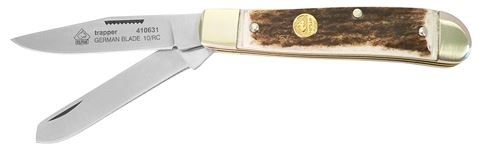
There are three main types of folding knives: single blade, multi-blade, and multi-tools (and Swiss Army knives).
- Single-blade folding pocket knives are the most widely used and come in a variety of blade shapes and sizes. They often have a locking mechanism to prevent accidental closures. They are also sturdier than multi-blade designs because the whole design is focused on a single blade.
- Multi-blade folding pocket knives include multiple blades, and each blade has a specific purpose; so, there might be one for skinning, one for piercing, and one for slicing. However, they can be bulky, and they're not as durable as single-blade pocket knives.
- Multi-tools and Swiss Army knives feature multiple blades as well as other tools like screwdrivers, scissors, saw blades, and more. Multi-tools and Swiss Army knives get lumped together because they are very similar. However, the key difference between them is that a multi-tool's main tool is a pair of pliers, while a knife is the primary focus of a Swiss Army Knife.
How Long Should a Pocket Knife Blade Be?
Blade length is an important aspect to consider if you intend to carry your knife with you everywhere as part of your Everyday Carry (EDC) kit. While it's mostly a matter of preference, some state and local governments do have laws limiting how long of a knife blade you can carry.
- Small blades are less than 2.75 inches in length and are great for everyday carry. Pocket knives with small blades are great for utility tasks like cutting boxes, food, or string. Don't plan on using this type of knife for tougher jobs like cutting wood, tough rope, or larger fruit and vegetables. Pocket knives with a 2.75in blade generally do not have a locking mechanism, so they are prone to folding on themselves when used for extreme cutting tasks.
- Medium blades are 2.75-4 inches in length and are usually perfect for a wide range of cutting jobs while still being convenient enough for everyday carry. These types of blades also come with a wide variety of opening and locking mechanisms that help prevent the knives from closing on themselves during strenuous use. Some local knife laws may prevent blades larger than 2.75 or 3 inches long to be carried, so make sure to check before purchasing.
- A large blade is anything longer than 4 inches. A larger pocket knife may be needed if you're an outdoorsman or intend on carrying a knife for self-defense. However, the length of a 4in blade makes it quite heavy, and many state and local laws prohibit such large knives from being carried in public.
Types of Knife Blade Edges
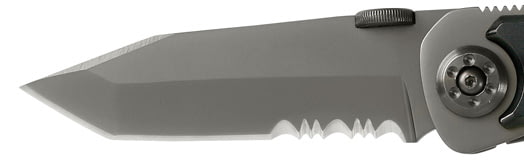
Folding pocket knives have three main blade edge types: plain, fully serrated, and partially serrated. What you actually want will be based on the type of cutting you plan on doing.
- Plain edge pocket knife blades are best for push cuts. The full length of the blade allows for clean, controlled cuts. Also, they're easy to sharpen. However, they won't work very well on objects that require a sawing motion like branches or tough rope.
- Fully serrated edge pocket knife blades are the opposite of plain edge blades. They excel at making pull cuts and will work great on wood and rope. However, they are difficult to sharpen.
- Partially serrated edges are the best of both worlds, but you also essentially end up with half a plain edge and half a serrated edge. However, you'll get both their drawbacks as well.
Different Blade Styles of Pocket Knives
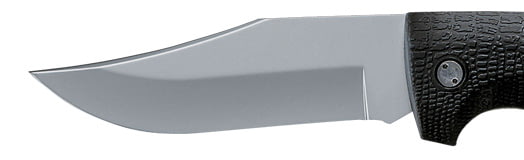
Clip point knives have a distinct cut out on the back of the blade. This makes for a finer tip that is ideal for piercing, and the curved up design allows for better slicing and push cuts.
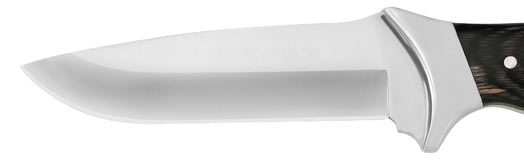
Drop point blade designs are great for utility cutting tasks on a daily basis, and most survival knives use this style. This blade features a larger belly ideal for push cuts and slicing.
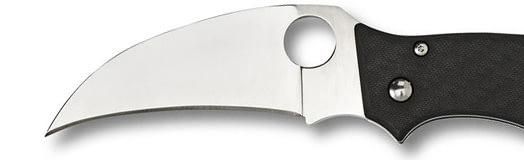
Hawksbill blade has its limitations but is effective at cutting rope and cord, wire-stripping, and box cutting. The unique concave design is hard to miss and looks menacing. The tip is sharp but at the same time, quite weak and can break off easily if used on tougher materials or for piercing.
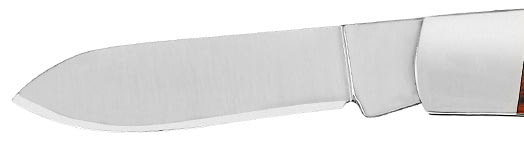
Pen blades are the small blades found on most traditional multi-blade pocket knives. The pen blade was intended to sharpen quill for writing. Today this blade is still on knives, making them great for small cutting jobs where a large blade is unnecessary.
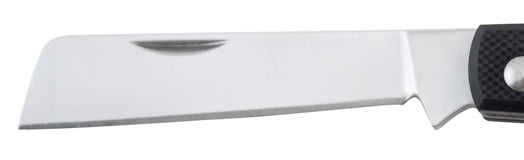
The Sheepsfoot blade was designed to trim a sheep's cloven hooves. The knife's dull back comes down in a curve and meets the straight sharpened edge to create a dull tip. EMS and other such services sometimes use a sheepsfoot blade design to cut seatbelts and clothes on victims in order not to injure them accidentally. As an EDC blade, this type of a knife is great for wood working and trimming.
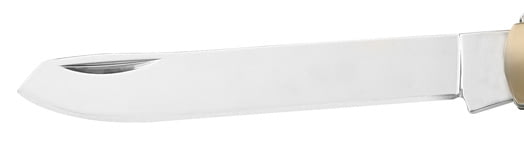
Spey point blades were created for the specific task of spaying livestock. This type of a blade is also good for skinning small fur-bearing game.
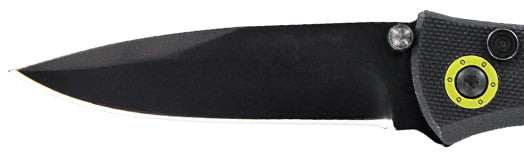
Spear point blades have both sides of the edge come down symmetrically forming a spear-like point that is very sharp, making it perfect for piercing and slicing tasks.
Tanto point blades are popular due to their unique look and design strength. Notice that there is no belly. This is because the Tanto blade is designed for piercing or push cuts of tougher materials, rather than slicing.
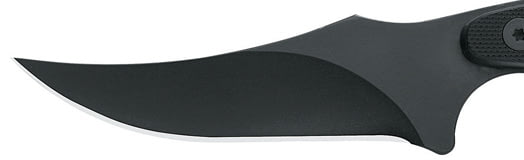
Trailing point blades taper up into a fine point. Although it may seem like the point is sharp and great for piercing, it is not. In fact, it is quite weak and may break if stress is applied. What the tapering creates is a deep belly that is perfect for long-slicing push cuts.
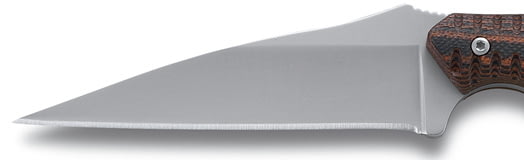
Wharncliffe blades look similar to the sheepsfoot style. However, the back of the blade is more gradual, and the overall blade is thicker, making it perfect for woodworking and general cutting tasks.
Types of Knife Blade Steel
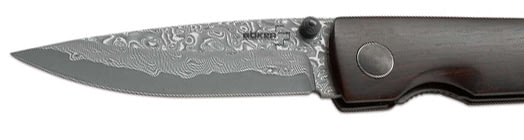
The type of steel used to make the blade should never be overlooked. There are many alloys used to craft the blade, but you'll mainly see two main types: stainless steel and carbon steel.
- Stainless steel knives feature 12% or more of chromium, which makes the blade more resistant to rust and therefore, better for wet environments. A stainless steel knife is easier to sharpen, but that also means it dulls easier. If you are looking for a survival knife, stainless steel is perfect.
- Carbon steel knives are harder to sharpen but will retain an edge longer. They are also more durable overall. However, a carbon steel knife is more susceptible to staining and corrosion than a stainless steel knife.
A quick note about Damascus steel. Damascus steel is a type of sword-making steel from the Middle East that was popular during the Crusades. While you'll see it touted as a selling point, the actual recipe has been long lost, and what's available today is a replicated pattern.
Types of Pocket Knife Opening Mechanisms
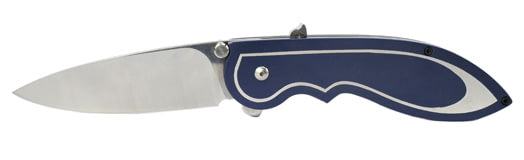
Pocket knives have three types of opening mechanisms to choose from: manual, assisted, and automatic.
- Manual opening pocket knives require you to open the blade without assistance from a spring. They feature some sort of groove, hole, or thumb stud that allow you to flip the knife out. Traditional designs require two hands to open while newer designs may require one.
- Assisted opening pocket knives, also known as automatic folding knives, allow for one-handed operation. There's usually a spring within the handle that releases the blade after you open it past a certain point (usually 30 degrees). However, the moving parts also make it prone to collecting dirt and debris, and some might be regulated by local laws.
- Automatic pocket knives, also called switchblades, open with the push of a button. These used to be highly regulated and were often only available for law enforcement, military, or one-handed individuals. Today, most states allow civilians to carry one, with exceptions regarding how to carry, blade length, etc.
How Does a Pocket Knife Lock?
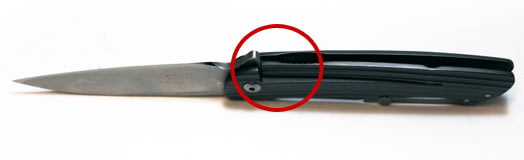
Most pocket knives today feature some sort of locking mechanism to prevent the blade from closing on itself when performing a cutting task.
- Liner locks are the most common. It engages when the blade is pushed out. The lock snaps in place and locks the bottom of the blade so that it doesn't close. To close the blade back, you have to manually push the liner out of the way. It is one the strongest locking mechanisms for a pocket knife.
- Frame lock is similar to a liner lock in the way it engages and disengages the blade. However, instead of a handle liner, the frame lock uses part of the frame itself to engage the tang and fix the blade.
- Traditional pocket knives utilize the slipjoint mechanism to secure the blade in place. However, it does not actually lock the blade and can close on itself if used for extreme cutting. When the blade is open, a tension from a spring or a flat bar is applied and holds the blade in place. The slipjoint pocket knives are ideal for light everyday tasks.
- Lockback mechanisms are for heavier cutting tasks. A locking arm along the spine of the handle features a hook that fits into a notch on the back of the blade. The hook uses tension from the back spring to lock the knife into place.
- Midlock mechanism is the same as the lockback but located in the middle of the handle. This was done because with heavier use, you may accidentally push the lockback trigger with the side of your hand, disengaging the mechanism and allowing the knife to close on itself.
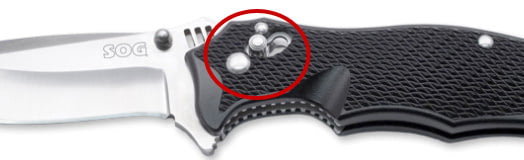
Benchmade and S.O.G. have come up with proprietary locking mechanisms that work in similar fashions. Some Benchmade knives use the AXIS lock, and certain SOG knives use the Arc-Lock. When a blade is opened, a steel bar is pushed into position using springs, engaging the knife tang and locking the blade into place. The tang becomes wedged between the bar and a stop pin, preventing the blade from closing on itself during cutting tasks.
What Is the Best Material for a Pocket Knife Handle?
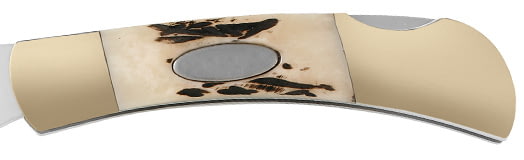
- Aluminum handles are lightweight and have protective coating to enhance the weather resistance of the material.
- Bone is used on some knives and generally adds to the aesthetic feel and look of the knife. The bone is usually carved to improve grip when handling the knife or to add artistic touches such as scrimshaw designs.
- Celluloid is a synthetic material that can be designed to show almost all colors to resemble many naturally-occurring materials such as amber, ivory, bone, pearl, and others. However, celluloid is quite fragile as compared to other materials.
- G-10 handles are made from baked fiberglass soaked in resin. It provides a very secure grip and is water resistant. In addition, G-10 does not conduct heat or spark, making it ideal for inclement weather use and working with wire.
- Kraton is a soft and flexible thermoplastic material that provides a very secure and comfortable grip.
- Micarta is a composite of cloth or paper and resin. It is not very hard but is frequently used in knife handles. Tan and yellow are the typical colors of a Micarta handle.
- Rubber pocket knife handles are very comfortable to hold. Although not as durable as other materials, it offers a familiar feel. Rubber tends to stick to or grab the inside of the pocket when you need to take it out.
- Stainless steel pocket knife handles are corrosion-resistant and durable. However, stainless steel is heavier and more malleable than synthetic materials.
- Stag pocket knife handles are made from deer antlers that have naturally fallen off. Their inherent rough texture creates a comfortable and strong grip. The aesthetic look of the knife is very appealing to many people, but the price of the stag handle can be quite hefty.
- Titanium is sometimes used in pocket knife handles because it is lightweight, very durable, and resistant to corrosion. If you don't mind the cold look that the knife with a titanium handle has, then you're sure to have a high strength material in your hands.
- Wood handles are typically made from soft woods and need to be stabilized to become hard enough to be a pocket knife handle. The finish of the wood handle looks great on a knife and is usually checkered to provide a stronger grip.
- Zytel is one of the strongest materials you can use as a knife handle. It is a thermoplastic developed by DuPont to be highly abrasion and impact-resistant while retaining low cost and improving durability.
How to Buy the Best Pocket Knife for the Money
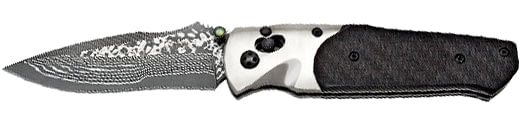
By now you're probably eager to start searching for your next pocket knife. Full of knowledge and zeal, your finger is anxiously awaiting to add to cart. Give me a few more paragraphs to leave you with some final thoughts. One question that I am often asked is, "How much should I spend on a knife?" So, let me break it down for you:
- Under $30 can get you a decent knife good for performing general utility tasks. These pocket knives are typically very cost efficient but are made with less expensive materials and will dull quickly. However, it doesn't mean that they won't perform if you only need a knife once in a blue moon to open a box or cut a fruit for lunch.
- $30-$70 is the optimal price range offering the perfect balance of price and quality. Within this range, you can expect to get a knife that will last you for years to come with proper care, and you can trust to do everyday utility cutting, as well as perform well in emergency situations.
- $70 -$120 will get you a very well made folding pocket knife with a high-quality steel blade and a great, durable handle. These knives will be a pleasure to use, and they will hold up their end when the situation calls for it.
- $120 or more will get you a custom or premium pocket knife with lots of little extras thrown into the designs. You can now look for knives that are made with Damascus steel and handles made from expensive materials, such as bone or stag.
This article is just one of dozens of How-to Guides on OpticsPlanet. If you found this guide helpful, please like or share on social media.


