 Your Browser is Outdated


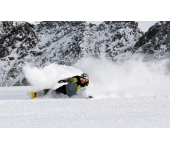

Buying the best snow goggles for snowboarding and skiing are important for your comfort and safety. Your experience will be much more memorable when you choose the right pair of snowboard goggles or ski goggles for your riding style, location, and weather conditions. Ski goggles and snoboard goggles are generally the same thing and can be used interchangeably. Below, you can find a guide on how to choose a good pair of discount ski goggles. OpticsPlanet carries the latest models of goggles, including men's ski goggles, women's snowboard goggles, adult ski goggles, youth ski goggles, and of course, prescription ski goggles! Here are the most important things to look for when buying snow goggles:
- Fit
- Frame Features
- Lens Options
How Should Ski Goggles Fit?
You should choose a pair of ski goggles like you would choose a pair of shoes – accurate fit is very important! The goggles should be strapped on snugly over your ski helmet or hat. Spy Optic and Smith ski goggles are engineered with the latest helmet designs in mind, so fit is never a problem. The feel of the goggle foam on your face should be consistent all the way around the goggles; there shouldn't be any uncomfortable pressure points.
There also shouldn't be any gaps between your skin and the snow eyewear where too much air could flow through and dry out your eyes. Be sure to check to make sure your ski goggles are helmet-compatible, meaning they fit securely on your face without being stretched or bent to fit over or around the helmet. We offer goggles that will fit over any prescription eyeglasses that you wear. If you would rather have prescription ski goggles, check for brands of goggles that use prescription Rx adapters.
Ski Goggle Frame Tips
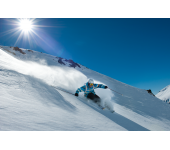
The frame of your ski goggles should be made of a flexible material. Make sure your goggles are well ventilated. Foam covered air portals are a common feature, allowing air to flow through the snow goggle to keep them fog-free. Some brands even offer fans to regulate airflow. Bolle sunglasses Equalizer technology uses a waterproof, breathable vent to equalize air pressure between the goggle lenses and eliminate moisture. The result is distortion-free vision and no fogging at any altitude. Spy Optic offers the Scoop Ventilation System that also helps to eliminate ski goggle lens fogging. We also recommend any aftermarket anti-fog treatment to assist with this issue.
How Do I Know What Ski Goggle Lens to Use?
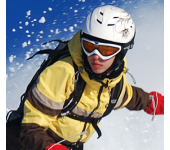
When buying ski or snowboard goggles, look for dual-lens features. They perform the best by creating a thermal barrier. Double lenses won't fog up on you. Spy Optic Gemini lens technology completely seals the dual lenses with polyurethane-based glue. The airtight chamber between the ski goggle lenses results in the elimination of between-the-lens fogging and altitude-induced snow goggle lens distortion.
Polycarbonate lens material is generally the most durable and offers 1005 UVA and B protection. Cylindrical double lenses are also very popular. They provide good optics for a reasonable price. Spherical double lenses have superior optics. These lenses are better at providing fog-free vision.
What Color Lens Is Best for Snow Skiing?
Remember, a mirror coating on the lens won't affect the color through which you are looking. For example, a rose tinted lens may have a silver or blue mirror coating, but it still is a rose lens. Spy calls their mirrors Spectra.
Snow lens tints and their uses:
- Clear lenses are best for extremely stormy conditions or for riding at night.
- Lemon or yellow lenses are best for stormy conditions and overcast days; they increase contrast and brighten up the landscape.
- Rose lenses increase contrast in most conditions. This lens with a silver gun mirror is ideal for most snowy conditions. Rose ski goggles are very popular nowadays.
- Citrus, brown, or orange lenses also increase contrast and are great for bright days. Choose an option with a mirror for a darker lens for the brightest conditions.
- Modulator lenses or photochromic lenses change depending upon the light conditions (for example from a light pink or orange, to a dark pink or orange). They are a very light high-contrast color for stormy weather and dark enough for the brightest bluebird days.
- Polarized ski goggles lenses can cut glare that reflects from snow or ice.
Other Snow Goggle Tips
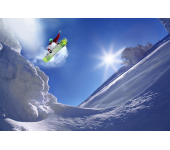
Always travel with your ski goggles in the protective pouch they came with. Clean the outside of your snowboard goggle lenses as you would your sunglasses, with only fresh water and a soft cloth. Never wipe the inside of your goggle lenses; it can affect the anti-fog coating. Instead, if you get snow or ice inside your ski goggles, shake them out to remove the snow. Then, put your skiing glasses back on and keep riding. The airflow will dry the rest.
BEST TIP TO KEEP YOUR GOGGLES FROM FOGGING: KEEP THEM ON YOUR FACE!!!
There is a dynamic between the cold, dry air outside your ski goggles and the warm, moist air inside. This is managed by the thermal barrier that the goggle's double lens creates. When you take the snowboard goggles off your head while waiting in line or on the lift, they will likely fog up when you put them back on. The best way to get rid of this minor fog is to keep them on; the airflow will dissipate the moisture.
