 Your Browser is Outdated


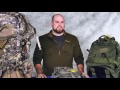

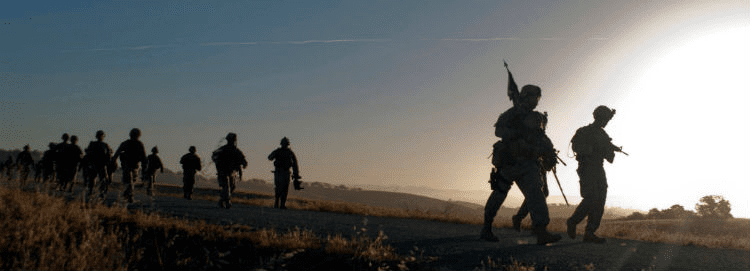

My feet were bleeding, legs were pounding and my shoulders were screaming as I made my way down the road with 80 lbs. on my back wwhile walking at a 15 minute pace. And we still had 8 miles to go on our required 18 mile ruck march. Yes, that's right: U.S. Army Basic Training at Ft. Benning Georgia. Home of the Infantry.
This was my first introduction to the benefits of a good backpack - not having one. Unfortunately, I would have to wait another 3 years before I could choose the type of backpack that would suit me best.
Civilian life is much easier when it comes to backpacking or fast packing. I have experienced a range of bags and backpacks over the years (good and bad), and I have been on many single- and multi-day hikes for recreation and hunting since that March day walking through those great Georgia Pines. The beauty of technology is that there are so many more options to choose from in today's backpacks that it really does take some consideration to figure out which combination of options are best for your needs. So, let's take a few minutes to review some of the most important aspects of choosing a backpack.
Backpack Sizing: Fitting a Backpack for Your Body
|
Length of Trip |
Size Liters |
For Use |
Back Packs |
|
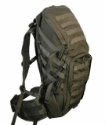
Single Day/Overnight |
20-30 |
Hike a small mountain with friends or climb a volcano like Mt. Hood in Oregon (7.2 miles, but takes all day), perhaps a morning and evening hunt in the George Washington National Forest or climbing Pike's Peak. |
 |
|
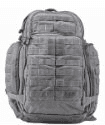
1-3 Nights |
35-50 |
Weekend camping trip with lots of hiking and trail walking. Stop to enjoy the waterfalls, steep canyons, caves, and wildlife. A good Bugout Bag is just what you need to take your kids on hike to your secret fishing spot - accessible only by foot. |
 |
|
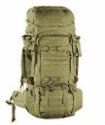
3-5 Nights |
50-70 |
A 4 day hike through the Grand Canyon from rim to rim, many people take multiple days to do it - on purpose. Also, mountaineering, trekking, multi-day ski touring, and alpine climbing. |
 |
|
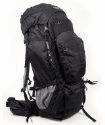
5 Nights or More |
70+ |
Whether you're Cameron Hanes on another trip to Colorado to fill an Elk tag or you're looking to up your game by dropping into Alaska via parachute and kill a Brown Bear with your buddies - you're going to need a bigger pack. |
 |
"You have everything you need to survive on your back... If you need to eat, it's got to be on your back."
~ Cameron Hanes on an 8 day backcountry elk hunt.
Backpack Sizing: How To Determine Your Torso Length
In the normal course of a day or week, most people do not give much thought to the size of their torso. The torso is not usually measured for choosing clothes, winter coats, a new suit, or that custom fit touring bicycle.
However, your torso size is extremely important when it comes to choosing the appropriate backpack. After all, there are at least 3 points of security for most backpacks today. These are the sternum support and strap, load lifter straps which go over the shoulders, and the sternum straps that go across the chest.
All three of these must work in concert to keep your gear riding comfortably on your back. We encourage women to try backpacks specifically for women. While it is true that many unisex backpacks will fit women just fine, 75%-80% of the weight of your gear should be supported by your hips (for men and women). Every woman has a different hip shape, so it is especially important that a woman's hips match the backpack.
 |
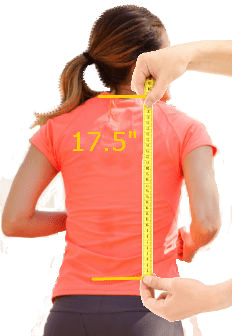 |
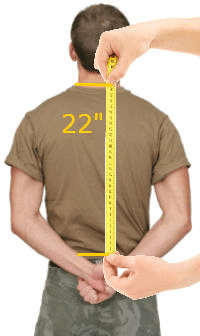
When measuring your Torso, you want to place a flexible tape measure at the base of the bottom of your neck where the top of your shoulders meet the neck. Run the tape measure down to the small of your back between both hips. This measurement is your torso length. Torso length does not have to be exact like a shoe-size, as you can see from the size chart below.
|
Extra Small |
Small |
Medium/Regular |
Large/Tall |
|
Up to 15 1/2 in |
16 - 17 1/2 in |
18 - 19 1/2 in |
> 20 inches |
|
* Many Backpacks are adjustable, so exact size is not necessary |
|||
Backpack Sizing: Does Your Waist Size Matter When Fitting a Backpack?
All manufacturers make adjustable straps that accommodate most people's waist size. If you have a waist size under 26 inches or above 50 inches, a custom hip belt might be required.
However, the majority of people are well within this range. Women and youth backpacks are specifically designed to adjust for their sizes.
Which Backpack Frame Should You Choose?
There are two types of backpack frames: Internal and External
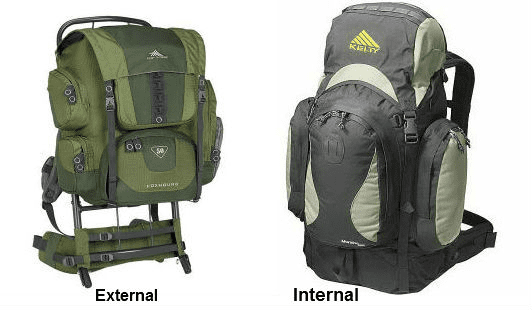
The difference between internal and external backpack frames is quite extensive, actually. Some people believe that with technology increasing toward the internal frame designs that there isn't much reason to use an external frame, but after this section, you may find a reason or two to keep that external frame in the forefront of your mind.
For example, there is no fabric that can accommodate breathability AND remain waterproof.
However, using waterproof material on an external frame will allow your back to breathe a bit.
So there are advantages and disadvantages of both an internal frame and an external frame. One is made to carry a lot of equipment or gear (external) while the other is created to feel like it is an extension of your own body (internal), to be form fitting and comfortable. Let's take a look at other advantages and disadvantages of each type of frame.
What's So Great About Internally Framed Backpacks?
Internal frames usually have a smaller profile, and when properly packed, they keep gear aligned with your center of gravity, which allows for better balance. Balance is extremely important when walking for hours and days. Tough terrain + a split second of imbalance can lead to injuries, especially when taking slim paths and traversing mountains.
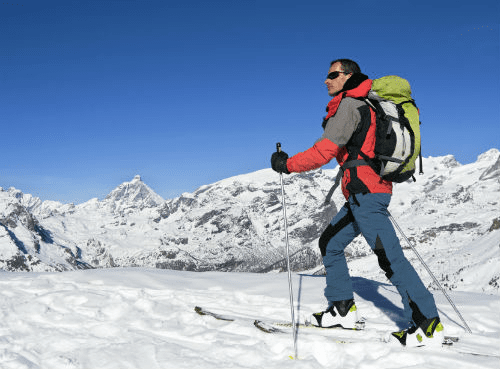
Internal frames are more form fitting and will give you better maneuverability. Remember, they feel like they are part of you, as they are close to your body and comfortable. So when traversing around the side of a mountain or around large trees and vegetation, you'll want the ability to maneuver well.
Since internal frames can carry more gear, provide more comfort, and allow more mobility, you then must consider the length of the hiking excursion and understand that they are best for long hikes. Especially if your activities while hiking may include skiing, rock climbing, hunting (shooting), or just understanding that you'll be traversing difficult terrain.
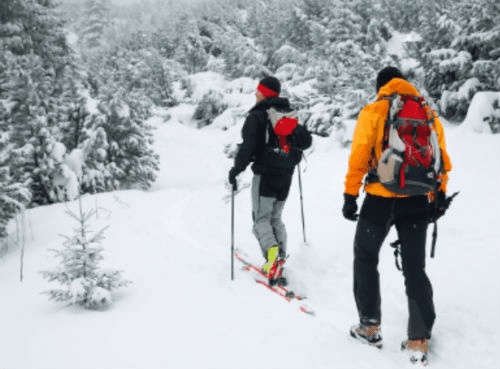
Since internal frames are right up against your back, you will also likely be drenched in sweat. There are few internally framed packs that have good ventilation, though the industry is making strides in that direction. Don't automatically assume that an internal frame is great for EVERY hiking need. External frames have copious advantages as well.
When Should You Choose an Externally Framed Backpack?
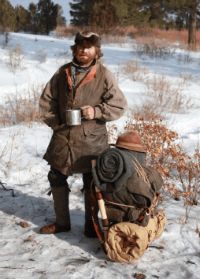 External frame packs are generally less expensive but are designed to carry heavy gear over long distances and still allow you to walk upright. Moonshiners, Gold Panners, and Hunters of large prey, to name a few, will likely want to choose an externally framed backpack. This is because you can attach equipment to the side of your pack and there are packs that have built-in rifle scabbards.
For example, a hunter that is packing in a few hours and sleeping in the forest while hunting moose will be carrying in enough gear to sustain him, but also likely carrying out large quantities of meat. So that hunter will want to purchase an external frame - a good solid device to help carry out that moose in 2-3 trips. Psst! Watch for bears and mountain lions.
External frame packs usually have a lot of compartments to hold all the gear you'll need to complete that gold mining prospecting, for example. This makes it easy to not only store important items, but also to find those items when you need them. Imagine a medic's pack with multiple compartments, each one has a purpose so he can get the equipment he needs blindfolded. Internally framed packs generally have 1 or 2 compartments, making it impossible to find anything easily.
External Frame BackPacks Have Great Ventilation
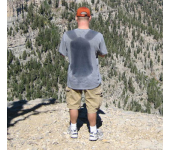 With an external frame pack, there is space between your back and the backpack. This space is what allows your back to breathe. Ventilation is the name of the game when it comes to external packs.
No longer are you required to change shirts every few hours because the sweat has begun to seep into your gear. Also, make sure you have wide, clear trails to walk or hike. Those external frames can get caught by overhanging branches, protruding rocks and many other inventions of Mother Nature.
What Are the Differences Between Internalky and Externally Framed Backpacks?
|
Backpack Features |
Internal Frame |
External Frame |
|
Comfort |
 |
|
|
Capacity |
|
|
|
Affordability |
|
|
|
Breathability |
|
|
|
Balance |
|
|
|
Durability |
|
|
|
Traverse Tight Trails |
|
|
|
Wide Open Trail (no snags) |
|
|
|
Accessories Attachment |
|
|
|
Pockets and Storage |
|
|
|
Long Trips > 5 days |
|
|
|
Short Trips 1-4 days |
|
|
|
Rough Terrain |
|
Let's sum it up in a few short sentences: If you're going on some short walks where you'll need to carry a few items go for the internal pack. Comfort is best and if your pack isn't perfect, the trek won't be long enough to make a huge difference. A few day excursion, weekend camping trip, hunting trip or panning for gold - using an externally framed pack would be best. But those long hikes for multiple days, weeks, even months along the Appalachian Trail - an internally framed pack will soon be your best friend.
Helpful Hiking Hints:
After 4 days on the Appalachian Trail, some folks report having to replace their backpack because it may have fit in the store, but completely does NOT fit after 2 days of walking with 40-60 lbs. of gear bouncing around. Many on the trail soon realize that they didn't need all the gear they planned on bringing and now after ditching 10-20 lbs. of equipment - their new backpack is just too big.
Top Loading Backpacks
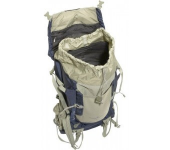 Imagine having to pack all of your gear through one porthole, always needing the item on the bottom? That is only negative aspect of the top loading backpack.
This style is used on almost all internally framed backpacks. It allows your equipment to be packed against your body, creating better support as opposed to having multiple pockets that create more weight pulling back away from the body. The top-down approach is the standard of most longer-distance backpacks.
Front Loading Backpacks
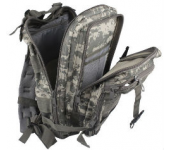 This style makes it much easier to access your gear, as front loading backpacks are the type that most people are familiar with when using computer bags, book bags, or smaller backpacks for day hikes. The pocket availability is usually ample and you can definitely organize your gear in a logical manner. Medic bags, for example, definitely use the front loading style.
A front loading backpack shouldn't be used for long hikes, since they usually do not sit comfortably on your hips like the weight-bearing virtues of a large pack and the weight always seems to be leaning back away from the backpacker. Yes, it is easy to access gear, but front loading backpacks are not comfortable on long treks.
How to Make a Backpack Comfortable
Comfort, after all the other considerations are made, is the most important factor in choosing a backpack. When you packed for your trip, loaded all your supplies, set the straps correctly and place that backpack where it belongs, only one things matters: Is it comfortable?
* All the best reviews, lowest prices, greatest discounts, prettiest colors and innovative features in the world will not justify an uncomfortable backpack.
Questions to Ask Yourself About Each Backpack
- How does it sit on my lower back?
- Does it pull back or down on my shoulders?
- Are the straps comfortable on the inside against your body?
- Are there enough straps that keep the backpack from making you hunch?
No matter what supplies you are packing (full backpack or lightly loaded) the pack should remain firm and not jostle around and shift from side-to-side.
Other Things To Consider When Choosing a Backpack
- Support: How much weight do you plan to carry? Does the backpack have enough pouches and pockets? Are you hiking in an area that will cause your pack to get snagged?
- Functionality: Can you operate the backpack effectively in the dark if your flashlight peters out?
- Hydration: Does your backpack have an internal bladder or do you need an auxiliary device (canteen or bladder). Does the backpack have a Hydro port and internal mesh hydro sleeve?
- Weight: Most backpacks are made with the toughest and lightest material available, similar to bicycles. Gone are the days of a backpac weighing you down. However, there is always a base weight to a backpack.
- Base Weight: The base weight of a backpack is the weight of the material and frame of the backpack's smallest size. Some backpacks weigh 10lbs and others weigh as little as 18 ounces.
If you are NOT a super-lightweight individual, the chances are that the weight of a new backpack is inconsequential. Always try on a backpack without anything inside of it and then while fully packed. Weight, comfort, and ease of use all go hand-in-hand.
Testing Your Backpack for Usability (User-Friendliness)
A lack of usability (ease-of-us) is one of my biggest pet peeves when it comes to outdoors equipment. The ability to hold supplies and NOT fall off your shoulders does not qualify for good ease of use. Backpacks are highly engineered products that take months and years of planning, building, testing, re-building, and then finally producing and marketing.
For the price of a good backpack, it should be able to do the following to your standards:
- Can you adjust the straps for the perfect fit? While it is on your back, too?
- Ability to keep accessories within reach and convenient (hydration hose/water bottle)
- Can you reach around and unzip the side pockets while still on your back?
- Can you get the backpack on and off quickly?
- Does the material stain easily, and if so, does it clean easily with a cloth and soap?
- Do the fasteners (zippers, hook and loop, snaps) work well? Does the material get caught in the zipper?
- Are the pockets deep enough? Too many access points, too much zipping and unzipping to find your equipment?
Here is an example of two backpacks with the same features - one usable and the other NOT:
I have two backpacks for short hikes and power walks. One requires me to always check two or three compartments to look for whatever item I put in the pack. I just cannot distinguish between any of the compartments. The other backpack is very usable because I can easily recognize which compartment is holding the needed item - I can recognize which zipper belongs to which compartment.
The usable backpack has the same number of compartments and zippers as the unusable backpack. The usable backpack has high-quality zippers that are far enough apart and the material is sturdy enough to help a person distinguish between each of the compartments.
The result is that I do not have to zip and unzip 2 or 3 different compartments to find what I'm looking for.
Does that sound like a big deal? It is a big deal when you multiply that by 3 or 4 times per day... It becomes a pain, which is why I always say, "Usability is just as important as comfort."
How to Pack a Backpack & Minimize Shift
Shift Happens: Keeping your gear tightly packed allows the backpack to remain securely attached to your back, shoulders, and hips. There are several features that help compress your gear within the confines of your backpack.
3 Systems to Tightly Pack Your Backpack
- Roll-Top closure system for vertical compression
- Side compression straps for horizontal compression
- Top Y-strap compression -- Designed to secure gear
This combination of compression techniques creates a system that helps to hold that gear inside your backpack, keeping it tight and limiting its side-to-side motion. Add an adjustable sternum strap with self-tensioning elastic and you can rest assured the backpack will become an extension of you, adding comfort to the backpacking experience.
Suspension: Fitting a Backpack Perfectly for Your Body
Suspension distributes the weight across the back from shoulders to hips. There are several companies that have great suspension technology and help distribute the weight evenly. The goal is to make hiking and load carrying easier, especially for longer days.
Most new suspension technology is patent-pending, but techniques like changing shoulder straps to slide through the back panel are being implemented. Adding lumbar swivel balls and using dual peripheral aluminum rods to stabilize and transfer weight closer to the body are also used to help the backpacker endure less energy and stress while hiking.
Adjustability: Customize a Backpack
Adjustability refers to the ability of a pack to be customized to the hiker's unique shape and size. The better the pack, the more opportunity for customization and a more comfortable and enjoyable hiking experience. This is more than just the hip belt and shoulder straps. The purpose of adjusting your pack is to keep your gear tight within the pack, and move it closer to the body to rest on your hips.
In addition to the hip belt and shoulder straps, there are load lifter straps on many backpacks today. Load lifter straps are sometimes known as "magic straps" that pull the upper pack closer to your shoulders. Stabilizer straps are relatively new and do not exist on all backpacks like hip belts but they are located just behind the hip belt. Stabilizer straps make the pack snug against the body, lightening the load. Many packs have the hip belt, shoulder straps and sternum strap, but look for all 5 ways to adjust your pack to make it a better experience.
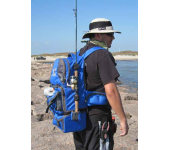
14 Additional Features When Choosing a Backpack
 |
|
|
Choosing, Fitting & Customizing a Hunting Backpack
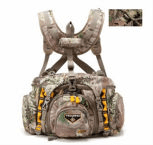
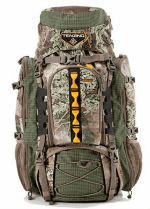
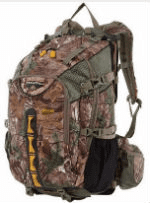
3 Essential Features of a Great Hunting Backpack:
1. Noise Discipline
2. Fasteners
3. Burr Resistant Material
 |
 |
 |
There are newer materials that are tear resistant, burr resistant and water resistant with DWR (durable water repellent)
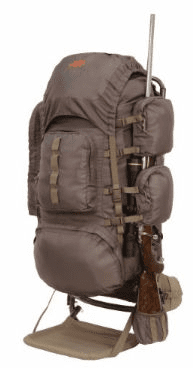 In addition to all the other factors mentioned above, Hunters are interested in noise discipline with fabric and fasteners. Is the fabric quiet when you're moving around or does it sound like a potato chip bag being attacked by a raccoon? I've actually heard that before.
Hunters like stalking in silence, like a sniper moving through the woods - silently. There is nothing worse on the 4th day of a hunt than getting busted by an Elk or whitetail buck because the Velcro strap echoed off 4 mountain tops or pine needles scratch across your backpack like nails on a chalkboard.
Are the pockets easy to secure without making a lot of noise? Are they snaps, hook and loop, snap buckles, or are they silent like a turn lock or flip lock style? Draw strings work well, but draw strings still make a little noise.
Technology has changed for the better since my Army days. Today, hunters and outdoorsman have the option of getting the type of quality that a 1000-Denier water and abrasion resistant nylon fabric with DuPont Teflon fabric protector for easy maintenance.
What Features Should You Consider in a Tactical Backpack?
 |
 |
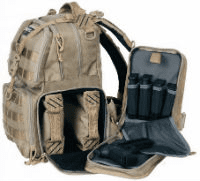 |
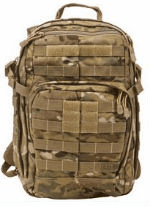
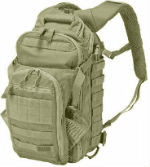
Tactical professionals looking for a backpack will appreciate the forethought of little features that make the toughest job in the world, just a little bit easier.
- Quick-Access Pockets - Accessible without removing your backpack
- Tear-Out Medical Pouches
- MOLLE Compatible - (Modular Lightweight Load-carrying Equipment) system
- Covered Zippers
- Drainage Holes
- Concealed Compartments
- And More!
There are two things that affect a tactical backpack's durability and strength:
- Material
- Weaving
Yes this is a lot to consider, but your gear is important to you. When you choose that backpack, it should last you at least a decade or more. You'll go through at least one car or truck before having to replace it. Choose wisely. Choose Optics Planet.
What Are the Different Weaves Used in Tactical Backpacks?
The basic diagonal weave is as strong and as effective as any weave out there. A diagonal weave is the staple of the tactical world for equipment that requires durability.
The other main option is the Oxford weave. Since you always wear a seatbelt, you're familiar with the Oxford weave. You may be deceived by the strength of this weave... and your seatbelt. This weave is not strong or resistant to tearing. If you need strength in your backpack, this is not the weave for you. Not all backpacks need durability. The Oxford weave is excellent for tactical guys in non-tactical circumstances.
What Fabric Should You Look for in a Tactical Backpack?
- Ripstop Fabric: Arguably the best material for tactical backpacks. Ripstop is extremely resistant to tearing and helps prevent a tear from spreading. Backpack manufacturers are increasingly using Ripstop Fabric to increase the quality of their products.
- Cordura Fabric: A nylon fabric created by DuPont, one of the most reputable names in... everything. This weave creates superior strength and resistance to tearing but not quite as durable as nylon rip stop.
- Kodra Fabric: Similar to Cordura but Made in Korea.
Yes this is a lot to consider, but your gear is important to you. When you choose a backpack, it should last you at least a decade or more. You'll go through at least one car or truck before having to replace it. Choose wisely. Choose OpticsPlanet!
The 4 Immutable Laws of Choosing a Backpack
- Breathable AND Waterproof material doesn't exist (for the most part).
Remember my example of the waterproof backpack on an external frame - A friendly combination.
- Never underestimate the weight of anything.
Everything weighs something. All those seemingly insignificant items end up weighing a lot, especially over time and miles. Every item takes up space, so choose your pack carefully and pack your pack efficiently.
- For long treks, you will likely overestimate the gear you will need. Choose your backpack accordingly.
Get advice from others that have walked the trail you plan on walking. Most people who have walked long trails admit to overestimating gear and end up dumping that gear or mailing it back to themselves at the first available spot.
- Shift Happens: Just because it fits in the store doesn't mean it will fit after 3 days on the trail.
If you realized that you didn't need all that gear, you're still stuck with a huge backpack that does not fit as well when not fully packed. Gear moves around and shifts, pulling on your shoulders and not resting on your hips... time for a smaller backpack.