 Your Browser is Outdated


When you think of a rifle sling, the first thing that comes to mind is probably a leather rifle sling. A leather gun sling is a great choice, and they've stood the test of time for centuries. They're durable, strong, and hold up well in the elements. However, a leather sling isn't the only "best rifle sling" these days. There are a wide variety of materials, shapes, sizes, and applications to choose from when you're looking for a new gun sling.
Is a Rifle Sling Worth It?
You've probably noticed that hunters, law enforcement, and the military almost always have a sling on their rifles. There are several reasons for this:
- Lugging around a long gun all day is tedious. Your hands and arms get tired without a sling, so when it comes time to take the shot, you lose a lot of accuracy simply because your muscles are stiff and/or shaky. You may have already tried this yourself and now find yourself reading this as a remedy.
- Dropping your gun isn't just causing potential damage to the firearm, it's unsafe and may result in an accidental discharge.
- There's little chance of pointing the muzzle in an unsafe direction if you're using a sling properly.
- Slings allow both hands to be free but still allow you to quickly bring your weapon into a firing position.
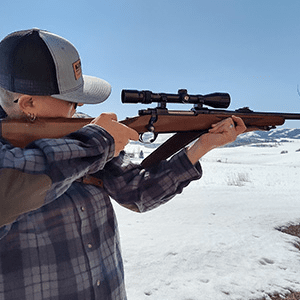
- There's an old trick for shooting "offhand" (no support for the gun except your hands). It's called the "loop sling method," where the sling is wrapped around your arm to aid in a stable shot. Once you've practiced bringing the rifle from a carry position to a firing position using this method, it becomes very natural. As pictured here, the strap is across the chest and supporting the elbow. This is also a great trick if you're kneeling or sitting and using your knee as a rest—it's just one more way to increase stability.
Gun Sling Materials: The Best Hunting Rifle Sling
A hunting rifle sling is typically different from a tactical sling. Tactical or combat slings are designed to keep a gun at the ready at all times, usually muzzle-down across the chest or back in a position that's very close at hand. Tactical slings usually come in one, two, or three-point configurations. They're perfect for tactical use but fairly impractical for hunting rifles, which are most often longer and heavier guns.
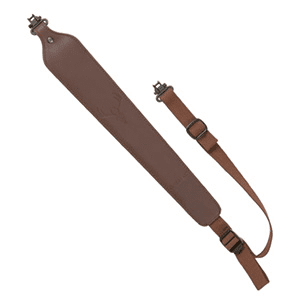
As previously mentioned, a leather rifle sling or leather shotgun sling is still very popular for hunters. They range from simple no-frills "military-style" to heavily padded models. Some of the higher-end leather slings will also have basketweave patterns or images (like big game) embossed into them and are a really handsome accessory for a classic wood gun stock. Leather is very durable, and many of these slings stay on a particular gun for decades of use, season after season. It tends to be heavier than synthetics, so they're less common on lightweight or ultralight rifles designed for hunters that are busting their humps into rough mountains where every once counts.
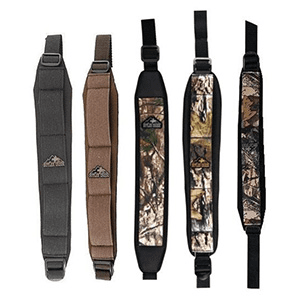
Lighter alternatives to the leather rifle sling are made of various synthetics for strength and durability and come in an almost endless variety of colors, prints, sizes, and padding. Nylon is a really popular material for rifle slings because of its light weight. Neoprenes are well-padded and offer great water resistance. Other popular synthetics include Polyester, Cordura, and Endura.
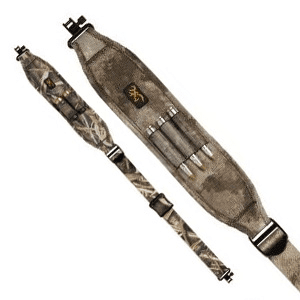
Some slings also include three to five cartridge loops to keep a few extra rounds handy without digging around in your pocket. This is definitely sufficient for big game hunting since typically only a few rounds are fired. To make sure your scope's ready for the hunt, check out our article on How to Zero a Riflescope.
Although almost all rifle and AR15 slings these days are adjustable, you may still run across some that are a fixed length. If so, you can figure out what's best for you by simply attaching twine to your gun at the connection points and tightening or loosening it until it's a comfortable length (even though the twine itself will be very uncomfortable). Once you have that, you can match the length of twine to your sling.
What Are the Different Types of Sling Mounts?
The "points" referred to with slings are simply how many places the sling is attached to the gun. Most hunting slings are two-point slings: one connection on the buttstock and another at the furthermost position on the forend. These are called "sling mounts".
These points are usually static studs screwed right into the rifle or shotgun. Fixed, static slings were the original design and still work perfectly well. The sling swivel's advantage is that it's easier to maneuver and is more comfortable on your shoulder as you move than a fixed or static style.
A QD sling mount (Quick Disconnect or Quick Detach) allows you to easily take the sling off or put it on. Most designs have spring-loaded ball bearings that hold them in place when attached. To detach them, simply press a button and they pop right off. They're sturdy and useful if you want to move the sling to different points, swap out a sling, or remove it entirely if it's snagging up while you're busting brush.
If you have a shotgun that doesn't have sling mounts, which is pretty common, you can find universal shotgun slings that use a girth hitch style mount so you don't have to have your stock tapped and replace your magazine cap.
To Recap
Hunting rifle slings reduce tired muscles in your arms, prevent drops, keep the muzzle in a safe direction, keep you hands-free, and even give you the ability to practice the old "loop sling" offhanded shooting trick. Now you should have a better idea of why you should have a rifle sling, what kind of materials are available, and the two basic types of sling mounts. Shop our full line of gun accessories now for deals on slings, sling mounts, and other essential weapon attachments!

