 Your Browser is Outdated


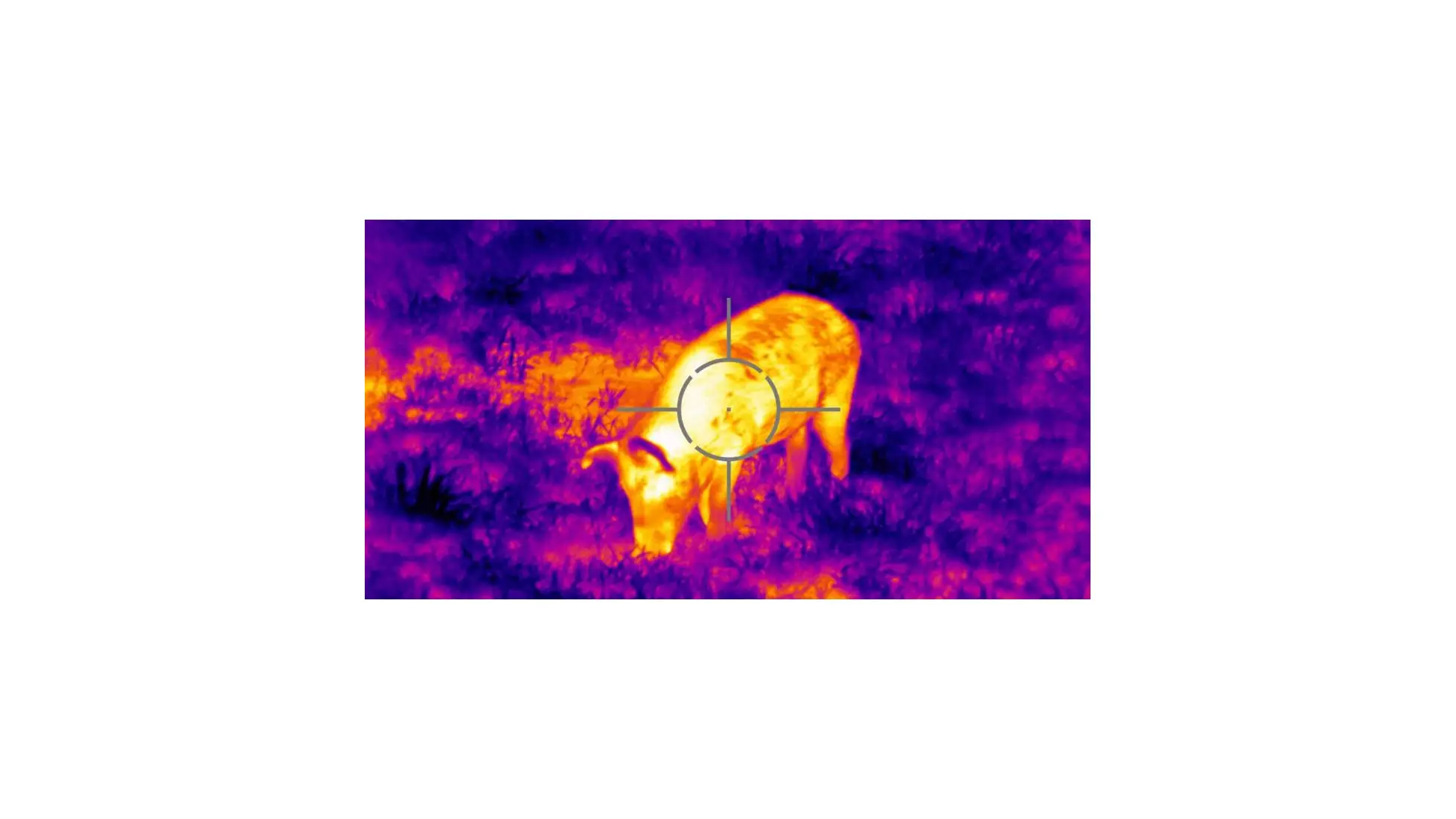


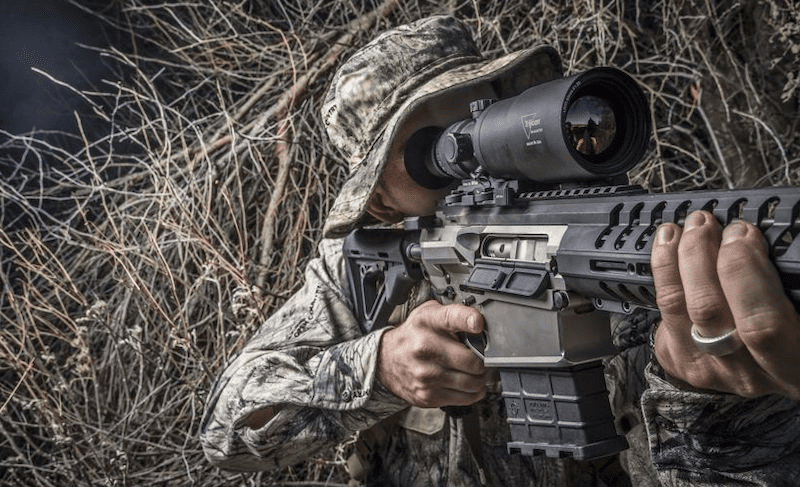
A thermal scope pairs infrared technology with the basic functionality of a rifle scope. The primary benefit is it enhances the visibility of your target, so you can recognize it at night or during the day amid low visibility conditions.
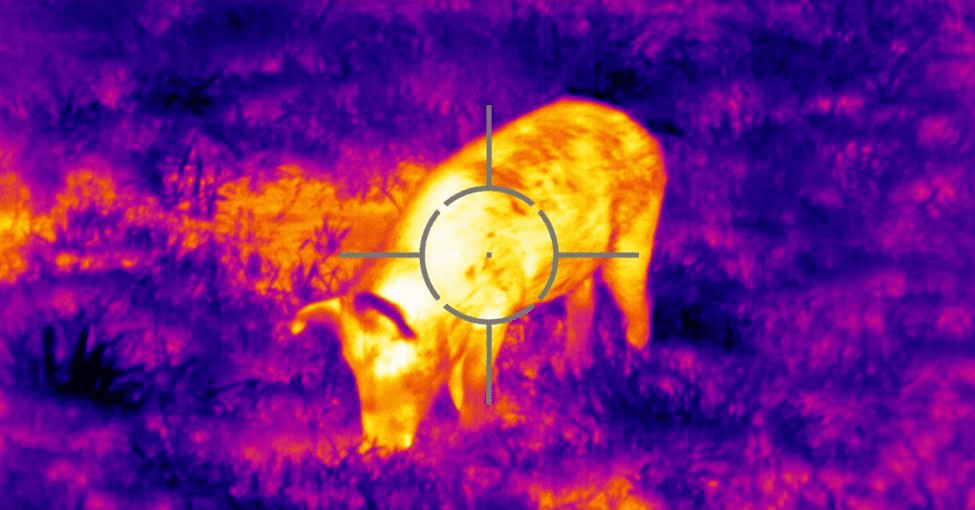
A thermal scope uses infrared light to create images or thermograms (which is why it is also called an infrared scope or IR scope). In a thermal image, hot things appear bright and cold things appear dark. That's because it's showing contrasting degrees of heat across a gradient. Animals, people, and motorized machines tend to emit lots of heat while inanimate objects like plants, buildings, and water emit less heat.
This article will cover how a thermal rifle scope works, how they differ from night vision, what you can use them for, and the qualities you should look for when you buy one.
How Do Thermal Imaging Scopes Work?
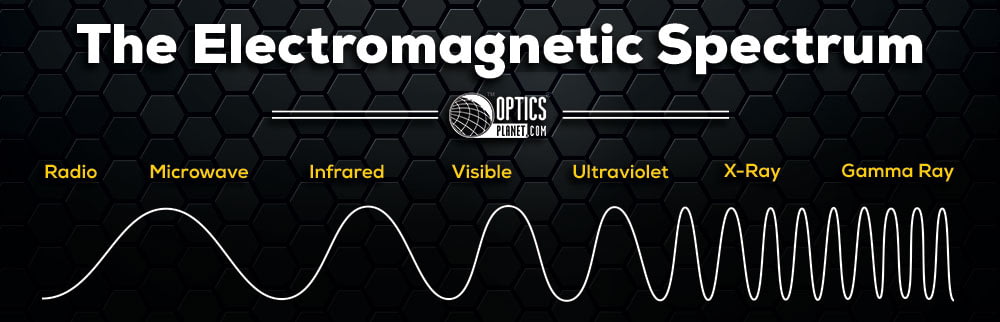
To understand how a thermal imaging scope works, let's take a quick look back to middle school science class when we learned about the electromagnetic spectrum. Light energy travels in waves. On one end, there are long waves like radio waves, which are low energy. On the other, there are short waves like gamma rays, which have high energy. Right in the middle is visible light and then next to it, with slightly longer waves, is infrared light.
The infrared spectrum, which is invisible to the naked eye, splits into three categories: near-infrared, mid-infrared, and thermal-infrared. The first two refer to reflected light while thermal infrared refers to the light emitted by an object, i.e. heat.
According to electro-optics maker ATN, thermal scopes are equipped with detectors that focus on thermal infrared light and then the device creates a thermogram, so you see the object's form but as it relates to heat.
If you've ever seen the popular 80s action flick Predator, then you already have an idea of what a thermogram looks like. In the movie, the alien hunter sees objects in shades of yellow, red, green, and blue. The imagery is an accurate representation of what's actually displayed in a thermal image.
Thermal Imaging vs Night Vision Scopes
Both infrared scopes and night vision scopes allow you to see in the dark, but that's about where the similarities end. There are major differences between them, and most notably in function, practical use, and price.
The biggest difference is how they function. Unlike thermal imaging scopes, night vision scopes need at least a small amount of light to work. The device amplifies that light to improve overall visibility in low-light or nighttime conditions. However, night vision won't work in absolute darkness because there's not enough light, and it won't work during the day because there's too much light. Additionally, when you expose a night vision device to too much light, you can severely damage the sensors.
While an infrared scope improves your ability to detect targets, a night vision scope will enhance visual clarity, much like a traditional rifle scope. But also like a traditional rifle scope, it can be obscured by things like fog, shadows, and camouflage.
An honorable mention to the discussion about thermal scopes vs night vision is IR illuminators. These emit infrared light, which you can see while using night vision but not with the naked eye. An IR illuminator is essentially a flashlight for night vision in areas with total darkness.
Lastly, price. You can buy a night vision scope for a few hundred bucks on the low end, whereas a thermal imaging scope will cost at least $1,000. They tend to land in the $3,000 to $5,000 price range. These are just the major differences. If you're considering spending the cash, you should check out our detailed comparison that gets into the nitty-gritty about durability, weight, battery life, and more.
Can IR Scopes be Used in Daylight?
Yes. The main advantage a thermal scope has over a traditional rifle scope or night vision scope is its ability to detect targets. Although thermal imaging cannot penetrate walls, it can detect an object's heat through a variety of other conditions, such as during the daylight or absolute darkness, in summer or winter, and through fog, smoke, or camouflage.
Can You Use an Infrared Hunting Scope?
There are lots of practical uses for thermal imaging technology, but as a rifle scope, night hunting is probably the best application. An IR scope is best for hunting crafty nocturnal animals like hogs and coyotes. Both animals are smart, fast, and have a strong sense of smell. Coyotes are known to smell hunters from a few hundred yards away, and hogs can detect some odors several miles away and deep underground. Additionally, they both often hide in brush and undergrowth, so a thermal scope can help you spot them behind this concealment.
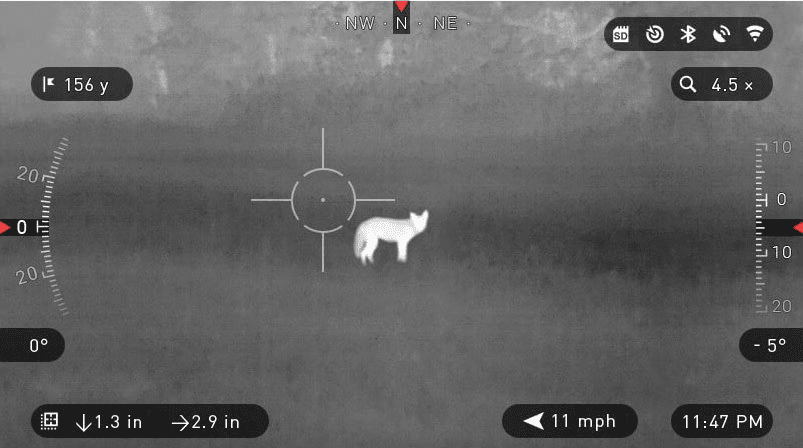
Both animals also know how to utilize camouflage. Hogs tend to hunt in packs while foraging for food but stick to the brush as they travel from point A to point B. Coyotes' beautiful coats serve as natural camouflage for any season and most habitats. Therefore, hog and coyote hunters need to hunt at night and from a distance, so an infrared hunting scope tends to be an ideal tool.
What Are the Best Thermal Imaging Scopes?
It's hard to definitively answer that question because it's so subjective, but there are certain qualities you can find to get the best thermal scope for the money. Looking at highly rated thermal imaging scopes by brands like ATN, Pulsar, Trijicon, Armasight, and Burris, here are the qualities and features that belong to what's considered the best thermal imaging scopes:
High Image Quality
Several factors contribute to the quality of a thermal image. Like most images, resolution is a common way to measure it. Some of the more popular scopes have a resolution of 640x480 pixels.
Because it's a scope and you want to see your target in real-time, refresh rate is another factor to consider. The refresh rate refers to the number of times the image is refreshed on the screen, so higher refresh rates result in more precise images. It's especially important if you're looking at fast-moving targets like deer, coyotes, or hogs. The standard for thermal imaging scopes is 60 Hz.
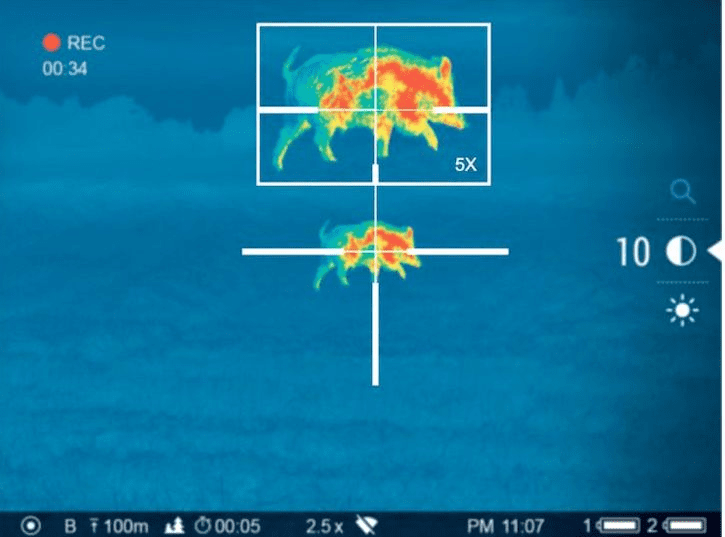
Lastly, some thermal scopes have settings to adjust the color scheme. For example, you could either use the traditional rainbow spectrum or a grayscale.
Long Battery Life
Electro-optics need a power source. More often than not, a thermal imaging scope uses CR123 batteries, but there are a variety of options. However, battery life will range depending on how you run the scope. A common range is 3-5 hours. The longer the battery life, the longer you can stay out in the field without issues.
Other Features
When you buy an electro-optic, you might expect a little bit more than just magnification and target acquisition. Depending on the brand, you can find things like:
- Multiple reticles
- One-shot zero
- Memory for multiple zeroes
- Range finder
- WiFi connection
- Ability to record
Price
Thermal scopes are expensive, but they do a lot of work for you. The price range varies greatly from about $1,000 to $10,000. Searching around the internet and OpticsPlanet, one of the most common scopes you'll find is the ATN ThOR LT Thermal Rifle Scope. It's an entry-level thermal scope with basic features, simple controls, and a long battery life.
As you add features and upgrade quality, the price will go up. If you look at the most popular thermal rifle scopes on OpticsPlanet, the prices range from $1,049 to $4,789. The median price is $1,949.
Parting Shots
Although thermal scopes can be expensive, the benefits quickly outweigh the costs. For most, the main benefit of a thermal imaging scope is target detection. It's especially helpful for hunting nocturnal game under low visibility conditions. If you're in the market for one, check out the selection of thermal scopes, thermal monoculars, and thermal cameras on OpticsPlanet!