 Your Browser is Outdated


If you’re wondering how to measure scope height for mounting a rifle scope, this article is for you. Hopefully, you haven’t purchased the wrong scope rings already and are now looking for a way to fix the mistake. I’ll go through how to measure scope ring height to make sure you don’t have to hassle with buying the wrong ones, returning them, and reordering what you hope are the right ones. That’s a lot of runaround, but we’ve all been there at least once. Adjusting scope mounts in the field is so impractical that it may as well be impossible, so I won’t even go there. Getting it done right the first time will save you a lot of headaches.
Common Scope Ring Height Issues
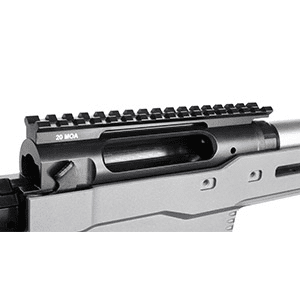
My very first tip is to buy new rings. Sure, you may want to swap those old classics onto your rifle, but you’ll have far more success in the long run if you get out-of-the-box accessories that have no wear and tear and include all of the appropriately sized screws. Get yourself some new bases that correspond to the type of rings you want, and try to match the brand on your rings and bases for the best fit. If you have integrated mounts that are machined into the receiver of your long gun, you only need to know if it’s a dovetail, Weaver, or Picatinny. Dovetail mounts can only use dovetail rings, but Weaver and Picatinny rails can both take Weavers. The easiest way to go is dovetail for dovetail. Otherwise, check if your mount is a Weaver or Picatinny rail.
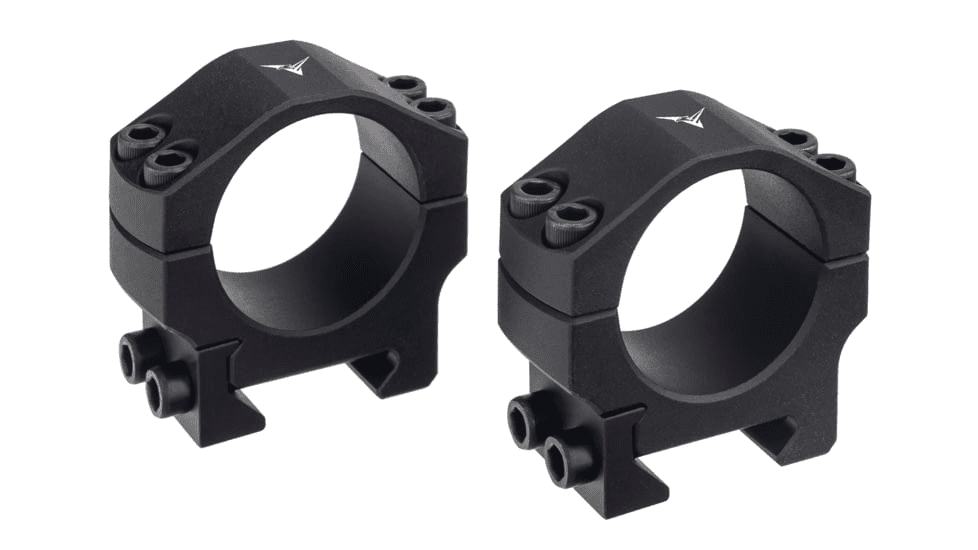
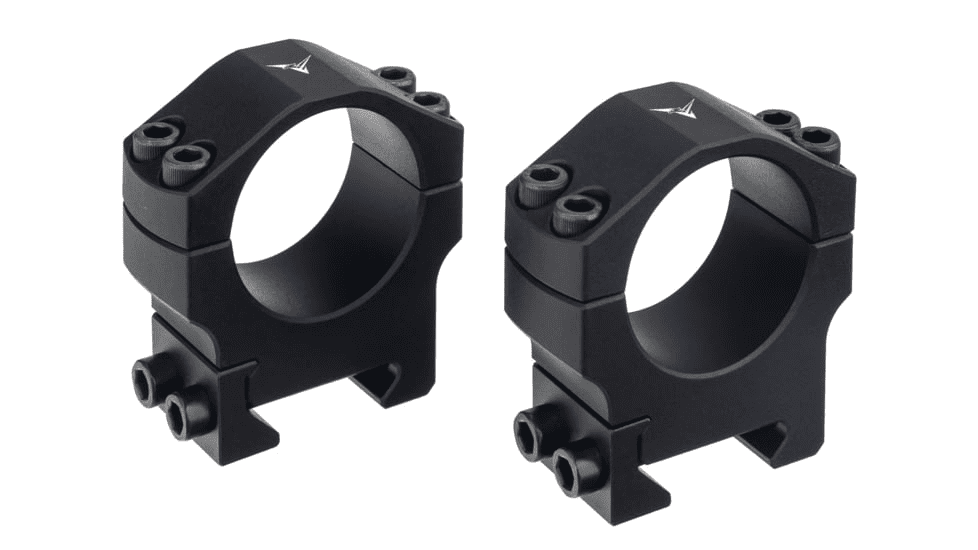
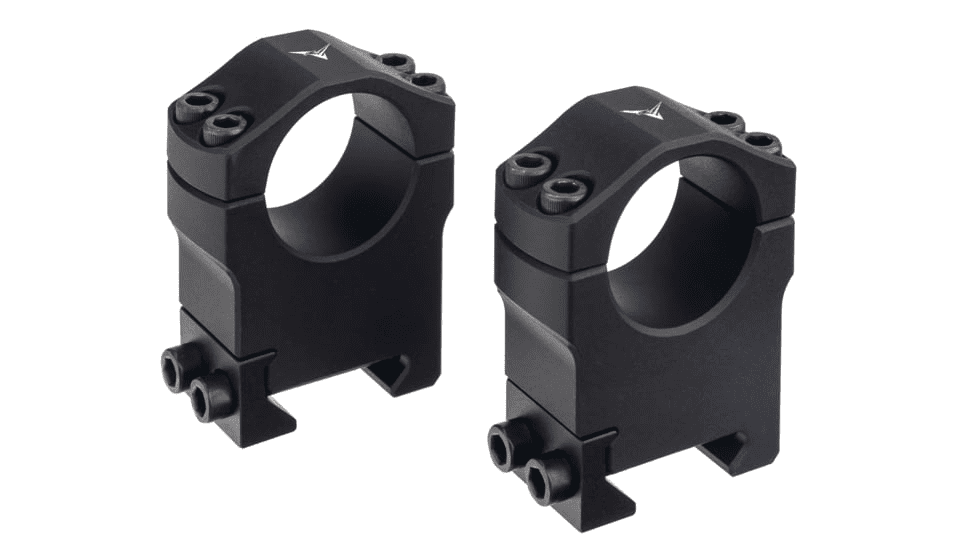
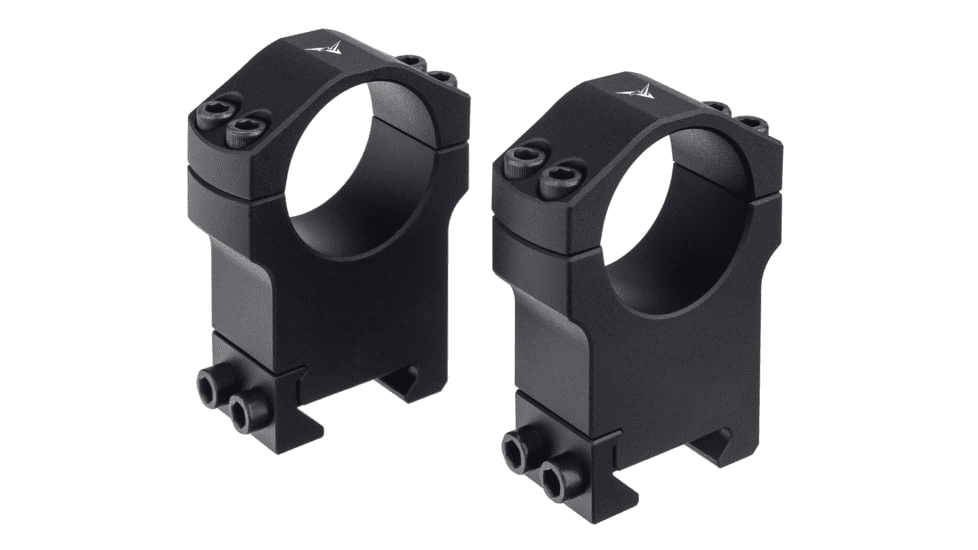
When I was working in a local gun store years ago, we’d see all kinds of do-it-yourself fails come in. The owner just couldn’t figure out what they’d done wrong, and sheepishly (sometimes angrily) brought in their gun to have us fix the incorrect mount. I’m no gunsmith or armorer by any stretch of the imagination, but since mounting optics is pretty straightforward and I seemed to have a knack for getting it done quickly, I was often the one called back to handle it while the more savvy employees dealt with more complex issues. In that time, I saw just about everything I could imagine being done wrong come across the workbench, including upside down and backwards (seriously).
Scope Ring Height is Too High
When the scope is mounted too high, it can cause a variety of issues. You have to take a really awkward position to get a sight picture, and that improper posture results in more felt recoil on your shoulder. Sometimes, if a shooter is so far separated from the cheek weld and their head is up to peer through the scope, they’ll literally take one on the chin if it’s a higher-recoil caliber. Unnecessarily high scopes will also suffer eventual damage or failure from that extra recoil. Some owners complained of accuracy issues no matter how many times they’d zeroed their scope. Although there are ways to mitigate these factors, it’s best to just make sure your rings aren’t too high. Your scope will give you the most accuracy when it’s as low as possible without touching any other parts of the gun.
Scope Ring Height is Too Low
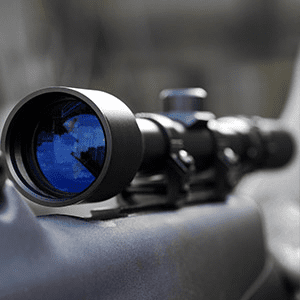
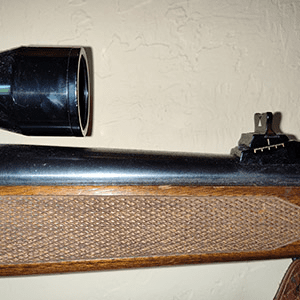
The most common issue we saw come through the doors was scopes that were just mounted too low. The objective lens was kissing the top of the barrel, so the front scope rings couldn’t be properly tightened down without crimping the scope tube. In the shop, measuring scope height was mostly done with eyeballing, prior knowledge, familiarity, and a little trial and error. If we picked the wrong scope ring height, it was obvious as soon as we set the scope into the bottom of the rings. Then we’d just grab the next higher size off the wall and quickly fix it. The only way for online shoppers to have that option is to buy a whole slew of rings, find the ones that work, and return the rest. That’s pretty expensive and time-consuming.
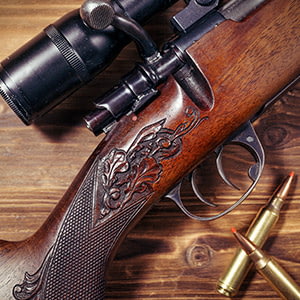
Mounting a scope as low as possible is the best way to go, but the objective lens shouldn’t touch the barrel. With a bolt-action, you also have to watch out for clearance on the bolt handle. There’s nothing worse than having the job done and going to replace the bolt or work the action just to find that it’s impossible because it hits the scope.
How to Measure Scope Height
As my old man used to say, “Use the right tool for the job.” This was usually after he’d tried some farm rig with duct tape and balin’ twine that failed. The most accurate way to get a measurement for firearm-related work is to use calipers. The next best choice is a ruler, but that is a rougher estimate since you’re relying on holding it level and eyeballing it. If you’ve come to the point where you’re getting into DIY instead of just taking it to a shop, getting some basic proper tools is the best way to go. I’ll provide some more tips further down under “Tools for Mounting Your Scope” that will get you started. What we’re actually covering is how to measure scope ring height, not just the scope height.
In an ideal world, we’d have an industry standard for any scope ring height measurement that would be an easy reference to combine with any scope ring size. Unfortunately, many companies measure their scope ring height in a variety of ways. Because of this proprietary nuisance, measuring scope height is the best thing to rely on, and then you can go to the manufacturer’s website and find the corresponding measurement to their rings. “Low, medium, high, or extra-high” doesn't mean much if you don’t know how they’re calculating that. There are two common ways that most manufacturers measure scope height:
- Measuring from base to ring center.
- Measuring from base to ring’s bottom edge.
There are several formulas for how to measure sight height that will give you very close results. I’m not a big math buff, and since you’re reading this, you’re most likely wanting the easiest way to go, so here it is:
- Measuring from base to center:
Take the diameter of your objective lens in millimeters (the second number in your scope’s designation, like the 40 in 3-9x40mm), add 2 to 4mm for the thickness of the scope body (you can often get this exact number from the manufacturer if you prefer), and divide that result by half.
If you prefer an equation, it’s (diameter + 2-4mm)/2 = scope ring height. Using our very common 3-9x40mm scope example and a middle ground of a 3mm scope body, it looks like this: (40 + 3)/2 = 21.5mm center height. - Measuring from base to ring edge:
A little trickier, but still doable.
Divide the measurement of your scope tube (usually either 1 inch or 30mm) by 2 and add the manufacturer’s scope ring height. A 1-inch tube = 25.4mm, so half of that would be 12.7mm.
You’ll still have to account for your objective lens, though. Just divide your objective lens by 2 and ensure that number is smaller relative to the scope ring height and that you’ll clear the barrel. Those calipers I mentioned will be the handiest way to make sure you’ve got it right before you hit the “BUY” button online.
You will still have some other considerations, though. If the iron sights are higher, you’ll need to either remove them (not advised unless they’re designed for it) or mount your scope a little higher. If you have a big objective lens for long-range shooting, like a 50mm, you’re going to need higher rings. Bull barrels and other heavy target barrels or AR flat-tops will change things. There’s always that bolt clearance, too. Sometimes, you can scoot the tube back a bit to clear the bolt handle while still preserving your eye relief adjustments.
Generally, the following are loose guidelines for scope heights based on objective lenses and a standard tapered barrel, but you should still measure before you buy:
- 40-42mm: Low
- 44mm: Medium
- 50mm: High
- 55mm+: Extra High
What Tools Are Needed to Mount a Scope?
Finally, my favorite part! Now that you’ve got the meat and potatoes, it’s time to make stew. As promised, here are the scope mounting tools you should have to do this properly and make all of the necessary adjustments:
- A gun vise. You can rig something up, but that sets you up for a lot of opportunities for your rifle and scope to slip around this way. They have little cupped spaces for you to set the tiny screws and parts aside so that they don’t go rolling off the bench to be lost forever. It’s also going to make life a lot easier when you boresight your scope after the mount, too.
- A torque wrench. This allows you to tighten everything down according to the manufacturer’s specifications. Overdo it and you could strip your threads or even dent your scope tube. Underdo it and your scope will slip around with recoil, making all of your previous efforts useless.
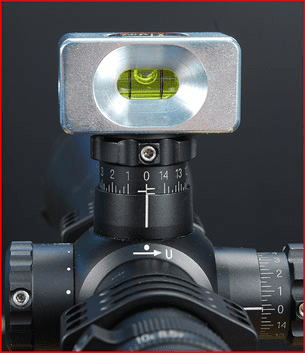
- A crosshair level. In combination with your gun vise, this will ensure that your horizontal crosshairs are level (hence, the name). If you go by your eye, there’s a good chance it won’t be level, and this will affect your accuracy.
- A dab of Loctite. Not a lot, just a little.
- This guide and video on How to Mount a Rifle Scope.
- A boresight to save you a lot of ammo and get you on the paper at 25 yards so you can start zeroing your scope.
- Targets so that you can ensure you're accurately zeroed and to show off your handiwork to all of your buddies at the range.
Dialing It All In
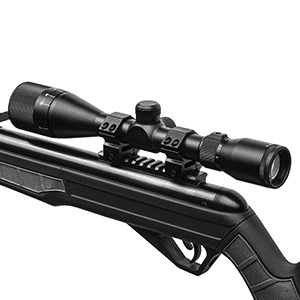
Let’s recap. We’ve covered how to measure scope height, or more properly, how to measure scope ring height. We’ve taught you how to select the proper scope ring height based on the two most common methods manufacturers use. Finally, we’ve pointed you towards the gunsmithing equipment you should have and provided you with a guide and video to mount your scope. Now that you have the confidence to do it yourself, buy those new mounting plates and rings and get started!