 Your Browser is Outdated


Pistol compensators are designed to counteract the recoil of your handgun, resulting in less muzzle flip, less felt recoil, quicker sight picture recovery, and faster split times. Compensators have grown in popularity in recent years because threaded barrels are more readily available, which means compensators are now offered in many styles and mounting methods. You can use them on many firearms, including competition pistols, duty pistols, and carry pistols. It is extremely important to use a compensator that fits your intended application, as compensators can affect your firearm's reliability and ammunition choice, and you must tune them for certain applications as well. Thankfully, if you're not sure which compensator best fits your needs, this guide is here to help!
How Do You Install a Compensator on Your Pistol?
 Most pistol compensators require your pistol to have a threaded barrel, as this allows the compensator to screw onto the end of it. Compensators also need proper timing to function as intended. Manufacturers use various methods to ensure proper timing, including shims and set screws. Ensure you follow the installation instructions from the manufacturer for proper fit and functionality for your firearm. While this can be done at home, if you're worried about installation issues, you can always have a gunsmith install it for you to ensure the process proceeds smoothly.
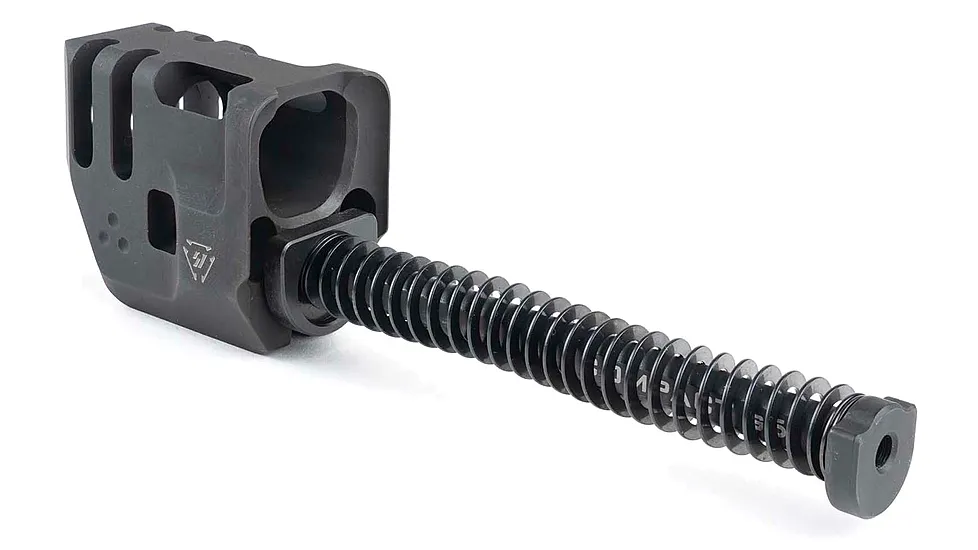
While threaded compensators are the most common, some don't require the use of a threaded barrel, such as the Radian Weapon Systems Ramjet, Strike Industries Mass Driver, and Wasatch Arms Compensator. These compensators use the underside accessory rail, the guide rod, or a barrel and compensator combination that use a tapered barrel with set screws to mount to the firearm. If you live in a state that restricts owning a threaded barrel, these are great options that allow you to have a compensator while still complying with the law. While most compensators are firearm specific, there are universal models available (although these are still limited to the caliber of the pistol). Whichever route you decide to go, follow the installation instructions from the manufacturer or have a qualified gunsmith install it to ensure proper functionality.
What Kind of Compensator Do You Need for a Carry Gun?
 When it comes to concealed carry, most people use compact or micro-sized pistols to make carrying and concealing their firearm easier and less cumbersome. The downside of micro-sized pistols is that they have more recoil and muzzle flip due to their size and weight, so they're harder to control and shoot accurately. A compensator can help negate these issues and make your firearm easier to shoot. However, because this is a firearm you are using for self-defense, it must remain reliable. While compensators reduce recoil, they can also increase the likelihood of malfunctions if the firearm isn't tuned properly. Since the compensator expels gasses and energy upward or to the side to reduce the amount of energy, this means less gas is cycling your pistol slide and chambering another round. One way to tune your firearm to ensure reliability is by installing a lighter recoil spring. A lighter recoil spring requires less energy to cycle the slide, which allows your firearm to function as intended with the benefits of the compensator. In addition to changing the recoil spring, you may also need to use higher pressure ammunition, as these rounds produce more energy, ensuring the slide cycles properly.
Not all compensators require you to tune the pistol. Micro compensators, such as the Griffin Armament Micro Comp and most single port micro-comps, will function as intended without tuning your pistol. A micro-comp is a compensator with minimal porting, such as a single port on top and possibly one on each side. While these compensators don't provide the same amount of recoil reduction, they typically allow for OEM reliability without changing your recoil spring or using higher pressure ammunition. They also do not increase the overall length of the firearm as much as a full size compensator, allowing you to maintain the concealability of your gun.
How Do Competition and Duty Pistol Compensators Work?
 Pistol compensators that are meant for competition or duty guns are designed to reduce recoil as much as possible, making them more effective than carry and micro-comps. They are typically longer and have either a large single port or more smaller ports, which equates to more recoil reduction and a flatter shooting pistol. This style also requires tuning to ensure it functions properly. Reduced power recoil springs and high pressure ammunition are typically necessary for proper function. Generally, you shouldn't use the largest possible compensator on duty pistols as they still need to be 100% reliable and must fit in duty-style holsters. Competition pistols are usually highly modified and use custom/specialized holsters, allowing you to use the biggest and most effective compensators. Tuning is required for larger competition-style comps.
Summary
Compensators are an effective tool for reducing recoil and muzzle flip which results in faster split times, better control and recovery, and increased accuracy. Choosing the correct compensator for your pistol depends on the type of pistol you intend to mount it on and how you plan to use the pistol. After mounting your compensator, always test fire the pistol with the standard ammunition you commonly use to ensure it functions properly. If you experience malfunctions, you may need to use higher pressure ammunition or install a reduced power recoil spring. Make sure you use a compensator that is compatible with your firearm and install it per the manufacturer’s instructions.
Here at OpticsPlanet, we have everything you need to upgrade your firearms and make them as functional, reliable, and useful as you need. We have a wide selection of pistol parts to choose from, including triggers, grips, and barrels. We also have plenty of handgun ammo available in tons of differeny calibers, so you can find the rounds you need for competitions, self defense, or target shooting.


