 Your Browser is Outdated


Personal protection is a priority, and an increasing number of people are flocking to electroshock devices for self-defense. These tools fall under the category of less-lethal weapons, meaning that they are designed to incapacitate or deter threats rather than eliminate them. Two of the most popular electroshock weapons available to civilians are TASER Energy Weapons and stun guns. While the terms TASER and stun gun are often used interchangeably, they are very different devices in terms of both function and effectiveness.
This guide will clear up any confusion between the terms, explain what each device is, and weigh the benefits and disadvantages of each to help you select the best self-defense weapon for your situation.
TASERs vs. Stun Guns: What’s the Difference?
To start, TASER is a brand name of electroshock weapons—not terminology for an actual device. This guide will refer to TASERs as energy weapons that shoot probes into an attacker from a distance, while stun guns are close-contact devices that deliver an electric shock to threats. It can get a bit confusing, as TASER does manufacture stun guns, and all current TASER gun models have a contact stun feature, providing dual functionality.
What Is a TASER Gun?
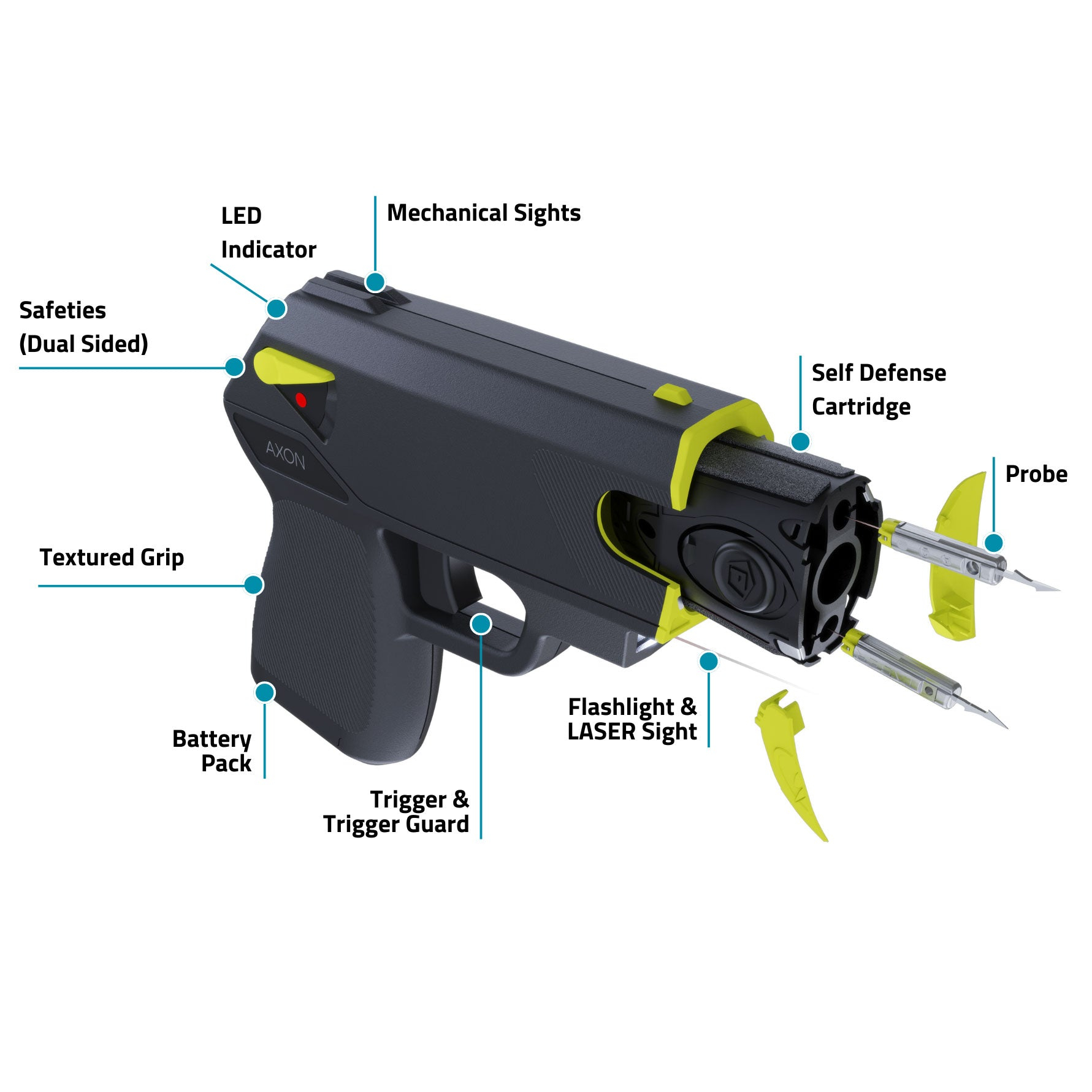
TASER is an acronym for Thomas A. Swift's Electric Rifle and is a brand name of electroshock self-defense weapons. When deployed, TASER guns fire two barbed probes that attach to clothing or skin and deliver electrical pulses through the wire. These pulses result in neuromuscular incapacitation (NMI) that disrupts voluntary muscle control, causing the target to lose balance, collapse to the ground, and remain immobile. For a model like the TASER Pulse 2, this immobility can last up to 30 seconds, giving you ample time to escape the situation.
What Is a Stun Gun?
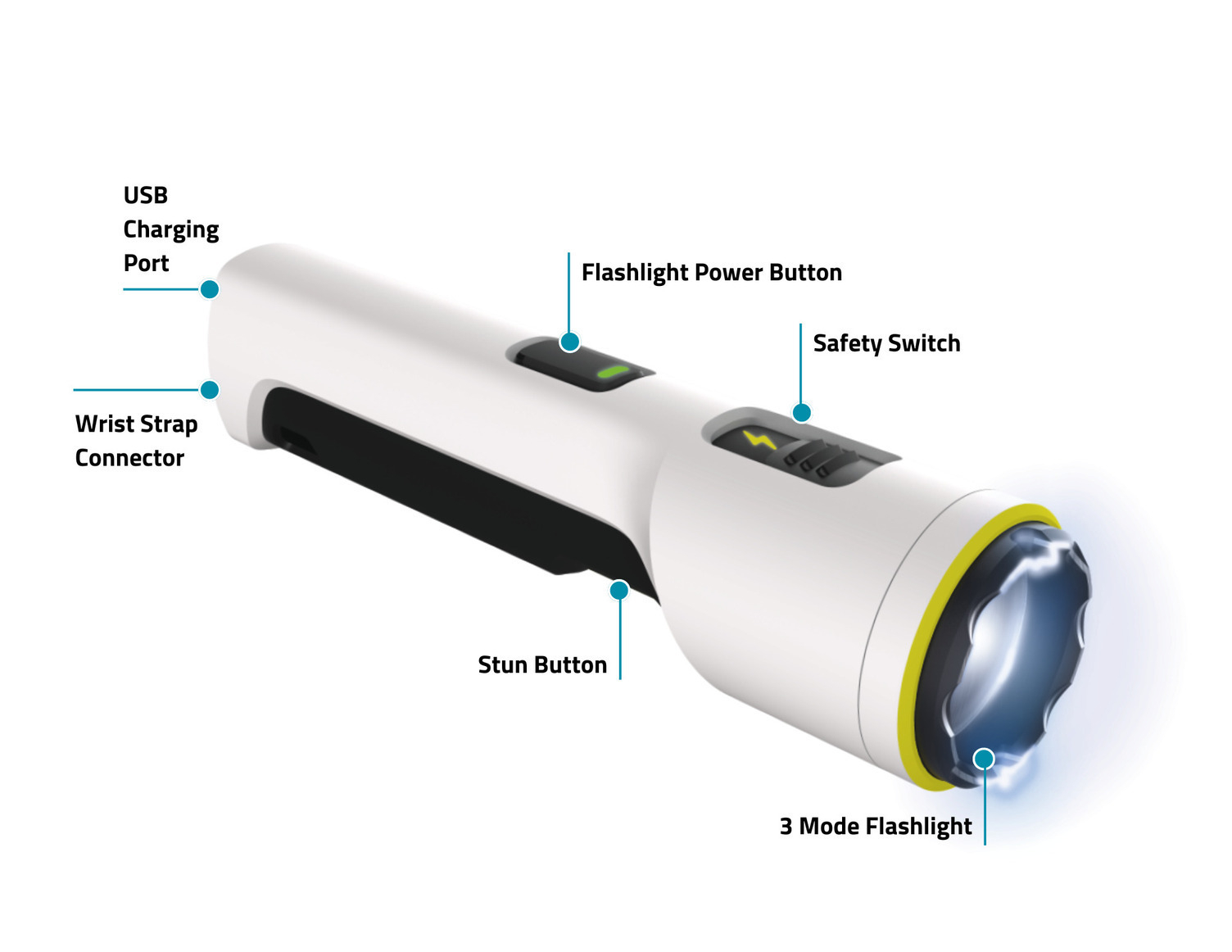
The two biggest differences between a stun gun and a TASER gun are effective distance and effect on target. For starters, you need to physically press the probes of a stun gun into an attacker to deliver the electric shock while a TASER gun launches projectiles from a distance. As for the effect, stun guns rely on pain compliance over NMI, meaning that they won't incapacitate an attacker, but they will hurt like hell and deter them from approaching you again.
Pros and Cons of TASER Guns vs. Stun Guns
With the basics in mind, here's a simple list of benefits and disadvantages of each tool to help you decide which one is best for your protection:
Pros of TASER Guns
- Can Be Used at a Distance: Most TASER models have an effective range up to 15 feet, allowing you to incapacitate a threat before it gets too close.
- Completely Incapacitates Threat: Once NMI kicks in, it renders the target immobile, providing a good 30 seconds or so to escape before they regain composure and the ability to move.
- It's important to note that certain narcotics and personal traits may impact the effectiveness of NMI against a threat. If the attacker seems to be under the influence or acting erratic, you need to be aware that the standard timing and effects of NMI may be altered in that situation.
- Can Ward Off Threats Without Deploying (some models): The TASER 7 CQ model has a neat feature: a loud warning ARC. This electrical arc produces a terrifying noise that can deter them from attacking. Try to think of a massive bug zapper or high-voltage electric fence. It lets threats know what they’re in store for if they continue to harass you.
Cons of TASER Guns
- Limited Shots: All current TASER models except the 7 CQ only fire one shot before requiring you to reload. This means that you only have one opportunity to take down your target in most cases, so practicing your aim is essential. TASER sells conductive training targets that display impact from their devices. While refills aren't that cheap, it's well worth the investment to practice if you're shelling out for a device in the first place.
- Clothing Interference: Thick threads and loose clothing can impact the effectiveness of the device, so it's important to notice this in the moment and aim for other areas of the body if this is the case.
- More Expensive: A TASER gun that can fire probes is often much more expensive than a standalone stun gun, and cartridge refills add on to that price. However, keep in mind that all TASER guns also have a stun gun feature, providing two functions in one compact device.
- Legal Requirements: For the most part, both TASERs and stun guns can be owned by law-abiding civilians in all 50 states. However, certain states and jurisdictions may have stricter laws regarding TASER guns and require a Firearm Owners Identification (FOID) card. Always check your local and state laws before purchasing.
Pros of Stun Guns:
- Ease of Use: Unlike TASER guns, stun guns require no aim to effectively use. You just need to press the end of it into the attacker to deliver pain compliance.
- Don't Require Ammo: As long as the device is charged, you can deploy it countless times in a situation without failure.
- Much More Affordable: Standalone stun guns cost much less than TASER guns that deploy probes. You will also save money on cartridge refills since they don’t require anything other than a simple charge from a USB-C cable.
- More Compact: Stun guns are much smaller and concealable than a TASER gun. Models like the TASER StrikeLight 2, also known as a TASER flashlight, not only look like a flashlight—they are one. This makes it easier than ever to go for late-night jogs or dog walks while illuminating your surroundings and being armed for defense at the same time.
- ARC Warning Feature: The same electric ARC warning feature on the most expensive TASER model is also found on their cheapest, the StrikeLight 2 stun flashlight. Not all stun guns may offer this feature, so thoroughly read the product description to ensure the device has all the features you want.
Cons of Stun Guns:
- Requires Close Contact: Unlike a TASER, a stun gun's probes must be pressed into a threat to have any effect, meaning you need to at least be in arm's reach to deploy.
- Does Not Cause NMI: A stun gun causes localized pain but does not reliably override voluntary muscle control. A threat who is determined, highly adrenalized, intoxicated, or simply has a high pain tolerance may continue their attack.
- If you can't carry a firearm, it is never a bad idea to arm yourself with a back-up option that can affect threats in other ways beyond pain compliance. Pepper spray is an excellent self-defense tool that can momentarily impair their vision and temporarily irritate the respiratory system, often causing coughing and shortness of breath. We carry several options of self-defense sprays by trusted brands like Sabre and Mace.
- Only Works While Maintaining Contact: The electrical effect stops almost immediately once the device is pulled away. Unlike a successful TASER deployment, which can create several seconds of involuntary muscle disruption, a stun gun doesn't provide a lasting incapacitating effect after contact ends.
Power Up Your Personal Protection
With so many unique ways to defend yourself, electroshock weapons are gaining ground with civilians due to their effectiveness, distance, and fewer legal restraints compared to firearms. When choosing a self-defense weapon, just remember that stun guns must be used at close ranges and are more of a deterrent, while TASER guns can be used at a distance and can temporarily incapacitate threats. Although, consider that stun guns are often more affordable than TASER electroshock weapons and essentially have unlimited "ammo" on a full charge. Make sure to check out our other Less-Lethal Weapon Guides to learn more about defense tools like Mace and pepper spray and other EDC items to add to your loadout.


