 Your Browser is Outdated


OWB holsters, or outside-the-waistband holsters, are a popular choice for firearm enthusiasts for various reasons. They offer several advantages over their inside-the-waistband (IWB) counterparts, making them ideal for specific situations. This guide will delve into OWB holsters, exploring their benefits, drawbacks, and different types of holsters to help you decide if one is right for your needs. 
The Advantages of OWB Holsters vs. IWB Holsters
Comfortable for Long-Term Carrying
OWB holsters distribute the weight of your firearm more evenly across your belt line. This reduces pressure points (holster hot spots) that can dig into your body, especially with larger firearms, making them significantly more comfortable for extended wear. Imagine carrying a full-size pistol throughout your day—an OWB holster will feel much less intrusive than an IWB holster digging into your side. Check out our guide on Concealed Carry Positions to Consider for tips on the best CCW holster positions.
Faster and More Natural Draw
Every second counts in a self-defense situation. OWB holsters position your firearm to be readily accessible outside your waistband. This allows for a faster, more natural draw compared to reaching underneath clothing with an IWB holster. The unimpeded access translates to smoother retrieval and potentially quicker deployment when needed most.
Superior Stability and Retention for Secure Carry
OWB holsters often have a more robust design with a larger footprint that securely attaches to your belt. This translates to superior stability, minimizing any unwanted movement or flopping of the holster while you move. Additionally, many OWB holsters incorporate retention features like thumb break straps or adjustable screws. These features ensure your firearm stays securely holstered during everyday activities or even a physical struggle.
Types of OWB Holsters
Paddle Holsters: Paddle holsters are known for their ease of use. They feature a wide, flat paddle made of Kydex or polymer that curves to conform to your hip. This paddle slides behind your belt and secures it firmly in place. Paddle holsters are ideal for quick on-and-off carry, making them popular for range use or for situations where you might need to remove your holster frequently. 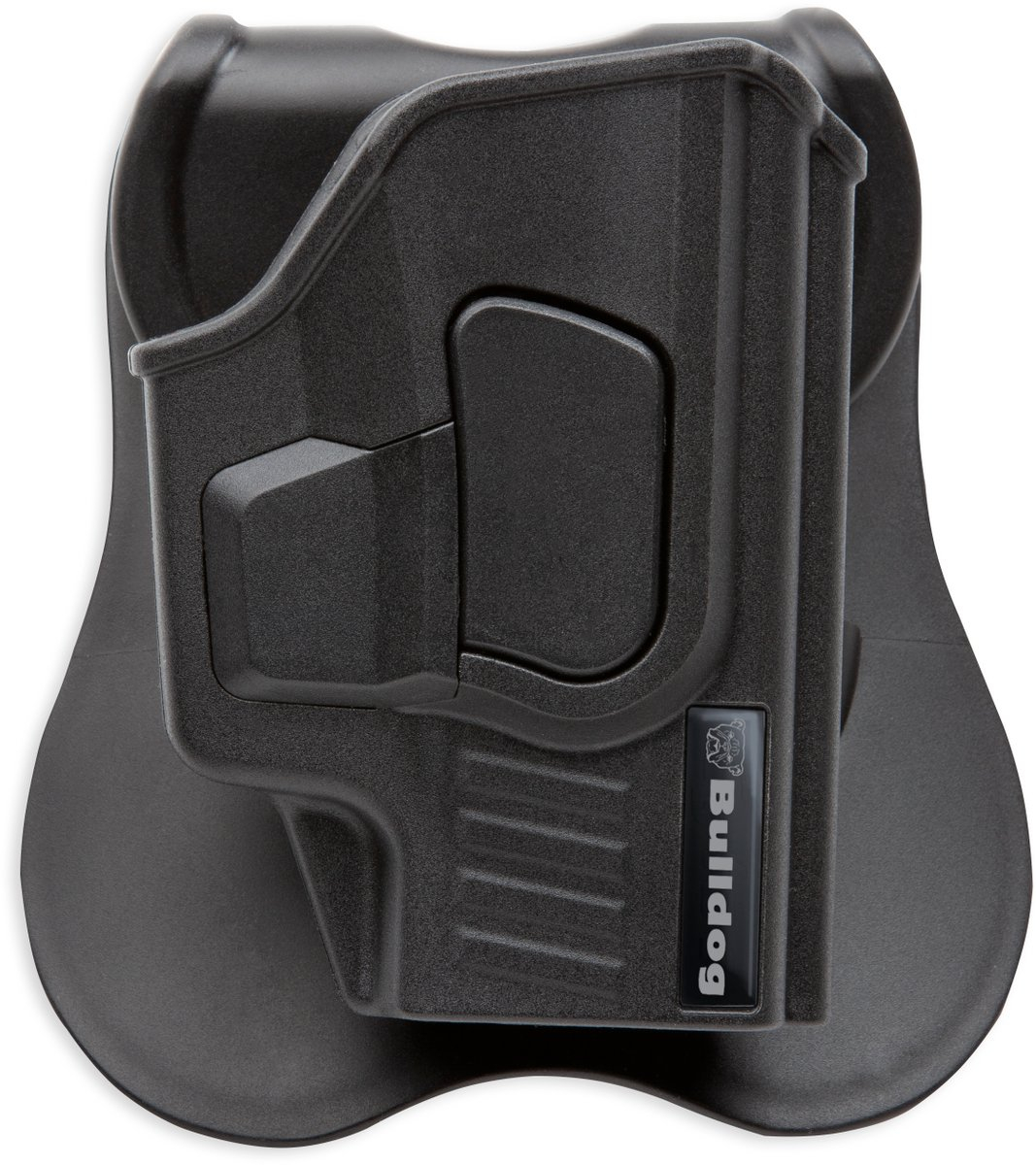
Belt Loop Holsters: Belt holsters secure to your belt loops for a more traditional carry option. The very first holsters were designed to be worn outside the waistband. OWB holsters were the standard method for carrying a firearm for over a century, from the early cowboys of the Wild West to early law enforcement officers. OWB belt holsters, with their simple and functional design consisting of a holster body made of leather or Kydex and loops sewn on the back that slide onto your belt, have proven effective and reliable for generations. This reliability instills a sense of security and confidence in your choice of carry method.
While OWB holsters remain an option today, the rise of concealed carry has led to the popularity of inside-the-waistband (IWB) holsters, which offer greater discretion. However, OWB belt loop holsters still hold a special place as a classic and dependable carry method. Due to their lower profile, they offer better concealment potential than paddles. Belt holsters may require a dedicated gun belt for optimal fit and security. They can be slightly more challenging to put on and take off than paddles.
Competition Holsters: These are designed for speed and ease of draw, often featuring adjustable ride height and cant angles. Competition holsters have retention features but prioritize a balance between security and speed compared to tactical holsters. Competition holsters typically fall under Level 1 retention. This means they rely mainly on friction and molding around the firearm's trigger guard for retention. The design prioritizes a smooth, snag-free draw for fast retrieval during competition stages. Some competition disciplines, like 3-Gun, which involves movement and obstacles, might utilize holsters with adjustable features like a thigh strap for added security against bumps or dislodging. So, competition holsters find a middle ground. They retain the firearm well enough for safe competition use but prioritize a quick draw for peak performance.
Safety should be your top priority when choosing an outside-the-waistband (OWB) holster. Start by mastering proper firearm handling. Also, check local laws to confirm that open carry is allowed. Another crucial aspect in finding the right holster for your needs is ensuring it fits your handgun. Some holsters are versatile, working with various models and sizes, while others are specific to certain handgun models. Therefore, always ensure the holster fits your handgun before making a selection.
What Is the Best Material for Holsters?
The material of your holster is a key decision, impacting everything from comfort and concealment to durability and draw speed. There are two main materials for holsters: Kydex and Leather.
Kydex is a thermoplastic material known for its strength and rigidity. Kydex holsters are lightweight, weatherproof, and offer excellent retention, making them ideal for active carry. They can be molded for a precise fit around your firearm, aiding in a smooth draw. However, an OWB Kydex holster can be less comfortable for extended wear due to its stiffness and can scratch your firearm's finish if not properly constructed.
Leather holsters are classic, offering a timeless look and good retention. Due to its natural flexibility, leather is generally more comfortable for all-day carry. However, leather can soften over time, potentially affecting retention, and is susceptible to moisture and weather damage. Additionally, leather holsters might require break-in time to achieve a smooth draw. Learn more about how to maintain your leather holsters.
OWB Holster Carry Positions
Regarding outside-the-waistband holsters, there are two main carry styles to consider: paddle and belt loops. Each offers distinct advantages and disadvantages.
Paddle holsters feature a wide, flat paddle that presses against your belt and waistband for easy on and off. They're generally more affordable and comfortable for occasional carry. Paddle holsters may be less secure than belt loops, especially during vigorous activity or movement. They can also print more easily under clothing due to the added bulk of the paddle. So, consider wearing looser clothing or a jacket to cover your paddle holster.
OWB holsters provide a comfortable, secure, fast-draw option for firearm enthusiasts. Whether you prioritize comfort for extended carry, lightning-fast draw speeds, or a combination of both, an OWB holster perfectly suits your needs. By understanding the different types, materials, and carry styles, you can select the perfect OWB holster that complements your firearm and personal preferences. Safety is paramount, so always prioritize proper firearm handling and adhere to local gun-carry laws. Be sure also to check out our more in-depth article on all types of gun holsters: Choosing a Gun Holster That's Best for You.

