 Your Browser is Outdated


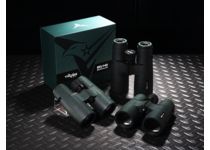
We reviewed the best birding binoculars on the market to offer you our favorites below. Do you have questions on how to choose bird-watching binoculars for your specific application? While the typical optics consumer often favors high-powered binoculars (16x is quite popular today!), the more discerning birdwatcher has traditionally preferred relatively low-power binocular models (7x, 8x, and some 10x). High power certainly has its place in birdwatching binoculars if you need to view small details at a greater-than-average distance. Still, lower power optics in birdwatching binoculars have many advantages.
One of these is the exit pupil, which translates to binocular brightness. For example, when comparing two similar birding binoculars with the same objective diameter, such as an 8x42 and a 10x42, the lower power unit will have a larger exit pupil (42/8=5.25 vs. 42/10=4.2) and therefore, deliver more light to your eye. This is an advantage when you are out at dawn or twilight or looking through binoculars at markings on a bird in the shadows of a tree. Lower-power birdwatching binoculars typically provide a wider field of view, which is handy for scanning a large area for subjects of interest or more easily following moving objects, such as birds in flight. Finally, you may have noticed that an 8-power binocular seems easier to hold steady than a 12-power binocular (we do have spotting scope & binocular tripods and binocular tripod adapters that will work great with these binoculars!) The higher power and the narrower field of vision make small movements of your hands and body more noticeable. Still, larger objective and top-quality lens coatings help to keep the view bright enough to be quite usable. Look below at our nature & birdwatching binoculars on sale and see what better fits your birdwatching needs. We guarantee you will be satisfied! Remember to read our guide on 10 Reasons To Start Birdwatching Today to learn more about the hobby.
Exploring Birding Binoculars: Power, Optics & Getting the Best View
Magnification
Any magnification (the first number in a binocular description) between 7 and 10 will work fine for an all-purpose birding binocular. Despite what some may claim, a 10x will not identify more birds for you than a comparable quality 7x binocular. (If you think you need more than a 7x or 8x binocular, you should opt for a spotting scope.)
A 10x binocular does offer slightly more image detail, but a 7x or 8x is easier to hold steady and offers a wider field of view. (A wider field of view will make it easier for a beginner to line up a binocular on a bird.) An 8x bino is a good compromise for birding and is today's most popular magnification.
Objective Lens Size
An objective of at least 30mm diameter is a minimum for an all-purpose birding binocular. Consider a model of 40mm or more for the best image brightness and quality. Compacts of 20-25mm can be handy, especially for experienced birders but should be avoided by beginners as a first binocular. For those who need to go light, an 8x30 or 8x32 is a popular choice and an excellent compromise between size and performance.
Porro vs. Roof Prisms
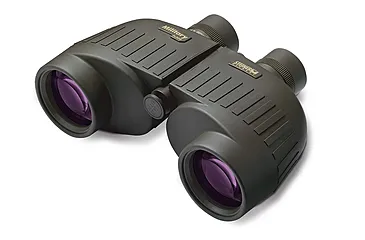
On the other hand, most people prefer the way a roof prism binocular handles. In addition, the Roof Prism is also the easiest design to waterproof and seal. If durability and longevity are a concern, you are less likely to have problems down the road with a good roof prism.
If you are looking for a roof prism, a PC (phase-corrected) roof prism will deliver sharper images than a non-PC roof prism
Preferred Focus Types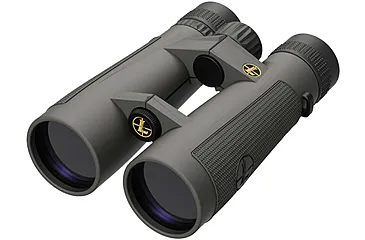
For an all-around birding binocular, a center-focused model is a must. Birding is an activity that will require you to focus on birds that are very near and on very distant birds. Center focus is the only focus system that can handle all distances well. Individual eyepiece focus (IF) can benefit birding at medium and long but not short ranges. Avoid "no focus" binoculars altogether.
Most people new to birding are surprised to find themselves watching birds less than 30 feet away and sometimes less than 15 feet away. A binocular that only allows you to focus on objects at most 20 ft will cost you some birding opportunities. A close focus of 15 feet should be a minimum for a versatile birding binocular, and a close focus of 10 feet or less is even better.
A binocular that requires many turns of the focusing wheel to focus is fine for some applications, but not birding. You will constantly focus and refocus as a bird moves from one location to another, and you will need to refocus quickly to catch up. A binocular that needs to be faster to focus will also cost you some birding opportunities.
Essential Criteria for Birding Binoculars: Focus, Quality & Price
How much should I spend on a pair of birdwatching binoculars? This is a hotly debated topic with birders. You won't need the highest quality binoculars for birding if you wish to identify a species but to enjoy the view better, you'll want to take a step up in quality. With computerized technology, even an economy-grade binocular will have enough optical quality to identify birds under good conditions for an hour or two. On the other hand, a high-grade binocular is much more likely to get you back out in the field to enjoy the birds and will be much more comfortable to use over extended periods. When in doubt, spend a little more, even if it is a stretch. At the end of a full day of birding, your eyes will know the difference.
For someone wanting to try birding casually, expect to pay at least $75-100 for a binocular with enough quality to ID birds for an hour or two at a time under good conditions. If you expect to be out all day, spending $150-200 is wise. You can also get a more durable, waterproof model at this price.
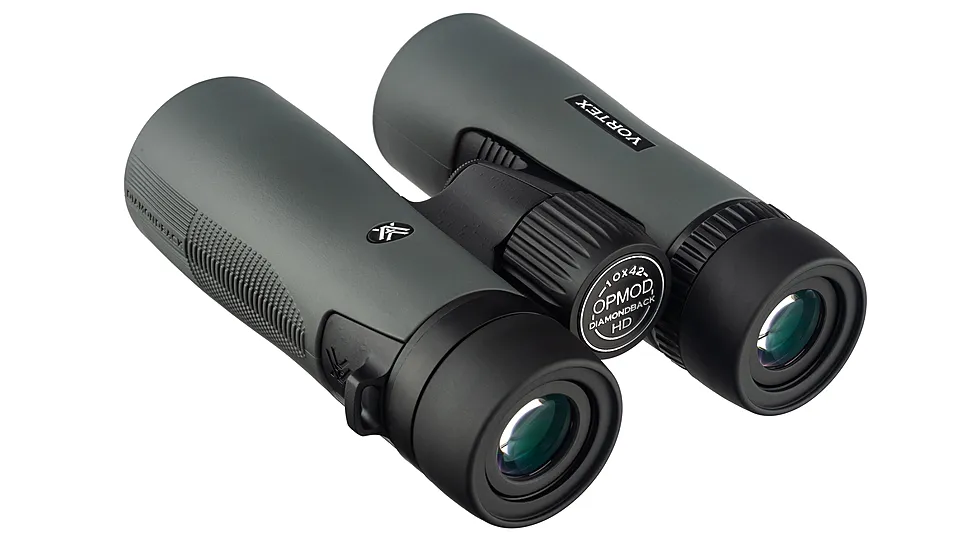
If you will be birding regularly, you should be willing to spend around $300. You get the most return on your optical dollar at this price initially. A $300 binocular will allow you to identify as many birds as the most expensive models, though it may not be as comfortable or durable as a more expensive glass. Still, a birdwatching binocular in this price range will provide many years of service with reasonable care.
For those who birdwatch often, a top-of-the-line model from Zeiss, Swarovski, or Leica is a relatively cheap investment when weighed against the many years of outstanding performance such an amazing birding binocular provides. Models in this quality range allow you to view for long hours without a hint of eye fatigue or strain and provide sensational views of birds in glorious color and form. Once you have used a binocular of this quality, you will never return to a cheaper model.
Eye Relief
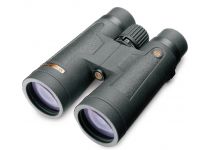
If you wear eyeglasses for normal-distance viewing, you should always wear them when using binoculars. Fortunately, most models are made with the eyeglass wearer in mind. To be able to use eyeglasses, a binocular should have an eye relief of at least 14-15mm. Anything less, and an eyeglass wearer must settle for less than the entire field of view.
Field of View
An average field of view (the amount of territory seen when looking through a binocular) will do fine for birding. Never sacrifice other features to get a wide field of view - a smaller, sharp window beats a wide, fuzzy one every time. Inexpensive wide-angle models nearly always obtain a wide angle at the expense of image sharpness. Also, when comparing two birding bino models of the same magnification, a difference in FOV (field of view) of less than 30 or 40 ft at 1000 yards is insignificant.
Unlocking Optimal Birding: Lens Coatings, Handling & Comfort
Unveiling the world of optimal birding requires a keen understanding of key elements that enhance your birdwatching experience. From lens coatings that amplify light transmission to the nuanced handling qualities defining your comfort, every aspect contributes to your birding pleasure. Discover how lens technology, ergonomic design, and weight considerations are pivotal in selecting the perfect binoculars for your birding escapades. Whether it's the versatility of multi-coated lenses, the tactile satisfaction of a well-balanced roof prism, or the liberating experience of lightweight models, finding the ideal match will elevate your birding endeavors to new heights.
Lens Coatings
Lens coatings increase light transmission and improve image brightness. With so many inexpensive models that are now "multi-coated lenses" (superior lens coating type), there is no reason to settle for a binocular model that is only "fully coated." The very best lens coatings are labeled "fully multi-coated lenses." This means every lens surface in the optical system exposed to air is multi-coated.
Handling Quality
This is a subjective factor, but most people prefer the "feel" of a roof prism. Other factors include balance, grip, placement of the focusing knob, diopter adjustment, and so on. The good news is that all manufacturers strive to please this category, and the odds of getting a real clunker are low.
Thanks to technology and modern materials, there is no reason to carry much weight around your neck anymore, even with a full-size glass. If you are only birding for a couple of hours at a time, a 35 oz (995 grams) model will be manageable, but for all-day birding, a binocular that weighs less than 30 oz (850 grams) is desirable.
Armoring and Waterproofing
This is optional for a birding bino. Still, it does make a binocular more comfortable to hold in extreme temperatures, and it does help protect your investment from nicks and scratches. (Armoring alone does not make a binocular waterproof.)
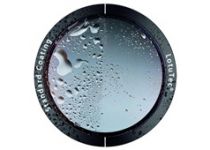
For most birding, a binocular must be waterproof only if you live in a wet climate or are birding under extreme conditions. Still, waterproofing is a good feature if you can get it. A waterproof model will not only be less likely to fog up internally, it will also be better sealed against it.


