 Your Browser is Outdated




In this article, we'll cover the basics about night vision like night vision goggles or a night vision camera and frequently asked questions. We won't just look at how night vision works, but also how it has evolved, it's limitations, and more. 
How Does Night Vision Work
A night vision device (NVD) amplifies available light so you can see in dark or lowlight conditions. Although the technology has evolved greatly since it was introduced in the 1930s, the basic premise has remained the same.
An NVD works by directing light toward an objective lens, which focuses it on an image intensifier. Next, a photocathode converts light into energy and directs it onto a screen to create an image.
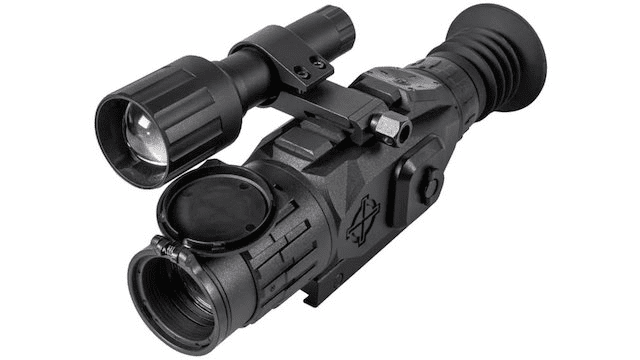
Today, there are a variety of NVDs including night vision scopes, night vision monoculars, night vision binoculars, and night vision goggles. There are also two types of night vision images: the traditional monochrome green, and digital color.
4 Generations of Night Vision Technology
One of the most common questions asked about night vision technology is "What's the difference between night vision generations?"
While all NVDs function using similar technology, the quality of the image is determined by the acceleration of electrons. The key difference between night vision generations is the intensifier technology.
- Generation 1 night vision uses an intensifier tube that amplifies ambient light by accelerating electrons and striking a phosphor surface just like a TV.
- Generation 2 night vision adds a micro-channel plate that multiplies the number of electrons before they impinge on the phosphor screen, thus increasing gain.
- Generation 3 night vision adds a Gallium Arsenide photocathode to create significantly more photoelectrons than older generations.
- Generation 4 night vision removes the ion barrier film and gating system to increase range and resolution.
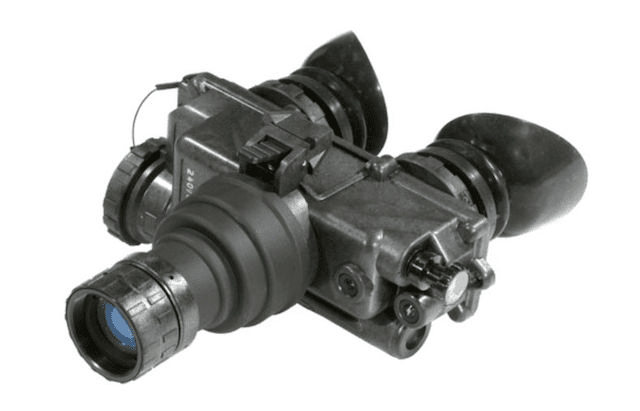
Although the quality of the image increases with each generation, modern generation 1 night vision devices are more than adequate for most recreational and professional activities.
Limitations of Night Vision
Available light, range, and size of an object can affect the quality of the image. In general, night vision is good for seeing large objects and close up. So, if you're looking at an object from a distance, you might not see it in full detail. In other words, it might be out of recognition range, a concept called range detection.
NVDs need light to function, meaning they cannot operate in absolute darkness like a thermal imaging scope. However, most NVDs include a built-in infrared illuminator (IR illuminator), which acts as a night vision flashlight and makes it possible to use night vision in almost complete darkness.
Additionally, a night vision device cannot operate during the day either because there's too much light. The device is designed to amplify light, so trying to view an object during the day could damage internal components sensitive to light.
The range of a NVD depends on the quality of the device and viewing conditions. Most available generation 1 devices can be effective between approximately 5-200 yards. The takeaway, though, is this. Most night vision devices are designed to see in the dark rather than during the day or from a great distance.
Night Vision FAQs
Besides simply wondering how night vision technology works, there are other frequently asked questions. The following are what you need to know about night vision.

Are they difficult to use?
No. Most NVDs are easier to operate than a video camera. One difference is that you must first focus your eyepiece on the internal screen and then focus the lens on the subject. This simple adjustment takes about five seconds.
Are they safe?
Yes. Night vision devices are safe for sensible adults. The main warning, though, is do NOT aim the near-infrared, low-energy laser illuminator directly at your eye. These low-energy emitters operate at wavelengths nearly identical to television remotes. Otherwise, the phosphor screen and internal electron beam are harmless.
How long do they last?
Most night vision devices are built for a long shelf life, but it's also unlikely that you'll wear one out. The phosphor screens are rated at about 1,500-2,500 hours. They will darken with constant use just like a fluorescent lamp. Few owners subject their NVDs to even 100 hours of use in a year.
One danger of purchasing a used night vision device is the possibility it may have been applied professionally for more than 1,000 hours, leaving only a fraction of its life for the unlucky new owner.
As for battery life, this is a bit like asking "What time will the fog lift?" OpticsPlanet rates most first generation units for eight hours of constant use with new batteries, but that's presuming you aren't continually using the IR illuminator.
Will it break if I drop it?
Maybe. Night vision devices are less trouble than most cameras, but if you drop it, you will probably break it! Light intensifier tubes and phosphor screens are delicate.
Will night vision work in the rain?
Night air conditions frequently include fog and high humidity. NVDs can sustain damage from constant humidity or immersion, but avoid getting them wet. If an NVD does get wet, wipe it off with a soft dry towel after use, and store it in a dry place without temperature extremes.
What are those black spots?
All image intensifier tubes have blemishes and they may result in black spots in the night vision image. The spots will remain constant and should not increase in size or number. Although black spots are common, higher quality NVDs, i.e. more expensive ones, will have fewer spots.
Does operating night vision require a license?
There are no government restrictions for civilian ownership of a night vision device, but it is quasi sensitive technology so there are regulations for retailers like OpticsPlanet.
Nighttime is the Right Time
In this article, we covered how night vision technology works, how it has evolved, it's limitations, and other frequently asked questions about night vision devices. NVDs have a host of applications because at the end of the day they're meant to help you see in the dark.
For more information on night vision, check out the How To Buy a Night Vision Device guide and see the difference in our Thermal Imaging v Night Vision Devices article. Also, check out the variety of night vision devices for sale on OpticsPlanet!

