 Your Browser is Outdated




Incandescent Bulbs
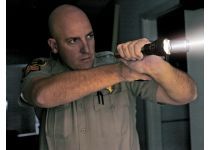 ATN J600 Tactical Flashlight
Incandescent bulbs use a thin filament with current passing through it. The filament gets hot, and this excitement causes the filament to glow, making light. The sealed glass surrounding it prevents oxygen from corroding the filament. Gasses sealed in this glass like xenon and halogen increase the operating temperature of the filament, making the bulb brighter and keeping the interior glass cleaner. The life of the filament is also increased. Argon and Krypton are also used but are not as efficient for flashlights. These bulbs are generally not very durable or shockproof, but they do offer an extremely bright white light and are easily focused. They are the most powerful, have great performance and are a great choice for long distances, so if you're buying a light for situations where a lot of light is needed but it doesn't get rough, an incandescent flashlight may be the way to go.
LEDs
Light Emitting Diodes. LEDs have solid state construction and are extremely durable. Because of their long life (up to 100,000 hours) they do not require periodic replacement, which is great if you're looking to save money in the long run when selecting a flashlight. They have a soft, easy glow and are great for close viewing. They are generally not nearly as powerful as incandescents, but lower powered bulbs can have run times with hundreds of hours in some flashlights.
HIDs
High Intensity Discharge bulbs use a capsule of metal vapor instead of a filament. Many times brighter than standard incandescents, but require a ballast for current control. Bulbs last at least twice as long as incandescents and emit a very bright white light using less power.
Brightness
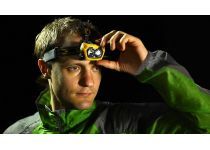 Fenix HL25 LED Headlamp - 180 Lumen
Candlepower or "peak beam candlepower" is the measurement of the brightest spot in a flashlight's beam, with focus not taken into consideration. A lumen is the measurement of all visible light. The best way to get an idea what amount of lumens or candlepower you need for your application is by viewing a light and finding out what the numbers are. These can be found on sites like OpticsPlanet or by checking with the manufacturer. When you get an idea what the numbers are for a couple lights you have seen, you'll get an idea of how much light you're going to want for your application. A keychain light might be one lumen. Some 2AA penlights with a single one watt LED lamp will offer about 45 lumens and run for over three hours. This is useable for most tasks from changing a car tire to preparing food at a campsite. This same light won't illuminate a raccoon twenty yards away very well, but if it had an incandescent bulb which is more focusable it certainly would. Drain on the battery would be significantly more though, decreasing run time. Some lights offer you the choice of switching between LEDs and incandescent bulbs, offering the best of both worlds.
Most experts in personal defense state that a minimum of 80 lumens is required to temporarily blind an adversary, although that is a subjective statement. One variant of a tactical light that is pretty new and works extremely well is a strobe. Strobes are very disorienting and are even able to cause loss of balance easily.
Brightness is very important when selecting a flashlight. If your light isn't bright enough you won't be happy with the purchase, so be sure to take a look at the various numbers, and pick an option that is bright enough for your needs.
Beam Colors
Colored LEDs are popular with hunters lately. Green is not supposed to spook game; red is the easiest on our eyes, and blue tracks blood. Whatever. The next thing you know a pink light will stop your stomach growling in your tree stand. Colors really are easier on your eyes, though, and they do make blood appear black, but from my testing you won't notice the blood any better than with a white light, and if you shine any light on a critter he'll see it. Still, colors certainly are easier on the eyes, so if you want to preserve your night vision on a hunt, be sure to choose a flashlight with variable colored light.


