 Your Browser is Outdated


Power and Magnification
The more power or maximum distance stated, the further you may range small objects. If you want to range a deer at 400 yards and buy a 400 yard rangefinder, you have most likely wasted your money.
Generally a 6x or 7x magnification level is fine, and most have appropriate magnification levels. 6x simply means that the object appears 6 times closer through the rangefinder than with the unaided eye. Keep in mind that distant objects are not necessarily easier to range on with more magnification, but more magnification means a darker picture and smaller fields of view. Practically, magnification levels are not something I would base much of my ultimate choice on.
Picture Quality
A good picture means good glass and coatings. Good glass is expensive, and so are the coatings that cover it. A Swarovski rangefinder may offer the ultimate picture, but the extra expense may not make sense on the golf course or another application. To me, as a hunter, it is very important.
Diopters and Battery Life
Diopters are used to adjust the view to your eye strength to ensure the cleanest, clearest picture possible. They are standard on most rangefinders.
Don't worry about battery life. Changing batteries once a year is plenty for most folks. If you use your rangefinder extensively, keep a spare. And always bring a spare when hunting or in extremely cold weather.
Size and Weight
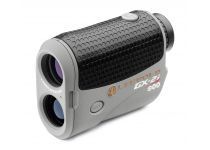 Leupold GX-2i Digital Laser Rangefinder
Size and weight are very important in a hunting rangefinder. The best rangefinder in the field is the one you have with you, handy. I normally keep my rangefinder in an easily accessible shirt or pants pocket or backpack. I normally don't like stuff hanging off my belt, so I usually only use my carrying case when transporting it in my luggage or to keep dust off when I'm not using it. Almost all rangefinders come with a carrying case of some kind. Whereas small and light is crucial for hunting, it's almost the opposite for golf. The Bushnell Pinseeker 1500, for instance, is huge and heavy compared to most hunting rangefinders, but it is generally carried in a golf cart or wheeled bag, and it doesn't make a difference. In addition, the large size gives excellent purchase for both hands and is very easy to hold steady.
Horizontal Mode
One of the modes I have come to like over the last few years is a horizontal range mode, called various things by different manufacturers. This can be useful for golf as well as hunting when shooting or hitting up or down steep angles. I have had occasion to really use this feature maybe less than one percent of the time I have used a rangefinder. It's nice to have when you need it.
Scan Mode
This is the truth serum mode. Usually the scan mode is a single button, that when held in the on position will give you a continually changing reading. On the golf course you could use a first or second priority rangefinder in the scan mode and slowly move from left to right, getting readings on the trees in back of the flag. When you reach the flag the distance reading will shoot to a much closer reading, and then back again when you pass it. This is especially useful at longer distances on the course or in the field and is one of my most used features on a rangefinder.
Other Modes
Some rangefinders have so many modes you have to call in the Geek Squad to learn how to use it. In some, the viewing screen is so occluded with numbers and symbols and charts that tell you how high to hold your rifle or how many minutes of angle or mils to adjust your scope or what club to use it's kind of laughable. If you are one of the few that want to and can take advantage of these options, more power to you. I subscribe to the KISS principle: Keep It Simple, Stupid!
Closing
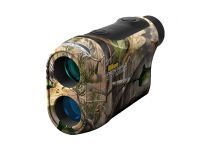 Nikon ProStaff 3 Laser Rangefinder
In closing, bells and whistles and various modes add to the cost of a rangefinder and are rarely used. Get a high quality rangefinder in the appropriate main mode for your most-used application with the most distance available. This will ensure that small targets like deer and flags can be ranged at 1/3 or more or the rangefinder's maximum capable distance. Buy a good one once and it should last you a lifetime, or until OpticsPlanet has a newer, cooler one you can't live without.


