 Your Browser is Outdated


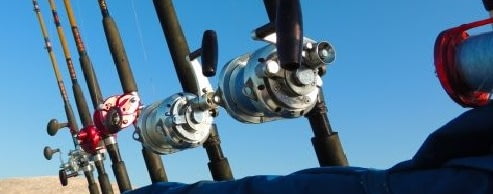

Whether you have just entered the sport of fishing or are a seasoned angler with more trophies in the photo books than most people could dream of, you must understand the importance of using the correct fishing reel. Using the right tool for any job is required for one to be successful, and you shouldn't always run out and buy whatever all the pros are using. Marketers are paid to get you to buy the next greatest thing, and the guys on the fishing show work for the marketers! So go with what's going to work best for you, not what reel is paying for some guy's bass boat!
How to Buy the Best Fishing Reel
Let's get our lines and feet wet and jump into the topic of fishing reels which have been used around the waters of the world for longer than any of us have been walking the earth. If you are new to fishing or have some experience, this how-to guide will help you determine what to put on that rod for your next fishing adventure without getting too technical. Some things that you are going to want to take into consideration immediately are the parts of the reel, looking at ball bearing and gear ratios, line capacity, and finally, which reel is best suited to use for different fishing styles. A huge and very important key element to also keep in mind is that freshwater reels and saltwater reels require different fishing gear.
Comfort Level and Fishing Reel Cost
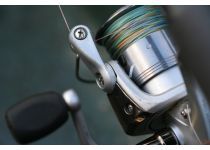
When shopping for a fishing reel, you should always consider what you are most comfortable with and what has maybe worked for you in the past. Being comfortable with the equipment you use builds self-confidence and promotes further skill development. Therefore, the more comfortable you are with a particular reel design, the more likely you will be to progress with learning new skills.
Entry-level anglers should know that the lower the amount of ball bearings and less complicated the gear ratio and reel design is, the cheaper the reel will be. There is no reason that any angler cannot find a very good quality reel to meet all their angling needs for under 100$. Yes, there are the great and wonderful reels out there that look as good as they operate, but for 100$ or less, I can guarantee you can find a reel to fit your fishing style or preference that will last for a very long time. More times than not, the decision will come down to the two styles most frequently used: the spinning reel and the baitcasting reel.
What Is a Good Gear Ratio for a Fishing Reel
In basic terms, the gear ratio is essentially how many times the handle turns compared to how many times the spool turns. So for every time you turn the handle on the reel, you will know how many times the spool turns a complete revolution. When you begin to look at reels more closely, and you begin to look at the numbers between reels, you will notice that gear ratios will be written like the following: 5.1.1 or 7.1:1. So for the first ratio of 5.1:1, that means for every time you spin the reel, the spool will turn 5.1 times and will be a much slower reel than a reel with a gear ratio of 7.1:1 which means that the spool will turn 7.1 times for every one full turn on the handle.
Inches Per Turn (I.P.T.) Explained
I.P.T, or Inches Per Turn, measures the amount of line retrieved back onto the reel with each full turn of the handle. This can vary greatly due to line capacity and size and width of the spool on the reel.
Fishing Reel Bearings
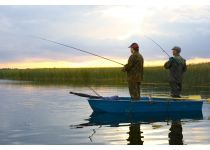
Bearings and their influence on the occasional angler really do not influence their decision too greatly. Many people that fish will simply go to the local department store and buy a $20 reel and never think twice about the reel or performance. A true angler will always look at the bearings and compare the cost to its competitors. But why are learning about bearings important if most people don't care? Because bearings and the amount of bearings are the reel's best defense against gravity and other causes of friction or restraint. The average reel with a couple ball bearings will last for a while, and for the light angler who might use it ten or so times a year, when the reel finally breaks down the spending of another $20 is not a big issue.
The more ball bearings, the smoother and better the reel is going to feel. Not only will more ball bearings make the reel feel that much better, but it will also significantly extend the life of the reel. Reels with just a couple of ball bearings will quickly feel as though they have a granular feeling or that there are inconsistencies while reeling, which can lead to tangled lines and lost fish.
Having fished with $15 reels and $1,000 reels, I can tell you that the difference is significant. I have traveled the world and put lots of energy and time into fishing, so I can tell you from personal experience that the money is worth it. Some of my reels are now pushing the 20-year old mark and feel as good as the day they were new. Over the past 20+ years, I have probably thrown out as many junk reels that would add up to the cost of several very nice reels that would more than likely outlast myself.
What Does Drag Do on a Fishing Reel?
The drag system of a reel might be one of the most important features when it comes time to look at fishing reels. Drag and the sensitivity of the drag is very important when selecting a fishing reel. The drag is absolutely essential for fishing reels to operate correctly. Many hours and dollars go into catching that fish of a lifetime, and hooking the fish is only the first quarter of the battle of being able to fight, land the fish, and hopefully return the fish (alive and healthy) to make up for a successful catch. A great way to think about the drag of reel is to look at it as an automobile and the ball bearings and gears as the motor. The drag would be best compared to the suspension of the car - it has to be sensitive enough for tight turns (light fighting fish) and ridged enough to take a beating and go to the race course if needed. A reel can have all the ball bearings in the world, but if the drag system isn't up to the par, the entire reel is a waste.
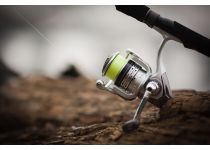
With the drag in use, the angler is able to control the amount of tension that is placed on the fishing line. It's very similar to that of a torque wrench hanging in your garage. Instead of the torque wrench breaking off the head on your bolt once it reaches a set amount of pressure, the wrench gives way and releases pressure. The drag system of a reel operates in the same manner, as its goal is to not let the line snap under the immense amount of strain that is placed on the line and the reel during a fight with a fish.
For most anglers, fighting the fish is what its all about. A real fisherman will not try to horse a fish into the boat so that they don't have to worry with every headshake or big run the fish goes on. And this is exactly how inexperienced fisherman lose their fish. A true angler will compliment the great beast from the waters below by letting the fish fight and eventually tire itself out. And how does a person fight a fish weighing up to 4x their weight without getting tired first or losing the fish? The answer, ladies and gentlemen, lies within the drag.
Through properly placed drag designs and controls, a good angler can almost play the drag like an instrument, tightening and loosening as it becomes necessary throughout the fight. Big fish also get big by being smart; they don't hit large shiny hooks with a piece of line 2in thick moving through the water. There is a distinct reason the record breakers tend to be taken on lighter gear as compared to mega heavy fishing gear. This is also taken into count when the record books look at trophy or record-breaking fish. The top anglers in the world are always trying to catch bigger fish on lighter gear to prove their worth and make their name known to the fishing world and the record books.
Parts of a Fishing Reel Explained
Reel Seat
The reel seat is the part on the back of the reel that is used to secure it onto the fishing rod. This typically looks similar to a cleat on a boat or dock. The long, flat flange simply lays flat on the rod while a cap or two, sometimes even the handle, is used to fasten them to the rod, making the feel like one complete unit.
Handle
The handle is the actual knob or knobs that you turn or crank to put the reel in motion and begin to retrieve the line back to the rod. Many handles come in few different shapes and sizes. It is best to find a handle with a soft rubber or plastic finish as harder plastics and/or rigid materials will take their toll on your hands after hours of fishing.
Spool
The spool is where the line actually sits. The spool on a spinning reel will spin with each turn of the handle while also moving up and down so that the line is evenly distributed each time it has to be reeled in. The spool on a baitcasting reel will spin as the handle cranks, but the line guide and pawl move the line instead of the spool to ensure it is winded evenly back onto the reel.
Gear Housing
You can find the gear housing of the reel directly below the spool on a spinning reel. This is the part of the reel that houses the gears. In comparison to a car, this would be the hood, and inside the hood is the engine and gears that make the car move.
Bail Arm
Specific to spinning reels, this is the bar that runs along the outside of the spool. This bar serves two purposes. First, it acts like a lever, allowing the angler to open and close the spool. Second, it guides the line back to the "power roller" which then feeds it onto the spool. Many reels will now come with a lever that the user will hit with their forefinger to open and close the bail arm. If the reel doesn't have this little lever, no worries, as you simply operate the bar by flipping it up to open the spool or closing it in the downward motion.
Power Roller
This reel part is between the bail arm and the spool; this small piece spins freely, putting little resistance on the line. The power roller also holds the line in the same spot as the reel moves up and down while it spins and spools the line evenly back onto the spool. The power roller is essential for the reel to operate and any flaws or cuts with the power roller will fray your line leading to a lost fish or rig at the least.
Front Drag
Front drag is the knob on the top of the spool. This is where the angler can control how much tension is on the line before the gear box breaks free, allowing the line to exit the reel without causing it to snap. The front drag is also where you would unscrew the spool to take off and possibly replace it with another spool that may contain a heavier line or maybe just a different material line.
Carrying several spools is always a great idea because you can never predict what's going to happen out on the water. I tend to always carry an additional 2-3 line loaded spools for a reel if on a trip or 2-3 entire backup reels for anything that might happen. There is nothing like mastering the rod and reel you want to use only to have a malfunction require the use of lesser quality or just a different feel from what you are now accustomed to. Gear can break while in transit, so be sure to prepare for damage and throw some backup equipment in the bag.
Anti-Reverse
This is typically a small lever found on the bottom of the reel that can be switched on or off. By switching the anti-reverse switch on, the spool will not go backwards as the gears will not allow it. This is a really great feature for left-handed anglers that pick up a right-handed fishing reel. More common than not, the left-handed person can switch the anti-reverse knob off and switch the handle to the other side of the reel, permitting them operation with their preferred hand.
The parts that make up a baitcasting or trolling reel, despite the size and overall style and appearance, do not differ too drastically; they are just made in a different matter. Another good way to compare fishing reels is to look at spinning reels like the sports cars and high-end ultra responsive super cars we all drool over. Then you have the monster trucks and the awesome SUVs with 4-wheel drive built for a beating and ready tackle the heavy work. These 4-wheel drive workhorses with tons of low-end torque for off-roading and hauling are your reels known as baitcasters and trolling reels.
Handle
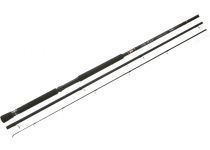
Just like spinning reels, the handle on a casting or trolling reel is what is turned to bring the fishing line back onto the reel. Like spinning reels they commonly have two knobs for the forefinger and thumb to grip and rotate, moving the reel's gears and spinning the spool. When it comes to baitcasters in particular, the one that's going to get the most work and use is a reel with a comfortable handle, as your fingers will thank you.
Star Drag
The star drag sits on the outside of the reel between the handle and the rest of the reel. This is placed directly next the handles, so it can be easily adjusted as the angler fights a fish. The large star design of this mechanism is so that your fingers can easily reach the mechanism, allowing you to adjust the drag as needed throughout the fight with the fish. This allows the person fighting a fish to keep their eyes on the rod tip and fight the fish without having to look at the reel to adjust the tension through the drag.
Spool Tensioner
The spool tensioner is maybe the one characteristic that really separates these reels from spinning reels. A baitcasting reel in particular will have a small round knob between the star drag lever and the actual reel. This small knob that is more common than not is just a circle and is what controls the amount of resistance placed on the spool when the line is flowing off, such as for a cast. This is by far one of the most critical parts of the reel for an angler to master, as this will either cause you lots of smiles or tons of frustration. The spool tensioner, if set correctly, will greatly limit the amount of exposure for having a bird's nest or a back spool.
To adjust the amount of tension, the knob is turned counter-clockwise or forward if using the reel, and to decrease the amount of tension, the knob is turned clockwise. Learning how to adjust is extremely important as you change types of fishing lines. As you use lighter lines with lighter fishing lures, the lighter the tension. If you are throwing musky lures with heavy-pound test lines, then you need to have the tension adjusted tighter so that the second you go to cast and the spool is free to spin, it doesn't go too freely, allowing the line to pop off the spool before the rest of the line can catch up, resulting in a backspool or worse, a birds nest. This tension will also limit the casting distance that you will be able to cover if you are just starting to use one of these reels. It's better to have the tension tighter, as it will aid you in learning thumb tension as you cast the reel.
Fishing Line Guide
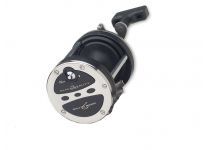
The fishing line guide is the first part that the fishing line will pass through on its way into the reel from the last eyelet on the fishing rod. This part sits in front of the spool and moves back and forth as the reel handle is moved to bring in the line. The line guide is similar to the power roller in a spinning reel, as it's the last part the line touches before it gets layered onto the spool. As the angler turns the reel, the line guide moves back and forth similar to an old typewriter. This part is beyond important, as the line needs to be evenly spooled back onto the reel to prevent a horrible knot.
Pawl
In an effort to locate this part, its easiest to turn the reel over and look above the spool, as there is a long gear that is the length of the reel. This is the part that actually rotates and moves the line guide back and forth. If this piece breaks or malfunctions, your line will be laid on the spool incorrectly, and you will have a ticking time bomb of a knot.
Baitclicker (Line Alarm)
The baitclicker is a switch on the left side of the reel that basically acts as an alarm for the angler. As tension is applied to the spool, the baitclicker will make a clicking noise and alert the angler to the presence of tension. Hopefully the tension causing the click is a fish and not your hook snagged on a structure. When fishing with multiple rods, it is important to have this on so that you can tell quickly when there is a fish and which rod needs the immediate attention of every man on board.
Spool Release
This is typically in the same area as the baitclicker except it sits on the opposite side of the reel. Like the baitclicker, it is made for easy access with the thumb for one-handed operations. This is what allows the spool to either turn or stay locked in place.
Now, one of the most important things to remember is that the final decision on the style and budget is more than likely going to come down to the angler's experience and comfort. All reels serve their purpose accordingly, and after reading this guide, you will be better able to determine which reel to buy and which one will provide you with performance required for success on the water.
This is a very important detail to take note of when purchasing a fishing reel. Although not as essential for freshwater fishing, saltwater reels have special features that make them suitable for the constant battle against the corrosive properties of saltwater. Saltwater reels are also used in climates near saltwater due to the amount of salt just in the air. Have you ever noticed all the rusty cars near the ocean ports? Imagine what it can do to a reel, even if it never gets used or comes close to touching the water.
If you are planning to fish frequently in both fresh and saltwater, you might want to consider just using the saltwater reels for freshwater fishing, providing that they are in line with the action and requirements for the targeted species.
Saltwater Reels vs Freshwater Reels
Saltwater reels don't differ too much from freshwater reels besides component materials and size, along with ball bearings for proper gear ratios to battle larger fish. If you're planning to do lots of fishing off the bottom of the ocean where anything might try to take your bait, a large reel with a line guide on it would be best. And if you're planning to hit the flats or do some casting for whatever might be biting, take along a decent-sized spinning reel with a large enough spool just in case a monster tarpon decides to take you on a multiple hour fight. Flat fishing, and sometimes deep-sea saltwater fishing, will also frequently use fly fishing reels, but it is usually up the angler's preference and desired operation of fishing.
Common Fishing Reel Types
Freshwater fishing reels are most commonly found in the standard spinning and baitcasting configurations. Now, there are the exceptions to the rules with fly fishing reels and smaller reels such as ice fishing setups and beginner "push button" style closed reels. A push-button reel, also known as a spincast reel, is also used for the specific targeting of some species such as catfish.
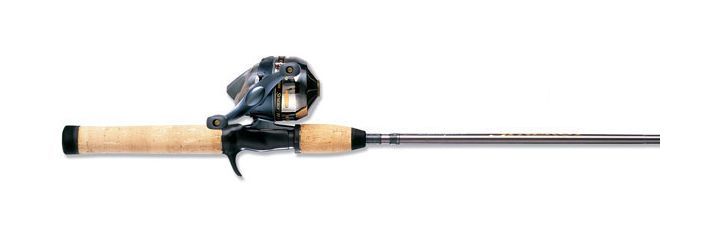
Spincast (Push-Button) Reels
Many young anglers or beginning fishermen will start out on these closed faced "push button" reels as they are the easiest to use and have the least potential to "birdsnest" or cause massive amounts of line to come off the spool which results in a cluster of knots so tangled it appears to look like a birds nest. More times than not, these "birdsnests" are beyond repair and result in cutting the line and stripping off feet upon feet of line. A knot of this magnitude can become costly as the loss of fishing line quickly adds up, especially if using high-end braided and fluorocarbon lines.
Operation of spincasting reels is so simple that they are frequently targeted to young children, as the operator simply needs to push the one single button down and cast the line. Once the hook/lure/bait reaches the end of the cast or the desired landing area, the button is released, stopping the spool and the lure/bait will stop right there. The user then simply begins to turn the handle, and the reel begins to reel back the lure, hopefully with a nice fish on the other end.
Frequently these come in combo kits that are on small rods for young children, and more times than not you can find them covered in their favorite children's movies, cartoons, action figures, etc. What's great about this is that they almost always come with a pre spooled reel and a practice rubber weight for developing casting skills and showing kids that fishing is meant to be fun. Plus, they also make excellent cat toys around the house.
Freshwater Reels and Failure
Freshwater reels are not as susceptible to failure and breaking as saltwater reels and therefore, are usually cheaper than their saltwater cousins. So remember to make sure that if you're not going to be taking the reels out into salt water, don't spend the extra money!
Fishing in saltwater takes an entirely different approach in regards to requirements for gear to be used. Everything for saltwater fishing, down to the motor on the boat, has to be treated to have a fighting chance against the acid that is also called saltwater. Did you know that the if average fishing hook for freshwater is submerged in saltwater that it would completely rust through in just a few days? So, whatever fishing reel it is you decide or fits the job best, you better be sure that particular reel is built for saltwater.
Saltwater Requires Quality Fishing Gear
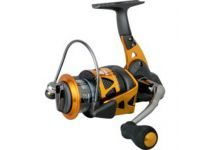
Buying high-quality fishing gear for saltwater is essential, as lesser-built reels will have some protected components and some parts that are not, and some even use cheap plastic parts. These reels are usually noticeably cheaper than their quality built competition, but remember that there is a great reel for everyone and their budget.
When looking into saltwater gear, especially for big game fishing, it's a great idea to do some scouting around and talking to local captains and guides. Some fish species that you wish to target might require certain gear functionalities, such as gear ratios and the speed of the reel, even as far as line capacity to be rather specific. Some fish have very soft mouths and require delecate drags and hook sets, so rod and reel preference is something that you should know before looking into buying new gear.
Not only do some fish require different types of specific gear, but these techniques for fishing and requirements for catching them can vary even through just a small geographic area as water conditions clarity and cover change rapidly.
Most Common Saltwater Reels
The players in the game for saltwater reels are pretty much solely comprised of spinning and larger trolling and baitcasting reels. The spinning reels for saltwater fishing are usually larger than those found in freshwater fishing and are also very commonly used based on their versatility and ability to fight multiple and different species of fish effectively.
What Size Reel Is Good for Saltwater?
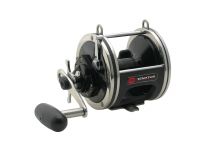
Saltwater fishing usually requires bigger equipment even if the species of the fish is about the same size as those in freshwater, but why would this be? Well, it's important to take in a lot of consideration as far as how much line is going to be required to not only get the lure to the fish, which could be hundreds of feet deep, but also what type of fish could hit this and how much line will that fish run off my reel?
There is absolutely not a more frightening feeling than hooking into that fish of a lifetime, and even with all your might and drag assistance with the boat moaning in reverse, the elusive beast still takes so much line that you watch your once-full spool of line disappear. As the reel screams out, the line rips off, sometimes even throwing some smoke, you will start praying the fish gets tired or you are able catch up on some speed!
So remember to always be sure you have enough line on that reel at all times, and when in doubt, go a little bigger. But remember to not over-spool too much line on the reel. Putting too much line on a reel will result in line spinning off the bale the second there is not applied pressure.
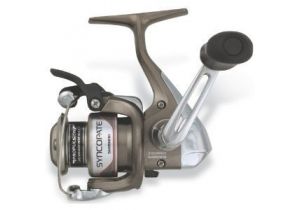
These reels are probably the most common around the world and are usually the second step for a youth angler or a beginner. Spinning reels are very versatile and range in size from ultra-light to heavy-action. For spinning reels used in freshwater fishing, these reel applications are commonly used for fishing smaller lures or live baits that are not typically going to be cast over and over again and are reeled in at a high rate of speed. The smaller lures use spinning reels, as the open bale design permits very light lures to be casted as the line can freely spool out without resistance, letting anglers cover more area with lighter lures. Spinning reels can be as small as ice fishing reels or as large as your forearm for those massive beasts that we all dream about.
Sensitivity is best with a spinning reel. Therefore, it's very commonly used for fishing live baits and also fishing with jigs or small lures. Fishing for delicate, smaller, and sometimes the tastiest fish, requires a delicate touch. One of the great advantages of fishing with a spinning reel is that you can actually use your finger as the first point of contact before the line hits the reel. This is a great advantage especially when fishing in a style known as "free spool".
"Free spool" fishing is typically done with a live bait or some sort of bait that is allowed to move freely and unrestricted. For example, fishing with a live minnow is sometimes better done without a bobber or float and simply letting the bait swim freely and head to cover as it would appear very natural and appetizing without raising alarm for predatory fish looking for a snack. This is also a very beneficial way to fish with frozen baits as they will hit under water currents in larger bodies of water and be carried into the path of waiting fish. Many sport fish and predatory fish will sit with their heads facing the current and let the current bring their next meal right to them as they move against and through the current effortlessly. In fact, some days catching certain fish might only happen when traveling in one direction, but that's why they call it fishing and not "catching". If we knew what fish think, it would be a lot easier.
Free spool fishing is very common in saltwater fishing with live baits (fish/crabs/shrimp) and frozen baits, which consist of just about anything you can imagine that would produce an odor like fish, crab, shrimp, squid etc. are tossed into the current while the angler leaves the spool and bail arm open allowing the bait to move in and out of the different currents and depths.
Tips From The Pros
The added benefit of the delicate sensitivity with these reels is that fish that actually inhale their prey without just biting it are far more difficult to detect than a hard-hitting strike like that of a bass. In fact some fish like walleye and crappie would be far more difficult to detect on the other end of a baitcasting reel. This is also due to the design of the rods that the reels are placed on.
Casting rods have far more and extra-ridged eyelets than a spinning rod. The more eyelets that a line has to go through the more the loss of sensitivity will take place. Spinning rods have a few very large eyelets that allow for the line to almost float through the rod until pressure is applied. Providing the angler with the ultimate amount of feel currently available.
Spinning reels are very easily operated as the user will typically lift the bar surrounding the bale and then pinch the line with their finger against the handle or forearm on the rod to act as a closed baled. This keeps the line from falling off the now open bale.
When the angler has determined where they would like to cast the line, they then cast the lure/bait holding the line down until the rod tip reaches its arc and is about to whip the lure. When the angler has a feel for the release point of the rod, releasing the line from under your finger becomes second nature, and the lure will cast off into the water as the line quickly flies off the spool.
When the lure or hook is in the air flying towards its landing point in the water, the angler can stop the reel by closing the spool at any time. With many of today's common spinning reels, this can be accomplished through the simple forward crank on the handle which will then make the "Bail Arm" close, stopping the spool from moving or permitting any further line from exiting the reel.
When you have completed the cast, the lure is in the water, and you wish to start your retrieval, it's always a great idea to hold your hand up below the last eyelet on the fishing rod and lightly hold the rod and line so that there is a fair amount of tension on the line between your right hand and the reel.
Then, slowly start turning the reel until there is no more slack between the reel and the lure. If your line is not taught between the reel and lure and you begin to try and put the line back on the spool, the line will be placed on the spool in an uneven and loose manner. When this happens, more than likely in your next few casts or retrieves that line will cause you problems, even resulting in birds nests. Luckily for spinning reels, knots and birds nests are much easier to work on and fix than when they happen on a baitcaster or trolling reel.
Also known as "Baitcasters," they are for more experienced anglers and for most part, come with a brief learning curve before they are mastered. Even after these reels have been casted thousands and thousands of times, the best-of-the-best anglers can have back spools or the even worse birds nests.
Baitcasting Operation & Applications
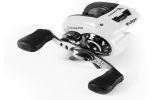
Baitcasting reels are commonly used for aggressive casting and for fighting fish that put up a good battle before you land them. These reels, like spinning reels, come in a variety of sizes and styles made to fit every unique fishing situation. Some are small and sleek with gorgeous finishes and metal compositions that are made for ergonomics and curb appeal, while some are traditional and round with large spools for line capacity.
Lure Action Weight and Line Weight
When considering what reel to purchase always be sure to keep in mind what lure and how heavy of line and lure you will be using. Not only will lure weight and line pound test effect this decision, but the type of line that you use should also be taken into consideration. Monofilament line takes up a lot more space than braided line, and its weight combined with the braided lines characteristics make it very different from traditional fishing lines.
Baitcasters and BASS tournaments
Most of us grew up watching the guys on the "B.A.S.S Master" tournaments and would notice that every single one of them only used baitcasting reels and a bunch to an excessive of them at that. Today, the rules are changing as fishing techniques and styles continue to alter so does the equipment being used. Spinning reels are being used again more so, as anglers are using different methods, lines, and lures to target the same fish. This is also due to new line and reel technology permitting lighter grade tackle to catch bigger fish than previously before.
Baitcasting Reels Construction and Cost
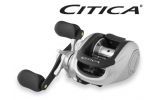
Baitcasting reels seem to range the most as far as cost and construction quality. Having personally fished with thousand dollar baitcasters and thirty dollar reels, I can tell the difference blindfolded, but sometimes you are simply paying for the patina or the name down the side the reel. Having fished with many different brands and types of reels, I can tell you personally that, yes, sometimes the reel feels as good as it looks, but sometimes it's just a pretty shell to look at. Then, you fight a fish, and the gears feel like they are loaded with sand or the drag is not responsive or sloppy.
Operation of a baitcasting reel requires experience and finesse. Since the operator of the reel has to basically use their thumb as a gear brake on the line wrapped around the spool mastering this can take a little time. This is referred to as "thumbing" because the operator will simply press or lay the side of their thumb on the spinning spool to apply the required tension on the spool.
Step 1: How to Use a Baitcast Reel
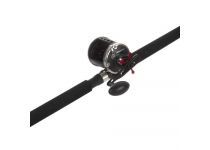
First part of the operation of a baitcaster is to adjust the "tensioner" knob to the correct amount of tension. For someone that casts this reel all the time, little to no tension is going to be required. This is due to the fact that they have mastered the art of laying their thumb on the line as it tears off the reel preventing and backlash and knotting. For fishermen new to this reel, the more tension you apply to the reel, the greater luck you're going to have for not getting a knotty situation. This will also affect the amount of distance that you will be able to cast.
To check the amount of tension on the line, simply open the spool by pushing in the "spool release" button and watch how quickly the line falls out of the reel. For those with less experience, it is suggested that the line flows out of the rail at a slower rate, which represents more tension.
I go by the "three-second rule" for starting out new anglers with these reels. To run this test, simply tie the lure of bait that will be fished with onto the line and hold the rod straight out at arms length, almost as if the rod is an extension of the arm. Now open the spool by pressing in the "spool release" and let the lure/bait fall to the ground. Once the spool is opened, start a 3 second count, and if the lure hits the ground on 3, you have just about the perfect tension setting for a starter.
So if the reel is for you or someone else, start out on the 3-second rule until you have the comfort and practice, and then start very slowly putting 1/8th turns and 1/4 turns on the tensioner as you release tension. With less and less tension, the more ground you will be able to cover while casting, which in turn, also opens the amount of potential fish you can catch. Do not get greedy with letting off the tension as the slightest amount of slack will quickly put you back into place, and you will surely be looking to tighten that tension back up after you dig out the knots.
Step 2: How to Cast a Baitcaster
In order to complete a successful cast with a baitcaster, just follow these simple steps. First, push in the button to open the spool. Once the button is pushed in, you will see the hook start falling towards the ground. Simply place your thumb on the spool to prevent any more line from escaping. Now, look and aim to have anywhere from 3 inches to a foot of line between the end of the rod and the now hanging lure/hook (the extra space will give you a little more whip and distance when casting.) Then, take the rod back as you would a spinning rod with your thumb still on the reel, and once the rod is done flexing or at about 3/4 's of the way through the cast, release your thumb and the lure will soar through the air.
Step 3: "THUMB" the Line
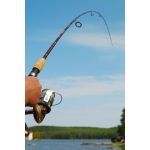
With the lure or hook moving through the air, pay attention to the arc of the cast, and once you start to notice the line hitting the end of its distance or starts heading towards the water not towards the sky, THIS IS WHEN YOU WANT TO BEGIN TO LIGHTLY THUMB THE LINE. Don't wait too long, or by the time you apply pressure, the tension might not hit the end of the line in time resulting in a backspool or birds nest.
At first contact with the spool and thumb try to be as delicate as possible for a smooth casting process. A very good way to think about this is driving down the road. When the spool is open and running line off it very quickly, it's similar to your tires spinning as you move down the pavement. At a speed of anything over 30mph, slamming your brakes results in a jerk and sudden stopping. Instead, you lightly feather the brakes and apply more pressure as needed to come to a complete stop.
Think of your thumb as your brake foot controlling the spinning tires, and you will have an easier time forcing your brain and fingers to become implanted with this information, resulting in muscle memory and reaction on every cast.
Step 4: Retrieve the Line
Now that the lure is in the water and start turning the reel and you will notice the "line guide" moving back and forth, and the line gets laid on the reel evenly without issue. Making sure that there is no slack in the line is not as necessary as it is with spinning reels. This should hold true if you are "thumbing" the spool properly, as there should be no slack as the lure enters the water. If there is slack when the lure hits the water, the sudden stopping will cause back spooling and a wonderful sized knot.
Remember to start slow with these reels and take your time learning the casting process with these reels. Don't get frustrated if after 50 successful casts you suddenly thumb too lightly or too late and end up with a knot. It happens to everyone; don't get discouraged just keep on fishing!
If you find yourself lucky enough to be doing a good amount of fishing over days straight and you have never used a baitcaster, you can expect burns and blisters on your thumb from doing so much casting and the required thumbing involved. Even though I have fished heavily my whole life, after a solid week of fishing and thousands and thousands of casts, my thumb is in rough condition and sometimes evens stained the color of the line. It's also important to realize that braided line can get hot very quickly under the thumb. Friction builds rapidly on the surface of braided line, so burning yourself can become pretty easy. But have no fear, if you're worried about this or have a blister impeding your fishing, a simple patch of medical tape over the thumb will work great. For the serious angler not looking to miss out on any feeling or sensitivity while casting/fishing, super glue over your thumb works good as an alternative option. Having fished and golfed my entire life, split nails blisters etc. are going to happen. It's just a risk you run when your hands are so heavily used, and superglue has gotten me through both fishing and golf tournaments without losing sensitivity. This burning and blistering is very common when throwing large weighted lures that require more tension while in cast. Throwing a small jig will not hit your thumb to this extent and effect, but throwing a footlong musky lure will surely get hot quick!
Baitcasters & Spinning Reels
It is far better when considering running the new and great braided lines to spool a much heavier pound test than you would with monofilament, especially in regards to baitcasters. The reason for this is that the ball bearing and gear designs were implemented for the use of traditional mono, and many reels, even the best in the market, will have the tendency to back spool causing massive birdsnests taking up hours of your fishing experience. So, a very simple fix to this problem that won't take up necessary spooling capacity is to run a much heavier braided line than you would think required for the targeted fish. The little extra weight and diameter from the heavier pound test will help prevent that ever-ready back spool and potential birds nest.
It is far better to purchase a larger reel with more line capacity than you think would be required and maybe only filling up the spool 3/4's of maximum capacity. By doing this, there is less strain on the reels gear and drag system, while at the same time, permitting all the line required without running the risk of over spooling, and when that happens, the line rips off the reel, resulting in a tangled mess. Over spooling is somewhat more common amongst spinning reels, as the line has an easier opportunity to pop off the open bale design.
Tension is your friend. Pressure and tension on your line as much as possible is always going to be your best defense against any knotting situations that could arise. If there is constant tension between the reel and hooks in the water, then there is no room for line to jump off the spool or develop twists. Also, if you plan to feel the fish nibbling on your hook you better make sure there is a straight piece of line with no limpness or slack so that the line can report the action back your sensitive hands.
Specialty reels are extremely specific and don't waiver too much in their use like specialty fishing rods. Examples of reels like this are the very small reels used for ice fishing, trolling reels, and fly fishing reels. Some reels now even come equipped with electronic motors for assisting you with the retrieval of that Goliath Grouper or massive Tuna.
Trolling Reels are very similar to that of baitcasting reels but are usually designed in the traditional circle style and not the sleek bullet or ergonomic design of a baitcaster reel that would be used for bass fishing. The reason for the traditional design is line capacity, gears, and the ability to fight larger fish. Trolling reels with line counters are an amazing tool to have. Fishing for Salmon and other fish that many people troll for can sometimes come down to finding that particular water temperature. That desired temperature or "thermocline" might be down twenty feet or one hundred and fifty feet, and having a line counter will let the angler know exactly what depth the fish are currently holding or schooling together in. Once the fish are located, the lines can be reset and repeated over and over, allowing for the angler to target the fish with precision.
How to Use a Trolling Reel
Operation of a trolling reel is not as complicated as that of a baitcaster, as it's rarely going to be cast over a distance. Trolling reels are also used for big game jigging and fishing in saltwater. Operating these reels is rather simple, as the angler sets the desired depth or guesses the desired depth point and releases the line off the spool as the boat "trolls" or moves forward. As the boat moves forward, the drag on the line from the water usually has enough tension and force to strip the line off quickly.
Once the lure or baits are behind the boat and reach desired depth or are on the top of the water depending on the fish, simply close the spool by cranking the handle forward and pushing the spool button back out, and therefore, locking the gears. The next, and probably most crucial part to the process of fishing with a trolling reel, is to set the drag correctly.
Trolling Drag Operation And Proper Setting
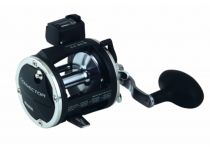
Having the drag set perfectly will determine the success of a day out fishing before the angler can even get a chance to fight the fish. All too often I see or help people adjust their drags, and more times than not, the drags are far too tight. Having too tight of drag can result in the lure being taken out of the fishes mouth by force or not allowing enough give to permit for a good hook set.
In order to run a drag test, simply turn on the drag alarm or "buzzer" so that you can hear what the reel is doing. To test for the perfect amount of drag on a trolling reel while the boat is trolling and moving forward, continually loosen the drag until the sheer force of the water and hook pulls the line off the reel, causing the line clicker to slowly start clicking. Then, very gently begin doing 1/8-1/4 turns on the "Star drag" until the clicking goes from "click,click,click" to "click.....click" then no clicks.
By listening to what the reel is telling you, it's easy to have the perfect amount of drag set for any size fish or any species of fish. The movement of a boat going forward is more than enough energy for a good hook set. So why would you want the fish to hit a lure with the drag maxed out, providing no give which can result in instant snapping of the line or not even getting the hook into the fishes mouth? In short, when it comes to drag settings, less is by far more.
What Is Thermocline?
Thermocline is a term that refers to the changing temperatures within the water table. These can be heavily affected by tide and time of year, combined with water and weather conditions. Finding the perfect thermocline can often lead to the success or failure of any fishing trip. Finding these temperature breaks is essential for some fish, as salmon love water between 40-52 degrees, and your fish finder might only be able to provide you with the surface temperature. I highly recommend doing some research and looking at surface temp maps, as well as wave and tide charts. With a little homework, you can start to locate these hidden honey holes.
Trolling Reel Size
Trolling reels can range in sizes from extremely small for pan-fish and other small fighters, to massive reels that can hold thousands upon thousands of yards of line for fishing for marlin, tuna, and shark. These reels can start as low as fifty dollars and have no problem exceeding the thousand dollar mark.
Tips from the Pros
If you are going to be doing a lot of trolling, it's worth the investment to purchase a transponder computer system that will tell you the temp and speed your lures are traveling. There are several setups that will provide you with the exact speed and temperature that your lures are set at, making the angler well aware of what speeds and depths are working and what isn't. Furthermore, this also lets the boat stay much more concentrated on that body of water, allotting for greater amounts of fish caught.
Ice fishing reels and rod combinations are typically very small and almost appear as something that a small child would use. These can come in a variety of reel types like spinners, straightlines, and modified versions of pushbutton/baitcasters. Ice fishing reels can range in price and quality, but just like open water fishing, the choice is more frequently going to come down angler experience, preference, and targeted species. The smaller size is a direct correlation to line capacity, and rod length is not really an issue, as there is no casting involved. Plus, the smaller rods make operation in the ice shanty also through the auger hole that much easier.
Fly Fishing Reels
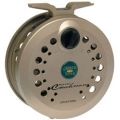
Fly fishing reels are a very particular breed of reels and are most commonly used by seasoned, experienced fisherman. The reason for this is the difficulty casting the line and wide range of drag and reel options. Fly reels are purchased almost completely off the feel that the angler desires. Hundreds and a hundreds of fly reel companies are present in the market due to the high amount of customer niche desires, needs, or wants.

Don't purchase based on the sticker or what the last commercial you just saw was for! The cost of a reel is not everything when it comes time to purchasing a new fishing reel or just trying to determine which style and design to seek out. Many times reels might be very close to the same thing, but due to different branding and marketing techniques, you can end up paying more for the same reel. To be honest, over the last 50 years not a ton has changed in the world of fishing reels. Yes, a few new designs and models are now present, but the core reels have not changed dramatically much.
The more ball bearings and the better the materials made to construct the reel, the more money it will cost. So, if you are just getting into the wonderful world of fishing, take it slow, try out a few things, and ask around the area where you are going to be fishing.
More than likely a fellow angler would be more than happy to discuss or even show you their setup and what works best for them, and if you are lucky, they might even be kind enough to tell you what color or lure the fish are hitting! So get out there and hit the open water!


