Your Browser is Outdated


Tripods are a useful accessory for any astronomy binocular, even low-power astronomy binoculars, and a must-have accessory for higher power and heavier binoculars. In the world of astronomy binoculars, there are two general categories. There are low-powered, smaller, and more easily transportable astronomy binoculars, and then there are high-powered, larger astronomy binoculars. Virtually any magnified view through an optic is made clearer by a tripod, but when you're stargazing you really want to be sure there's no shaking that might distort the image. The best way to stabilize an image through a high or low power astronomy binocular is with a tripod.
Do You Need to Have the Same Brand of Binocular & Tripod?
The good news is that, with a few rare exceptions, you do not have to match the brand of tripod adapter to your brand or model of binocular. The thread size on the binocular socket is standardized at 1/4x20. One caution here is with roof prism binoculars. The barrels on a roof prism binocular are closely spaced, so you should use a tripod adapter designed and listed for use with a roof prism. A good example of a roof-prism style tripod adapter is the Celestron Binocular Tripod Adapter for Roof and Porro Prism Binoculars. Standard L-shaped tripod adapters for porro prism binoculars (the most common body style in astronomy binoculars) will be too wide and cause clearance problems on a roof prism binocular. Porro prism binoculars, on the other hand, have plenty of space between the barrels and can use any standard tripod adapter.
Okay, so what if my binocular is not threaded for a tripod adapter? There is still hope. There are tripods out there with a flat platform and Velcro straps to hold the binocular. This will work with binos up though about a 50-56mm objective (second number), but not with larger binoculars.
Tripod Adaptors for Astronomy Binoculars
Handheld binoculars such as a 7x50, 10x50, 8x56, and so on do not have built in tripod mounts like some of their larger cousins, so in order to use these binoculars with a tripod, you will usually need both a tripod adapter and of course, a tripod.
When checking the specs or shopping for an astronomy binocular, check to see if the binocular is listed as tripod adaptable or listed as having a tripod socket. Note that this does not mean the tripod adapter is included with the binocular, only that it is threaded for a tripod adapter. You still have to purchase the tripod adapter.
Already own a binocular? Where is this tripod adapter socket? The tripod socket on a binocular is located under a cap on the front of the center hinge that holds the two halves of the binocular together. The cap typically unthreads to reveal the tripod socket underneath. (If the cap does not unthread, your binocular is not threaded for a tripod adapter.) When you locate this socket, simply thread the top of the tripod adapter into this socket, then thread the other end of the adapter onto the stud of any camera or photo tripod.
How to Use Small Astronomy Binoculars
Handholding
My favorite astronomy binoculars are the lower magnification, smaller models, because I prefer to use astronomy binoculars without a tripod. Nothing quite as simple and enjoyable as scanning the sky at will, without the need to adjust and mess with extra equipment. If you want to do some handheld astronomical viewing through a pair of binoculars, you'll need to make sure the magnification (the first number when you see something like 7x42) does not exceed 10 to 12 and the second number is not over 70 or 80.
Keeping the magnification down will minimize distortion from shaking and since the second number is the size, in millimeters, of the objective lens (the lens away from your face), you'll have a fairly manageable weight. If the objective lens is too heavy you won't be able to hold up the binoculars for very long. (For me, personally, even a 70mm or 80mm binocular is too heavy to hold for long.) This handholding, no tripod binocular approach is very effective with magnifications of 7 though as much as 12x when observing open and globular star clusters, large nebulae, and bright galaxies - the primary targets for any astronomy binocular.
Using Binocular Tripods
Handholding, though, is much less effective when I am trying to count stars in an open cluster and even less effective when I am trying to split close double stars or see fine details of the moon. That's when I pull out the tripod, even with a 7x50 or 10x50 astronomy binocular. To see how much difference a tripod can make, even with a 7x50 or 10x50 binocular, observe the moon with your binocular using the handholding approach without a tripod. Then, brace your binocular solidly against any convenient object, such as a tree, a door frame and so on. You will be amazed at how much more lunar detail you see in terms of craters, rills, and mountain ranges when you improve steadiness, even with such an impromptu mount.
A tripod will do an even better job. Another great use for a tripod, even with a low magnification binocular, is sharing the view with guests and, my favorite, children. There is simply no way a beginner will accurately find most targets on their own. With a binocular on a tripod, I can find the object for them and then invite them to take a look, usually explaining what it is they are seeing as we go along. I've started many people in astronomy this way.
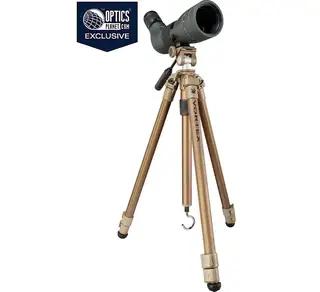
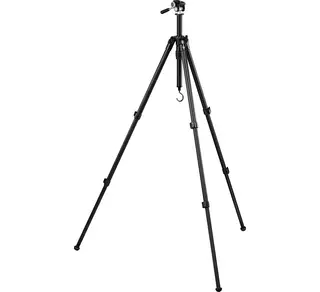
The good news is that due to the smaller size of a typical handheld astronomy binocular, such as a 7x50, 8x56, 10x50 and so on, you do not need to invest in a heavy tripod. I still recommend a tripod that is made well and that features a metal head, instead of plastic, especially if you are using an expensive binocular. Several brands offer options for saving space and some money, like Nikon, Vortex, and Pentax.
Tripods for Giant Astronomy Binoculars
The single biggest mistake beginners make is selecting a tripod that is too light when choosing a giant astronomy binocular. It can be hard to understand and accept that you may pay nearly as much for a tripod for these giant binoculars as for the binocular itself, but without the right tripod, a 20x80 and, especially, a 25x100, is almost useless. One observing session with a cheap, flimsy tripod will demonstrate this in no time.
The main issue is sag or flex in the head and parts. Put a heavy binocular on a light head, find an object, lock the head on the target, let go, and look through the binocular. The target will not be in the field of view because the head sagged under the load. You then loosen the mount, re-aim, this time guessing how much to compensate for the sag and try again. Still not in view? Try again. A lightweight tripod used with extra large binoculars also creates a very real risk of the binocular toppling over without warning.
20x80 Astronomy Binoculars
Shopping for a 20x80 astronomy binocular? How much should you expect to spend on an adequate tripod? Prices start at about $100. If price is really an issue, try the Bushnell 784030 - no quick release plate, but it is a well-made tripod with a metal head.