 Your Browser is Outdated


Focusing
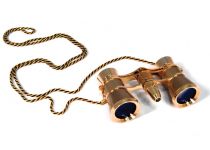 Levenhuk Opera Glasses w/program light,
lanyard
Levenhuk Opera Glasses w/program light,
lanyardA no focus opera glass, as the name suggests, requires no focusing whatsoever. Just look through these opera binoculars and everything is always in focus. Since there is no focusing mechanism, there is a program light, typically a small red LED, mounted between the barrels. A dim red program light, as shown in the image above, allows you to better read a program or find your way to your seat without interfering with your (or your fellow theater-goers') ability to see the stage. Unfortunately, a no focus system is not the best if your eyes are bit old or in need of optical correction. In this case, you may want to consider a center focus model.
Center focus models allow a bit finer focusing, a good feature if you don't have the greatest eyesight or require a lot of correction. The downside is that there is no room for a program light on a center focus model. The center focus mechanism takes the place of the light on the no focus models as shown in the image below. This means that you must go with a no focus model if you want a program light.
Accessories
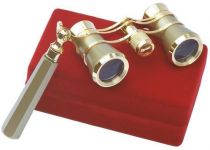 LaScala Center Focus Opera Glasses w/ Lorgnette, Case
One nice extra, available on both no focus theater binoculars and a center focus opera glass is a lorgnette, which is an elegant way of describing the handle shown on the model above. This was originally added to an opera glass, not only to reduce fatigue, but also to more discreetly raise the opera glass in a crowd. Lorgnettes fold when not in use and most are adjustable for length. Opera glasses like the ones at the top of the page include an elegant lanyard to help keep them ready to use.
Nearly all opera glasses and antique opera glasses come with a velvet or leather case that closes with a drawstring to make them easy to carry. Some models offer the elegance of a hard, presentation style case. Both types of cases help protect the glasses from inclement weather and damage while traveling to and from the theater.


