 Your Browser is Outdated


There are many reasons you may want to use a plate carrier. You may be looking for a way to carry armor plates if you're in law enforcement, store tactical gear and magazines while at the range, or are looking to incorporate a weighted vest into your workout routine. This guide will help you select a plate carrier that fits your body and meets your needs. 
What Plate Carrier Size Should I Get?
Plate carriers are built to accommodate specific-sized plates. According to the U.S. Army Training Doctrine and Command, 80% of the population uses a size "Medium" or 9.5in x 12.5in armor plate. For confirmation of a proper fit, with an armor plate inserted into the front and back of the carrier, the top of your front armor plate should be placed at your sternal angle and centered on your mid-clavicular line. The top of your back armor plate should be one inch below your Vertebra prominens (the 7th cervical vertebra). The bottom of your front armor plate should be approximately one to three inches above your belly button.
Depending on your body size, you may need larger plates like 11in x 14in plates or smaller plates like 8.5in x 1.75in. If possible, it is a good idea to try on different size plate carriers to get an idea of how they will fit your body. Body armor plates can also vary in thickness and shape which can affect their compatibility with certain plate carriers. Make sure to check the specs on the specific plate carrier you are interested in as some may only be able to accept soft armor, while some can accept much thicker steel or ceramic plates. You can also check out our Plate Carrier Sizing Guide for more information.
What Is a Cummerbund on a Plate Carrier?
A cummerbund is the adjustable waist strap(s) found on a plate carrier. The cummerbund will keep the fit and form of your plate carrier, offering an adjustable fit to your body type and providing additional protection, extra space for tactical gear, and enhanced comfort.
There are three different types of cummerbunds:
- Skeletal
- Elastic
- Pocketed
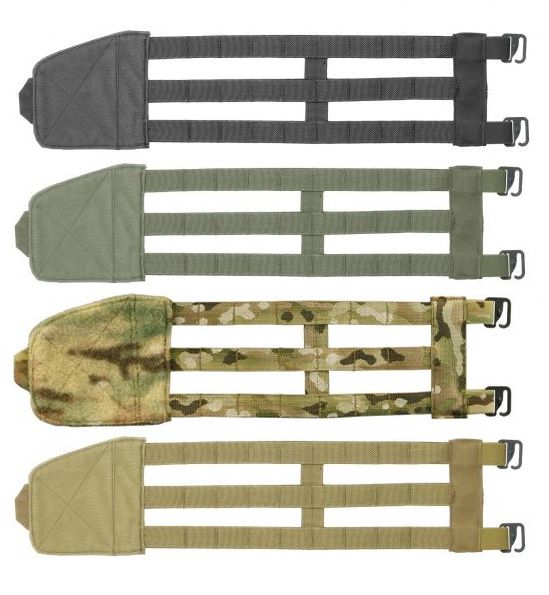 Skeletal cummerbunds typically do not provide the user with the ability to attach gear or use side armor plates. Its primary purpose is to be as lightweight as possible while assisting in pressing the plates to your body.
Elastic cummerbunds function in a similar fashion but can sometimes offer small pockets to store spare magazines, tourniquets, multi-tools, etc.
Pocketed cummerbunds are designed to provide a place to insert side armor plates. Those who are looking for additional protection besides front and back plates may want to use a pocketed cummerbund. Most modular carriers have the ability to change cummerbunds if you want to use a different style or are looking to optimize your current setup for another use.
Plate Carrier Features to Look For
There are many different features that a plate carrier offers, depending on the needs you require. For those who want to use a plate carrier to carry weighted plates for the purpose of improving their workouts, you may want to use a more minimalistic design in order to cut down on bulk and unnecessary accessories. These plate carriers are usually referred to as slick or minimalist carriers because they only provide the user the ability to carry weighted plates. These carriers are also useful to those who only wish to wear armor plates discreetly underneath clothing.
Unlike minimalist plate carriers, other models can be loaded up with additional gear. These carriers typically use some sort of mounting system such as PALS Loops. This allows the user to weave MOLLE gear like magazine pouches through their carrier and secure it in place while providing easy access to essential equipment.
Another mounting system is placards. Placards are a quick and easy way to change your plate carrier setup by easily swapping your carrier's front panel via buckles or straps. You can have one placard setup with rifle pouches and another placard setup with sub-gun pouches. This will allow you to change only the necessary components when swapping to a different rifle/pistol or purpose.
Shoulder straps and pads are another important feature that plate carriers provide. Your plate carrier will start to quickly accumulate weight as you add more gear on top of the armor plates. Most of this weight will be felt on your shoulders, which can lead to discomfort and slower movement and performance. Some modular plate carriers have the ability to change shoulder straps to thicker, more comfortable straps. There are also aftermarket shoulder pad options that wrap around your existing shoulder straps, providing you with more comfort and less stress.
Plate carriers utilize different variations of buckles such as traditional buckles, Velcro, Fast Tubes, and more. Different buckle systems, such as Fast Tubes, will allow you to equip and unequip your plate carrier much quicker. Velcro will typically eliminate buckles by your shoulders, leading to a slicker, more streamlined option. Buckles may or may not play an important factor in your choice of the plate carrier. Either way, it is nice to have options that can better suit your needs.
Plate carriers come in a variety of materials and styles. 500D Nylon is a common material used in military gear such as bags, packs, chest rigs, and plate carriers. This will typically be a less expensive option despite being one of the most rugged materials. The "D" (Denier) is a unit of measurement for the weight of yarn used. It is the weight in grams of 9,000 meters of yarn. 1,000D would weigh 1,000 grams and 500D would weigh 500 grams.
Some plate carriers use Ripstop fabric which is designed to prevent small tears from growing bigger due to the weave of the fabric. Laser-cut plate carriers have PALS-style loops cut into the carrier itself in order to reduce bulk and weight, while other carriers have PALS loops sewn on. A certain style or material may appeal to you more depending on your specific needs.
Summary of Plate Carriers
Selecting the correct plate carrier for you means it is comfortable, provides the necessary coverage, and can keep the gear you need readily accessible. Ensuring you choose a plate carrier that fits the plates you want to use is the most important step. After that, you want to ensure the plate carrier you choose fits your body type comfortably. Then, you can browse through the styles and features that suit your exact needs. You may prefer to have one plate carrier that can do it all, or you can set up a couple of unique plate carriers for different uses.


