 Your Browser is Outdated


Game calls, often referred to as hunting calls, are designed to mimic different animal noises to draw in the game you are hunting. Game calls can mimic prey noises, mating calls, feeding calls, location calls, and other different sounds and vocalizations specific to the animal you are hunting. There are also different types of calls in terms of the way they operate. These include electronic calls, reed calls, diaphragm calls, slate calls, and rattles. Choosing the right game call helps you succeed when hunting, so this guide explains the differences between each type so that you can decide which one is best for your hunt.
Mouth Calls/Diaphragm Calls
 Diaphragm calls are made up of latex film that is stretched in a small housing that is then placed in the hunter’s mouth. By applying a certain amount of pressure to the call and exhaling, the air forces the latex film to vibrate, creating a specific noise. They are similar to reed calls because the noise they are designed to replicate depends on the way the latex film is cut and how the user is exhaling and applying pressure. These calls can be difficult to use but are often preferred by experienced hunters because they are small and hands-free. Many turkey calls are designed as diaphragm calls, but they are also often used in elk hunting like the ones offered by Primos and Hunters Specialties.
Big Game Rattles
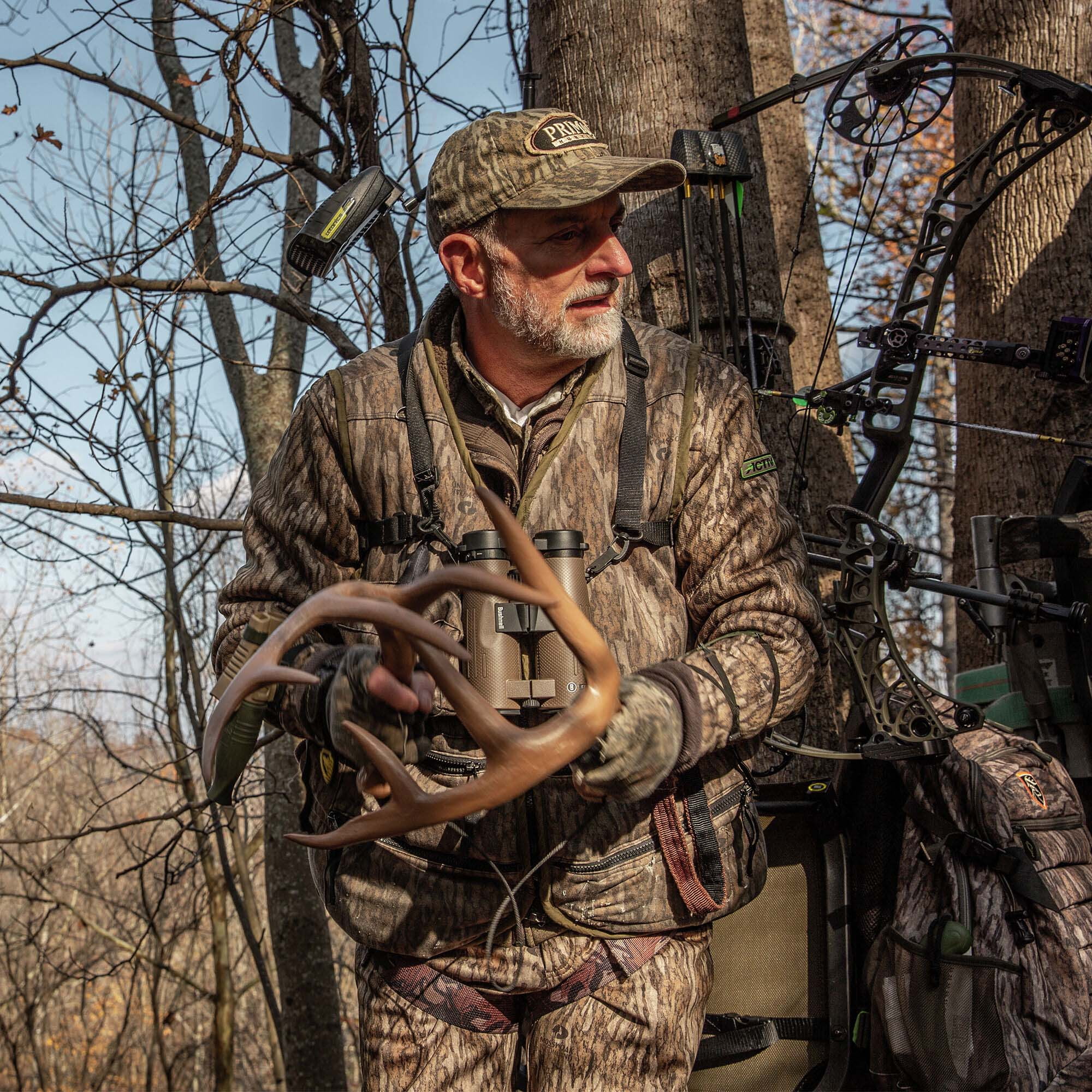 Rattle calls are for Deer Hunting, particularly bowhunting, and are designed to mimic the noise of antlers clashing together as bucks fight. These calls can be made of plastic sticks that are in a mesh bag that mimics this noise when shaken. There are also plastic antlers that can be smacked together to make the same noise. Hunters will also use two real deer antler sheds to clash together to make the same noise. Bucks primarily fight for does during the rut which is the height of the breeding season for whitetail deer. The rattle call will often draw in other deer to investigate the commotion, and also to find the doe that the other bucks are fighting over. Many bowhunters also employ deer calls in combination with rattles to sound more natural.
Electronic Predator Calls
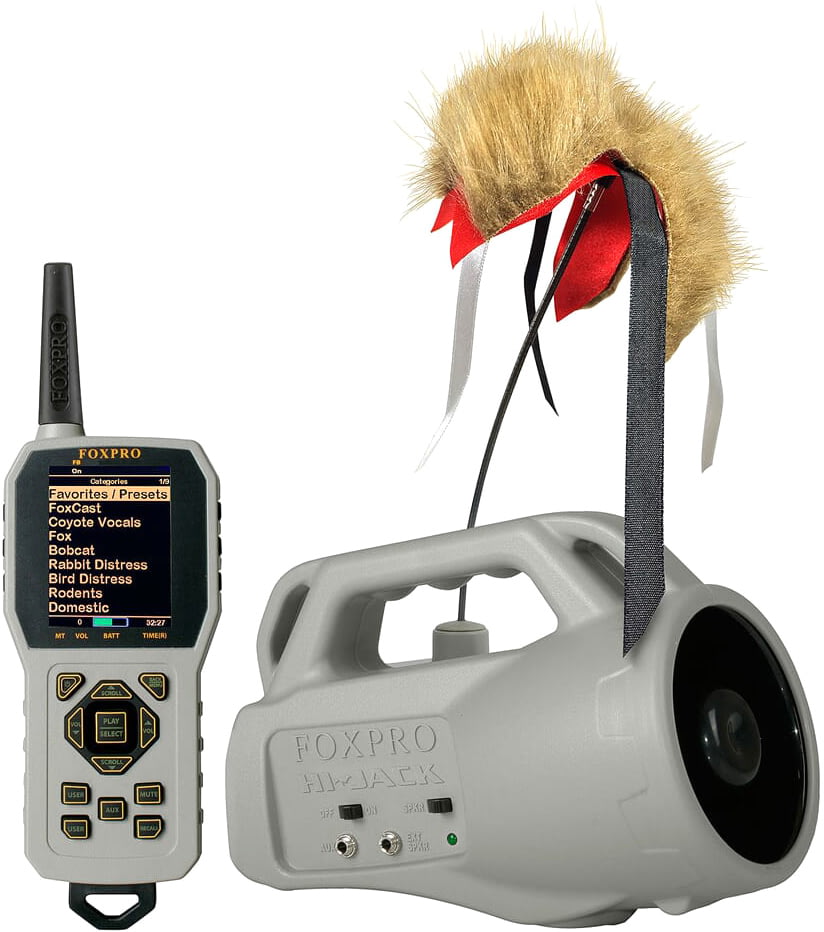 Electronic calls are calls that have a speaker and remote with a variety of sounds or calls programmed into them. The speaker is set out away from the hunter who then uses the remote to call while they are in their shooting position. The benefit of the electronic call is that it can be used to make a wide variety of sounds that are very authentic to the real noises they mimic. Having a variety of calls programmed into the remote gives the hunter the option to change the type of calls being used depending on the situation they find themselves in. For example, you can often use the same electronic call for different animals and hunting seasons. These calls also can have varying volumes and can be very loud to carry a further distance.
However, electronic calls are illegal to use for most types of game hunting, so make sure to know your local laws and regulations. Predator hunting like coyotes, bobcats, and wolves is the primary use for electronic calls. Predator hunters will use calls that mimic injured prey distress sounds such as jackrabbits to draw these animals in close enough to get a shot. They often use Predator Hunting Decoys, not only to bring them in even closer but also to focus the predator’s attention away from the hunter.
Reed Calls
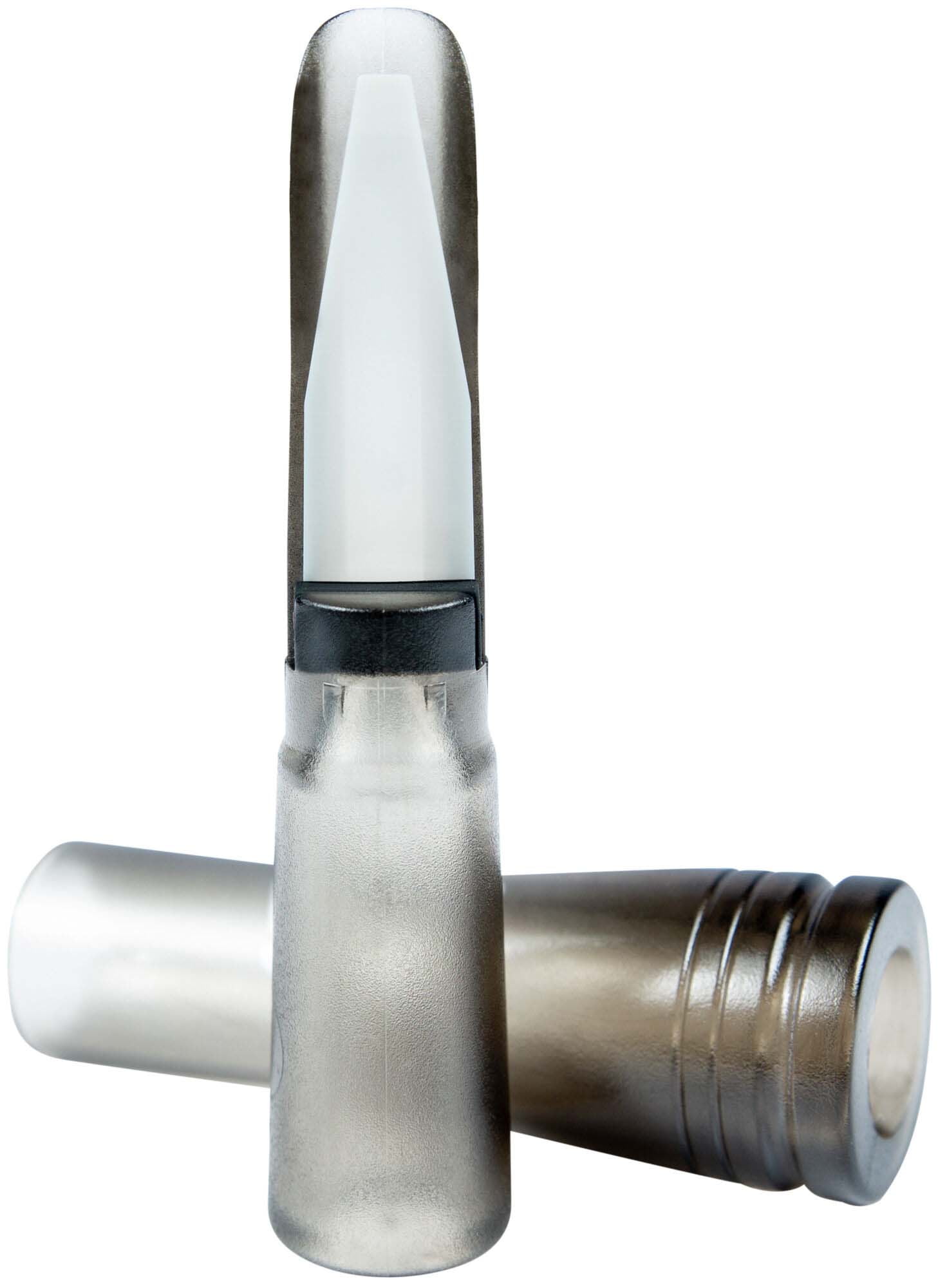 Reed calls operate by blowing air through a tube or housing which then forces the reed to vibrate against a sound board, causing a specific noise. These types of calls are designed to make a specific noise based on the number of reeds in the call as well as the length of the reed being used and how the operator blows air into the housing of the call. These calls can be hard to use and take a lot of practice to have them sound authentic to the specific animal you are trying to mimic. Waterfowl hunting, such as ducks or geese, primarily incorporates the use of reed calls. Duck Calls and Goose Calls will mimic feeding noises as well as location calls that waterfowl frequently make.
Slate/Box Calls
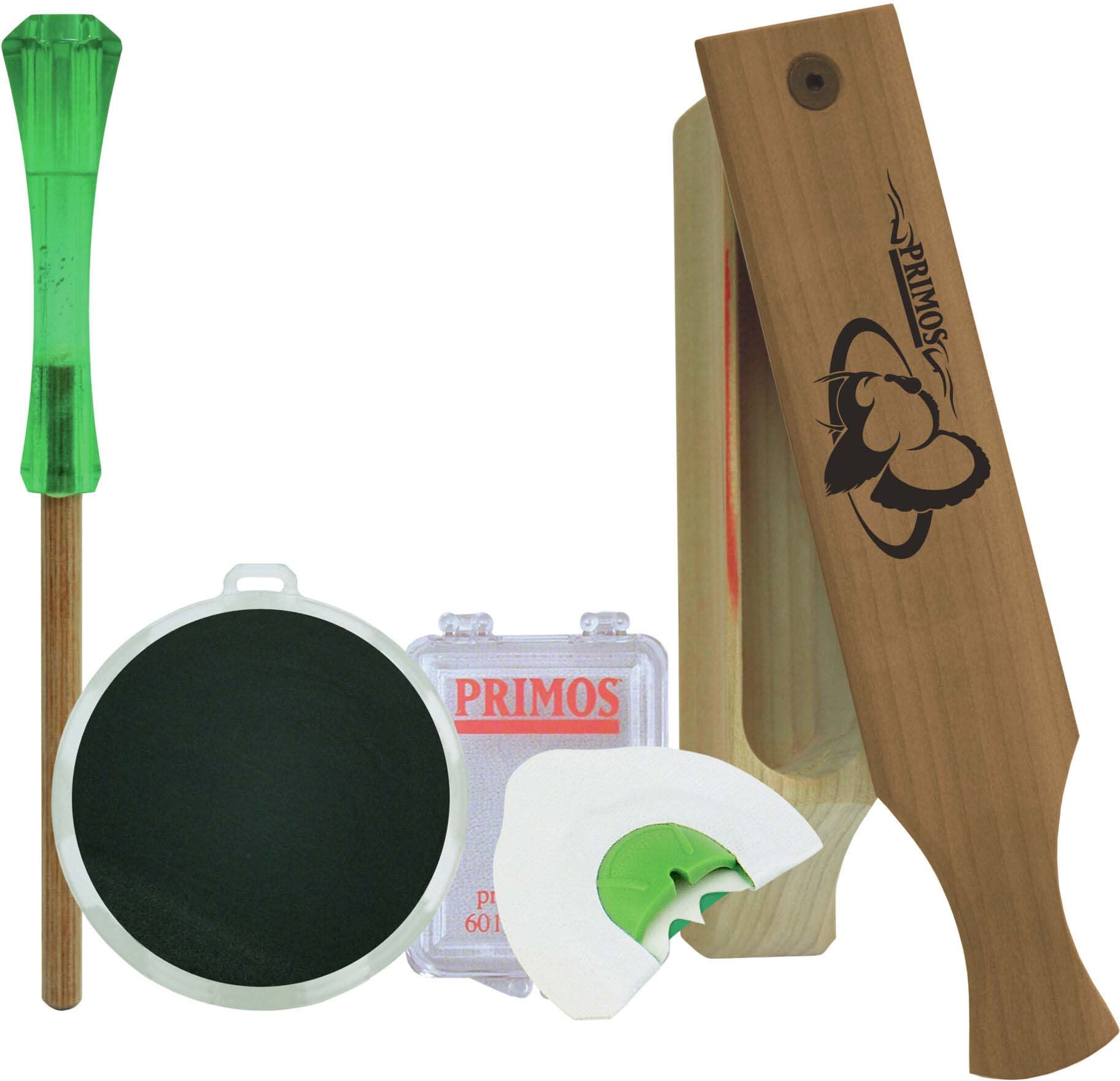 Slate and box calls operate by friction. These two game call types are primarily turkey calls used while turkey hunting. Slate calls have two main parts; a circle body with a glass or ceramic face and a separate striker. The striker and call are held in different hands and the striker is pushed or dragged across the glass or ceramic face of the call. This friction produces a specific noise that can be changed by the direction and force at which the striker makes contact with the call.
A box call also uses friction to produce a noise. The box call is a rectangular box with a lid that pivots from side to side. The user holds the bottom of the call in one hand and with the other hand drags the lid across the top of the box. The contact of the lid moving across the box causes friction, producing noise. The calls used during the spring are used to mimic the sound of female turkeys (hens) to draw in male turkeys (Toms) to mate.
Shop OpticsPlanet for Hunting Game Calls!
There are many different types of game calls you can use depending on the game you are hunting. Some calls mimic prey while others mimic the animal you are hunting. The key to being successful with game calls is to know what sounds attract your specific game and practice making the calls. A well-practiced, confident call increases the odds of a successful hunt. Here at OpticsPlanet, we carry all of the Hunting Gear you need for your next trip!


